Tools / Pressure Washers
User Manual for Ryobi RY130PWA Electric High-Pressure Cleaner
A comprehensive user manual for the Ryobi RY130PWA electric high-pressure cleaner. This guide covers safety warnings, assembly, operation, maintenance, and troubleshooting to ensure safe and efficient use of your pressure washer.
Table of contents
Quick guide from the manual
This manual provides essential instructions for the safe and efficient operation of your Ryobi RY130PWA electric high-pressure cleaner. Before using the product, ensure you have read all safety warnings and instructions. The product is intended for outdoor, domestic use only, such as cleaning machines, vehicles, buildings, and tools.
Intended Use
The high-pressure cleaner is designed for cleaning stubborn dirt using clean water, with or without a neutral cleaning agent. It must be operated with two hands for safety. Do not use the product for any other purpose.
General Safety Warnings
Warning: Read all safety warnings and instructions. Failure to follow these may result in electric shock, fire, or serious injury. Keep children and visitors away from the work area. Always wear complete personal protective equipment, including safety boots, gloves, and helmets with visors. Do not direct the high-pressure jet at people, animals, or electrical equipment.
Overload Protection
The product features an overload protection device that activates during overheating or power spikes, automatically shutting down the power. To resume operation, disconnect from the power supply, wait approximately 15 minutes, and reconnect.
Transportation and Storage
Always stop the product, disconnect from the power supply, and allow it to cool down before transporting or storing. Remove water from all hoses and the pump, and empty the detergent tank. Store the product indoors in a cool, dry, and well-ventilated place, away from corrosive agents. Never store the product in temperatures below 0°C.
Maintenance
Servicing should only be performed by a qualified service technician. Regularly inspect the high-pressure cleaner every 6 months. Check all nuts, bolts, and screws for tightness to ensure safe operation. Use only original manufacturer replacement parts and accessories.
Troubleshooting
If you experience issues such as fluctuating pressure, the product stopping, or pulsating, refer to the troubleshooting section in the manual. Common solutions include checking for air leaks in hoses, cleaning the nozzle, or allowing the thermal sensor to cool down.
Manufacturer information
Ryobi
Practical help
Common problems
Fluctuating pressure
Check that all hoses and connections are airtight.
Product stops unexpectedly
The thermal sensor may be activated. Leave the cleaner for 15 minutes to cool down.
Product pulsating
Air may be trapped in the inlet hose or pump. Run the product with the trigger open until normal working pressure resumes.
Product starts but no water comes out
Check if the pump, hoses, or accessories are frozen. Wait for them to thaw. Also, ensure the water supply is connected.
Before use
- Check the power cord and extension cord for damage.
- Ensure all connections (high-pressure hose, nozzle) are secure.
- Unwind the high-pressure hose completely to prevent twisting or kinking.
- Ensure the water supply is connected and turned on.
- Clear the area to be cleaned of debris, toys, or outdoor furniture.
- Ensure the accessory is securely attached to the trigger gun.
Images and diagrams
- Page 147 provides a numbered diagram of all product components.
- Pages 148-149 illustrate the assembly and setup sequence.
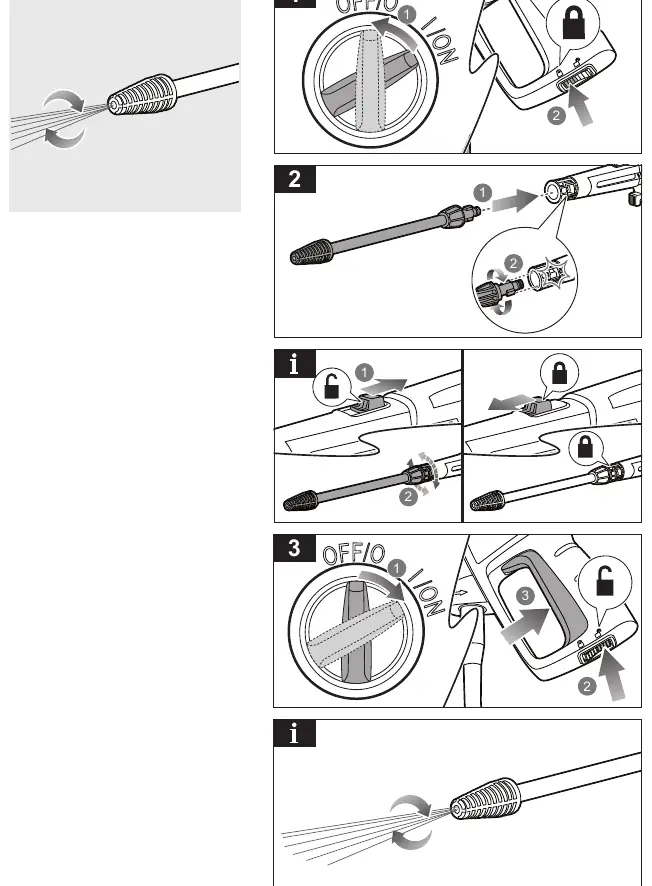
- Page 152 shows how to operate the nozzle and trigger lock.
- Page 154 demonstrates the detergent tank usage.
Model compatibility
- Use only original manufacturer's replacement parts and accessories.
- The product is designed for use with a neutral cleaning agent supplied or recommended by the manufacturer.
- Must be connected to a water supply with a backflow preventer (EN 12729 Type BA).

Manual page author
Michael Turner
Technical manual editor
Reviews PDF manuals for structure, safety notes, and practical product details so readers can find the right information quickly.