Home Appliances / Vacuum Cleaners
Troubleshooting Guide for Ryobi 18V 1 Gallon Electrostatic Sprayer P2870
Quick troubleshooting guide for the Ryobi 18V 1 Gallon Electrostatic Sprayer (P2870). Learn how to fix common issues like leaks, priming problems, and nozzle selector malfunctions, along with essential chemical compatibility warnings.
Table of contents
Quick guide from the manual
This document provides essential troubleshooting steps for the Ryobi 18V 1 Gallon Electrostatic Sprayer (Model P2870). It addresses common operational issues and outlines critical safety requirements regarding chemical usage to prevent damage and warranty voidance.
Troubleshooting
If you encounter issues during operation, follow these steps:
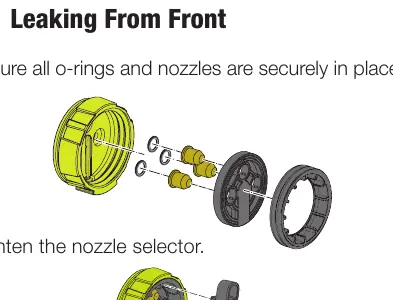
- Leaking from the front: Ensure all o-rings and nozzles are securely in place. Tighten the nozzle selector.
- Liquid will not spray / Pump will not prime: Set the nozzle selector to the High position. Force water or air through the back of the unit to clear any blockages. Fill the hose with liquid by connecting it to the tank and pressing down on the metal bar inside the hose connector.
- Nozzle selector freely spinning: Confirm that the detent ball and spring are correctly in place.
Chemical safety and compatibility
Using incompatible chemicals can damage the unit and void your warranty. Adhere to the following restrictions:
- Do not use bleach, alcohol-based chemicals, chlorine, hypochlorous acid, or hydrogen peroxide.
- Do not use tablets, powder, or abrasive chemicals.
- Do not combine different chemicals.
- The sprayer is designed for most water-soluble chemicals. Always check the official Compatible Chemicals List (available via the QR code on the unit or official website) before use, as this list is updated frequently.
Customer support
If your issue is not resolved by the steps above, contact the electrostatic sprayer customer support team at 1 (800) 525 - 2579.
Manufacturer information
Ryobi
Practical help
Common problems
Leaking from the front of the unit
Check that all o-rings and nozzles are seated correctly and tighten the nozzle selector.
Pump will not prime or liquid will not spray
Set nozzle to High, clear blockages with air/water, and ensure the hose is filled by pressing the metal bar in the connector.
Nozzle selector spins freely
Verify that the internal detent ball and spring are properly installed.
Before use
- Verify all o-rings and nozzles are secure
- Confirm the detent ball and spring are in place
- Check the Compatible Chemicals List for your specific solution
- Ensure no prohibited chemicals (bleach, alcohol, chlorine, etc.) are used
Images and diagrams
- Visual guide for nozzle selector tightening and o-ring placement
- Illustration of the priming process using the hose connector metal bar
- Diagram showing the correct assembly of the detent ball and spring
Model compatibility
- Compatible with most water-soluble chemicals only
- Prohibited: Bleach, alcohol-based chemicals, chlorine, hypochlorous acid, hydrogen peroxide, tablets, powder, and abrasive chemicals

Manual page author
Michael Turner
Technical manual editor
Reviews PDF manuals for structure, safety notes, and practical product details so readers can find the right information quickly.