Home Appliances / Microwaves
Sencore SMW 1718WH Microwave Oven
Quick guide for the Sencore SMW 1718WH and SMW 1719BK microwave ovens. Includes safety instructions, operation steps, cookware compatibility, and maintenance tips.
Table of contents
Manual images
Click an image to enlargeQuick guide from the manual
This microwave oven is designed for heating food and beverages. Before using the appliance, ensure it is placed on a stable, flat surface with adequate ventilation (20 cm above, 10 cm behind and on the sides). Never use metal containers or dishes with metal trim, as they may cause sparks. Always ensure the turntable and holder are correctly installed before operation.
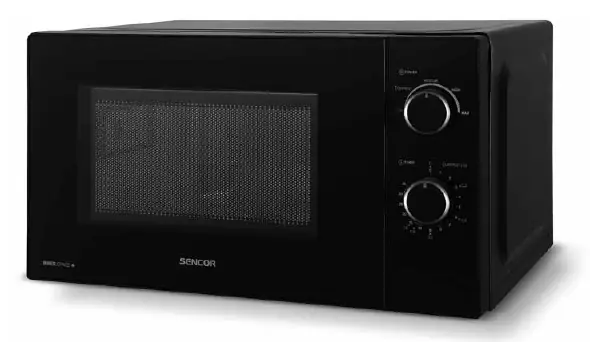
Description of the appliance
The microwave consists of the following main components:
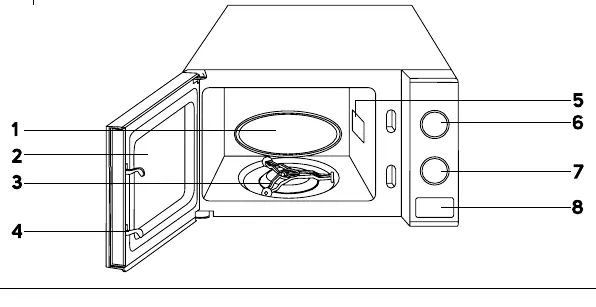
- Turntable tray
- Door viewing window
- Turntable holder
- Safety door closing mechanism
- Magnetron cover
- Power setting knob
- Timer knob
- Door release button
Installation
The appliance is intended for free-standing use only and must not be installed in a cabinet. Ensure the power cord is not trapped under the oven. Before first use, remove all packaging materials, including plastic bags and polystyrene, from inside the oven. It is recommended to heat a bowl of water on the maximum power level for several minutes to eliminate any initial manufacturing odors.
Operation
To operate the microwave, place the food inside, close the door, and set the desired power level using the power knob. Then, set the cooking time using the timer knob. The oven will start automatically. If you need to check the food during the process, opening the door will stop the oven; close it to resume. The oven turns off automatically when the timer reaches 0.
Cookware compatibility
Use only microwave-safe containers. Glass, ceramic, and heat-resistant plastic are generally suitable. Avoid using metal containers, metal-trimmed dishes, or recycled paper products. When heating meals on plastic or paper dishes, monitor the oven frequently to prevent fire hazards. Do not heat eggs in their shells or whole hard-boiled eggs, as they may explode.
Cleaning and maintenance
Always disconnect the appliance from the power supply before cleaning. Use a weak kitchen detergent solution and a soft cloth to clean the interior and exterior. Do not use abrasive cleaners or steam cleaners. Regularly clean the door gasket and the interior walls to prevent food buildup, which can damage the surface and affect the appliance's lifespan. The turntable tray can be washed in a dishwasher.
Troubleshooting
If the oven is not working, check the following before contacting a service center:
- Ensure the power plug is properly connected to the socket.
- Check if the circuit breaker has tripped.
- Verify that the door is properly closed.
- If radio or TV interference occurs, move the antenna or the oven to a different location.
Practical help
Common problems
Oven does not start
Check if the power plug is connected, the circuit breaker is active, and the door is securely closed.
Unpleasant odor
Heat a large glass container with water and lemon slices on maximum power for 2-3 minutes.
Radio or TV interference
Move the microwave oven farther away from the receiver or adjust the antenna.
Before use
- Remove all packaging materials from inside the oven.
- Ensure the turntable and holder are correctly installed.
- Check the door and gasket for any damage.
- Place on a stable, flat surface with 20 cm clearance above and 10 cm on the sides/back.
- Verify that the local voltage matches the rating label.
Specs in practice
- Rated power input
- 1050 W
- Microwave power output
- 700 W
Images and diagrams
- 1: Turntable tray
- 2: Door viewing window
- 3: Turntable holder
- 4: Safety door closing mechanism
- 5: Magnetron cover
Model compatibility
- Do not use metal containers or dishes with metal trim.
- Use only microwave-safe glass, ceramic, or heat-resistant plastic.
- Do not heat eggs in shells or sealed containers.
- Avoid heating liquids in closed containers to prevent explosion.

Manual page author
Michael Turner
Technical manual editor
Reviews PDF manuals for structure, safety notes, and practical product details so readers can find the right information quickly.