Home Appliances / Refrigerators
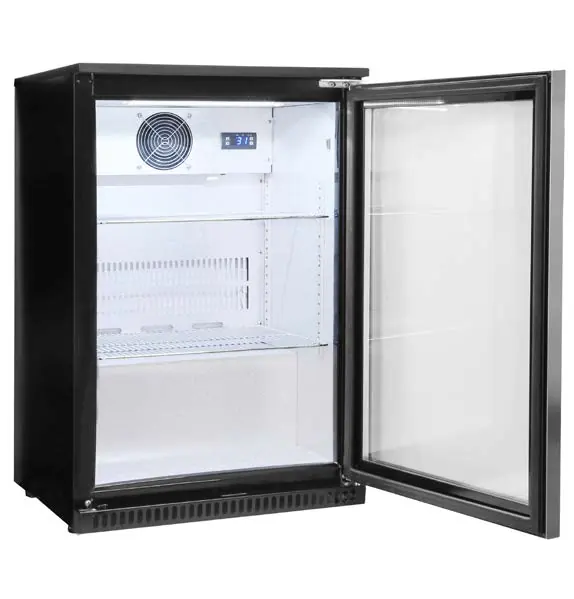
User Manual for Stirling 118L Outdoor Beverage Chiller SOBF118
Quick guide for the Stirling 118L Outdoor Beverage Chiller (SOBF118). Includes installation steps, temperature settings, defrosting procedures, maintenance, and troubleshooting.
Table of contents
Manual images
Click an image to enlargeQuick guide from the manual
This beverage chiller is designed for storing canned or bottled drinks. Before first use, let the unit stand upright for 8 hours to allow refrigerant gases to settle. After plugging it in, allow the unit to cool for 3-4 hours before loading beverages. The operating temperature range is 0°C to 10°C. Note that this appliance is not intended for storing fresh food or perishables.
Safety Instructions
This appliance contains flammable refrigerant (isobutane R600a). Do not damage the refrigerant circuit. Keep ventilation openings clear. The unit is intended for domestic use only, indoors or outdoors. Do not use mechanical devices to accelerate defrosting. Always unplug the appliance before cleaning or servicing.
Installation
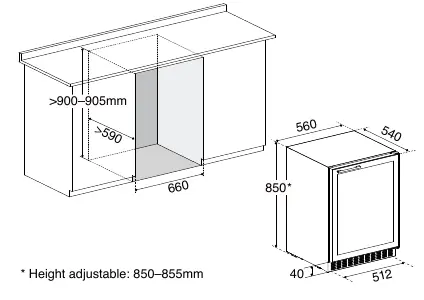
The unit requires a dry, sturdy, level surface. It is rated for tropical temperatures up to 43°C. Ensure a minimum of 5cm clearance on the back, sides, and top for proper ventilation. The unit can be used as a freestanding or built-in appliance. If building in, ensure the depth dimension is observed and the base vent is not obstructed.
Operation
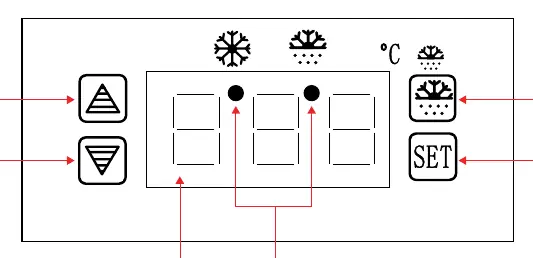
The control panel allows you to set the desired temperature and manually activate the defrost cycle. Use the Up/Down buttons to adjust the temperature in 1°C intervals. The unit features an automatic defrost cycle that runs for 20 minutes every 8 hours. To manually defrost, hold the Defrost button for 6 seconds until a beep is heard.
Maintenance
Clean the interior with a solution of 1L lukewarm water and 2 tablespoons of baking soda. Do not use abrasive cleaners or solvents. Keep the door gasket clean to ensure an efficient seal. If the unit will not be used for an extended period, unplug it, clean it, and leave the door slightly open to prevent mold.
Troubleshooting
If the unit does not operate, check the power connection and circuit breaker. If it is not cold enough, check the temperature setting and ensure the door is closed properly. If moisture forms, check the door seal and ensure the door is not opened too frequently.
Practical help
Common problems
Beverage chiller does not operate
Check if the appliance is plugged in, turned on, or if the circuit breaker has tripped.
Not cold enough
Reduce the temperature setting, ensure the door is closed properly, and do not open the door for 4 hours.
Turns on and off frequently
Increase room airflow, check temperature settings, and ensure the door gasket seals correctly.
Door will not close properly
Level the unit, clean the gasket, and ensure shelves are positioned correctly.
Before use
- Let the unit stand upright for 8 hours before connecting to power.
- Clean interior and exterior surfaces with lukewarm water and a soft cloth.
- Ensure the unit is on a dry, sturdy, level surface.
- Allow 3-4 hours of cooling time before loading beverages.
- Ensure 5cm clearance on all sides for ventilation.
Specs in practice
- Temperature Range
- 0-10°C (Stirling recommends not setting below 4°C for prolonged periods to avoid freezing contents).
Images and diagrams
- Control Panel: Shows buttons for temperature adjustment, setting, and manual defrosting.
- Installation: Illustrates the required 5cm clearance for built-in or freestanding installation.
- Shelf Supports: Shows how to insert supports into the side racks.
Model compatibility
- Not intended for fresh food or perishable storage.
- Tropical rating allows operation in temperatures up to 43°C.
- Do not use extension cords or inverters.

Manual page author
Michael Turner
Technical manual editor
Reviews PDF manuals for structure, safety notes, and practical product details so readers can find the right information quickly.