Tools / Battery Testers
Keithley Cables Selector Guide
A comprehensive selector guide for Keithley cables and accessories, providing compatibility, termination types, and specifications for various models to help you choose the right cable for your instrument.
Quick answers from the manual
Quick answer
- This document is a selector guide for Keithley cables, providing compatibility, termination types, and lengths for various models. Use the selector table on pages 1-2 to find the correct cable for your instrument. p. 1, 2
Key actions
- Identify your instrument model in the 'USE WITH' column. p. 1, 2
- Verify connector types (From/To) for your setup. p. 1, 2
Problems and fixes
Incorrect cable selection
Consult the selector table to match your instrument model with the appropriate cable type and termination.
p. 1, 2Show 2 more answers Show less
Technical specifications
| Parameter | Value | Meaning | Pages |
|---|---|---|---|
| Cable Lengths | Various (0.15m to 15m) | Available lengths for different cable models. | p. 1, 2 |
Where to find it in the PDF
- Selector Table p. 1, 2
- Cable Details p. 3, 4, 5, 6
Table of contents
Manual images
Click an image to enlargeQuick guide from the manual
This document serves as a comprehensive selector guide for Keithley cables and accessories. It is designed to help users identify the correct cable for their specific Keithley instrumentation based on connector types, cable length, and compatibility.
How to use this guide
The guide consists of a master selector table on pages 1 and 2, followed by detailed descriptions and photographs of specific cable assemblies on pages 3 through 7. To find the correct cable:
- Identify your instrument model in the USE WITH column of the selector table.
- Check the required TERMINATIONS (From/To) to ensure compatibility with your test fixture or setup.
- Verify the required length and cable type (e.g., Triax, Coax, Shielded).
Cable types and specifications
The guide covers various cable types, including:
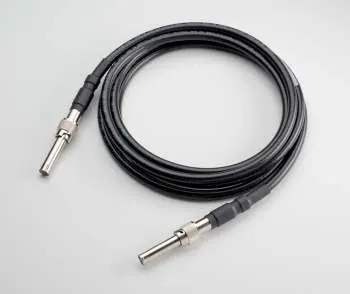
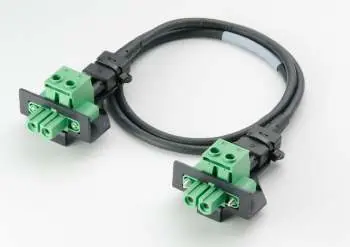
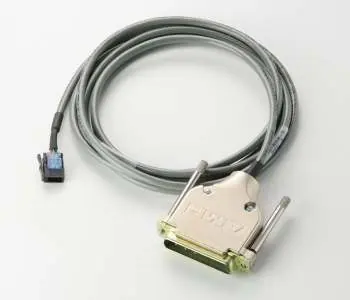
- Triax cables: Used for low-noise and ultra-low-noise applications.
- Coaxial cables: General-purpose and high-voltage applications.
- Mass Terminated Assemblies: D-sub based cables for multi-channel connections.
- Interlock cables: Safety-related cables for specific test fixtures.
Important compatibility notes
Always refer to the USE WITH column in the selector table. Using an incorrect cable may result in improper measurements, noise, or damage to the instrument or test fixture. For high-voltage applications (e.g., 3kV rated cables), ensure the cable rating matches or exceeds the instrument's output.
Practical help
Common problems
Cable does not fit instrument
Verify the connector type (e.g., Triax, BNC, D-sub) against the instrument's input port using the selector table.
Measurement noise
Ensure you are using the correct low-noise or ultra-low-noise cable specified for your instrument model.
Before use
- Verify instrument model compatibility using the 'USE WITH' column
- Check connector type (From/To) for both ends
- Confirm required cable length
- Check impedance requirements (e.g., 50 Ohm)
- Ensure cable rating (e.g., 3kV) matches application requirements
Show more Show less
Specs in practice
- Terminations
- The connector types at each end of the cable (From/To).
- Mass Terminated
- Cables designed for multi-channel connections, often using D-sub connectors.
Images and diagrams
- The guide provides photographs of cable connectors to assist in visual identification.
- Selector tables provide a quick reference for matching cables to instruments.
Model compatibility
- Always verify the 'USE WITH' column for your specific instrument model.
- Some cables are specific to certain test fixtures (e.g., 8009 test fixture).

Manual page author
Emily Carter
User documentation editor