Automotive / Electric Vehicles
Safety and Handling Guide for Tesla Model S (2021-Present)
Essential safety and handling guide for first responders regarding the Tesla Model S (2021-Present). Includes procedures for vehicle identification, immobilization, high-voltage system disabling, occupant access, fire response, and towing.
Table of contents
Manual images
Click an image to enlargeQuick guide for first responders
This document provides critical safety information for first responders dealing with the Tesla Model S (2021-Present). Warning: Lack of engine noise does not mean the vehicle is off. Silent movement or instant restart capability exists until the vehicle is fully shut down. Always wear appropriate personal protective equipment (PPE).
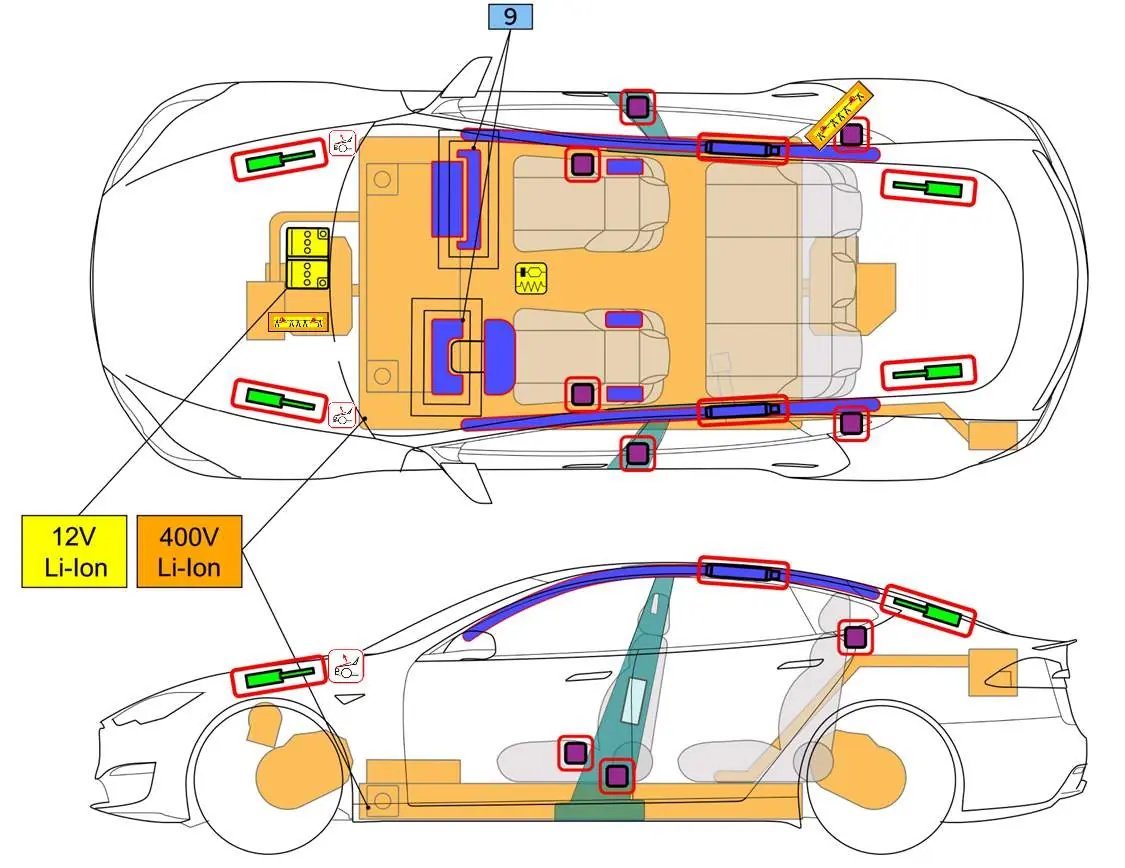
Identification and Recognition
The Tesla emblem indicates a fully electric vehicle. Note that the model name does not appear on the exterior of the vehicle.
Immobilization and Stabilization
- Chock wheels: Always chock the wheels to prevent movement.
- Push to park: Ensure the vehicle is in park.
- Lifting: Use designated lift areas. Do not push on the High Voltage (HV) battery.
Disabling High Voltage Systems
To disable the vehicle, follow these steps:
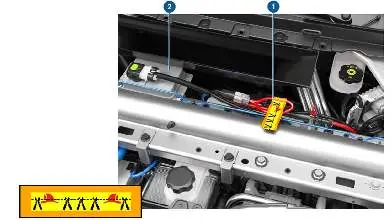
- Open the hood.
- Double cut the First Responder Loop.
- Disconnect the 12V Li-ion battery.
Note: The cut loop is located on the right side of the Model S. You may need to break a small window to access it. Never attempt to open the high voltage battery.
Accessing Occupants
Electrical and mechanical releases may be compromised after a collision. Seats and steering wheel are electrically powered and may not function. The body is constructed of aluminum. The windshield, top glass, and rear window are made of laminated glass; side windows can be tempered or laminated.
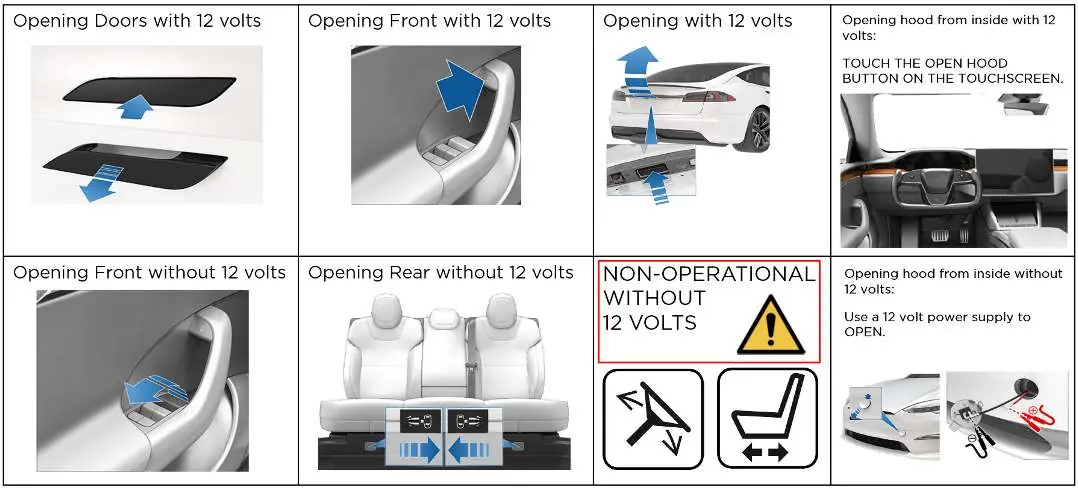
Emergency Response
In Case of Fire
- Do not submerge the vehicle to extinguish or cool a battery fire.
- Use large amounts of water to cool the battery enclosure.
- Monitor the HV battery temperature for at least 24 hours due to the risk of re-ignition.
In Case of Submersion
Treat as any other submerged vehicle. Wear appropriate PPE. Remove the vehicle from the water and continue with normal high voltage disabling. Tilt the vehicle side to side to allow water to drain.
Towing and Transportation
Check the HV battery temperature before transport. After a fire incident, store the vehicle outside at a safe distance (at least 50 ft / 15 m) from other vehicles and structures.
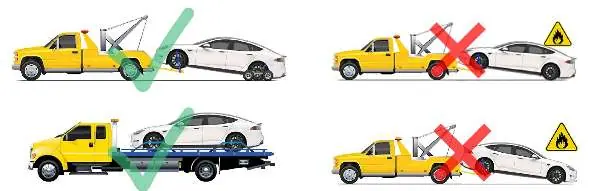
Additional Information
For emergencies, call Tesla Roadside Assistance. Refer to https://www.tesla.com/roadside-assistance for the applicable hotline. For training questions, contact [email protected].
Official resources from the manual
Practical help
Common problems
Vehicle is silent
Lack of engine noise does not mean the vehicle is off. Silent movement or instant restart is possible until fully shut down.
Doors won't open after collision
Electrical/mechanical releases may be compromised. Extrication may be required.
Battery fire
Do not submerge to extinguish. Use large amounts of water to cool the battery enclosure. Monitor temperature for at least 24 hours.
Before use
- Wear appropriate PPE
- Identify vehicle as Tesla
- Chock wheels
- Push to park
- Locate First Responder Loop
Show more Show less
Specs in practice
- Orange insulation
- Indicates high voltage cables.
- Blue coolant
- Indicates battery coolant.
- Laminated glass
- Windshield, top glass, and rear window are laminated; side windows vary.
Images and diagrams
- The vehicle diagram highlights high voltage components, SRS control units, and high-strength zones.
- The disable method involves cutting the First Responder Loop and disconnecting the 12V battery.
Model compatibility
- Knee airbags are only installed in North America, Mexico, and South Korea.

Manual page author
Emily Carter
User documentation editor