Tools / Power Tools
User Manual for Tolsen 79782 Vacuum Cleaner
Quick guide for the Tolsen 79782 Vacuum Cleaner. Learn how to set up, operate, maintain, and troubleshoot your wet/dry vacuum, including filter installation and blower mode.
Table of contents
Manual images
Click an image to enlargeQuick guide from the manual
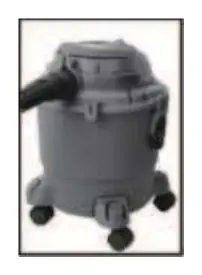
The Tolsen 79782 is a wet/dry vacuum cleaner designed for household use. Before operating, ensure you have read all safety instructions. Always use the correct filter for the task: a foam filter is required for wet pick-up, and a dry filter is necessary for dry material. Never operate the vacuum without the appropriate filter installed. If the vacuum is accidentally tipped over, turn it off immediately to allow the float mechanism to reset.
Components and controls
The vacuum includes the following main components:
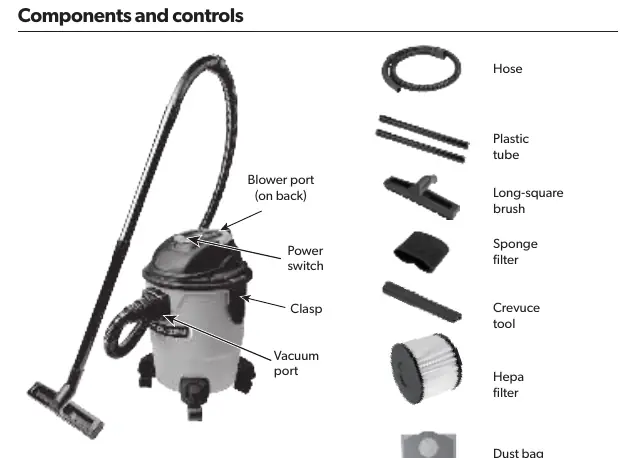
- Vacuum port (for suction)
- Blower port (located on the back)
- Power switch (0 = OFF, I = ON)
- Clasps (for securing the power head)
- Hose, plastic tubes, and various cleaning brushes
- Filters (Sponge filter, Hepa filter)
- Dust bag
Setup and assembly
Follow these steps to prepare your vacuum for use:
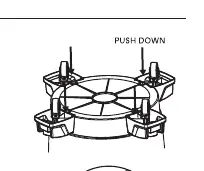
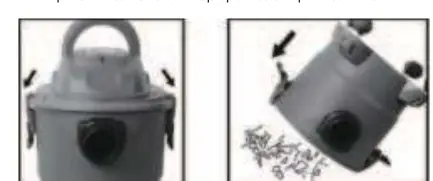
- Caster installation: Invert the dust tank and align the casters as shown in the diagram. Secure them using the provided screws, then return the tank to an upright position.
- Power head: Ensure the proper filter is installed before replacing the power head. Secure the head by snapping the lid latches tightly in place.
- Hose connection: Insert the hose end into the vacuum port. Attach extension wands and the desired cleaning accessory to the end of the hose, twisting slightly to tighten.
- Power: Plug the cord into a wall outlet and push the switch to position 'I' to turn the unit on.
Operation
Dry pick-up
Install the foam filter over the filter basket. When picking up fine dust, empty the tank and clean or replace the filter frequently to maintain performance. If the filter gets wet, replace it immediately before continuing.
Wet pick-up
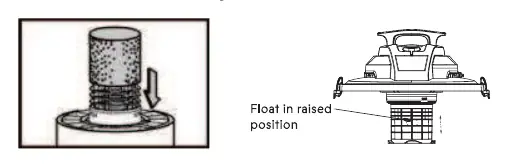
Install the foam filter over the filter basket. The vacuum features a float mechanism that automatically cuts off airflow when the tank reaches capacity. If suction ceases and motor noise increases, turn off the vacuum, unplug it, and empty the tank.
Blower operation
To use the blower feature, locate the blowing port on the back of the vacuum. Insert one end of the hose into the blower port and turn the vacuum on. Always wear safety eyewear when using the blower function.
Maintenance
Regular maintenance ensures peak performance:
- Cleaning: Clean the outside of the vacuum with a cloth dampened with warm water and mild soap.
- Tank: Dump out debris, wash the tank with warm water and mild soap, and wipe dry.
- Filters: Clean the foam filter often. Check for tears or holes; if damaged, replace it immediately. Do not use a damaged filter.
- Storage: Empty and clean the dust tank before storage. Wrap the cord and store accessories in the designated holder. Store indoors.
Practical help
Common problems
Vacuum will not run
Check that the electrical outlet has voltage. A qualified electrician may need to be contacted.
Loss of suction (wet pick-up)
The tank may be full or the hose may be clogged. Drain and clean the tank, and remove any debris from the hose.
Loss of suction (dry pick-up)
The tank may be full or the hose may be clogged. Drain and clean the tank, and remove any debris from the hose.
Before use
- Read all safety instructions.
- Ensure the correct filter is installed (foam for wet, dry filter for dry).
- Check that the power head is securely latched.
- Verify the hose is properly connected to the vacuum port.
- Ensure the electrical outlet is functional.
Specs in practice
- Electrical rating
- 110-120VAC, 60Hz power supply.
- Rated current
- 9A (1000W) power consumption.
- Tank capacity
- 6 gallons (23 liters) total volume.
Images and diagrams
- Components and controls: Identifies the vacuum port, blower port, power switch, and accessories.
- Caster installation: Shows how to invert the tank to attach wheels.
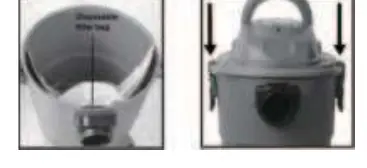
- Filter bag installation: Shows how to slide the collar onto the deflector.
- Float mechanism: Illustrates the float in the raised position to prevent overfilling.
- Emptying the tank: Shows the process of removing the power head and dumping contents.
Model compatibility
- For household use only.
- Do not use to pick up flammable or combustible liquids (e.g., gasoline).
- Do not use to pick up explosive dust or hot ashes.
- Always wear safety eyewear complying with ANSI Z87.1 (or CSA Z94.3 in Canada) when using as a blower.

Manual page author
Michael Turner
Technical manual editor
Reviews PDF manuals for structure, safety notes, and practical product details so readers can find the right information quickly.