Home Appliances / Dryers
User Manual for Whirlpool EASY CLEAN 100TM Dryer
Comprehensive user manual for the Whirlpool EASY CLEAN 100TM dryer. Includes instructions for cycle selection, lint collector maintenance, drum cleaning, laundry tips, and troubleshooting.
Table of contents
Manual images
Click an image to enlargeQuick Guide from the Manual
This guide covers the operation and maintenance of the Whirlpool EASY CLEAN 100TM dryer. Key features include the EASY CLEAN 100TM lint collector, various automatic and timed drying cycles, and optional drying rack usage. Always ensure the dryer is properly installed, leveled, and vented outdoors (for gas models) before use.
Safety Instructions
Warning: To reduce the risk of fire, electrical shock, or injury, follow these precautions:
- Do not store or use gasoline or flammable vapors near the dryer.
- If you smell gas, do not touch electrical switches, clear the area, and call your gas supplier or fire department.
- Do not dry items soiled with vegetable or cooking oil, wax, paint, or gasoline.
- Keep the area around the dryer free of lint, dust, and paper.
- Do not allow children to play on or in the dryer.
- Always unplug the dryer or turn off power before performing maintenance or service.
Parts and Features
The dryer includes a cycle control knob, temperature selector, start button, and the EASY CLEAN 100TM lint collector basket. Some models may feature a drum light, drying rack, and end-of-cycle signal.
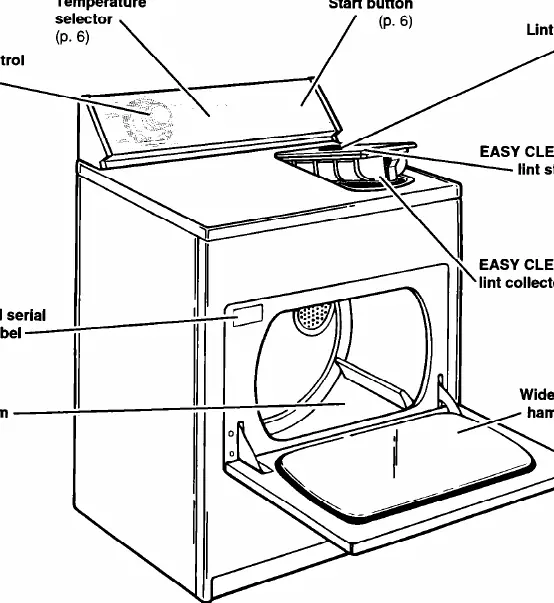
Operating Your Dryer
Starting the dryer:
- Load clothes and close the door.
- Ensure the lint collector basket is clean and the lid is closed.
- Turn the Cycle Control Knob to the desired cycle.
- Set the Temperature Selector.
- Push the Start Button.
Stopping/Restarting: You can stop the dryer by opening the door or turning the knob to Off. To restart, close the door, select a new cycle/temperature, and push Start.
Using the Drying Rack
The optional drying rack (Part #692990) allows for drying items without tumbling. Fit the rear legs into the indentations in the back wall and rest the front on the dryer opening. Use Timed Drying or Fluff Air cycles. Remove the rack for normal tumbling.
EASY CLEAN 100TM Lint Feature
This feature minimizes lint cleaning frequency. When the lint indicator window shows "Full":
- Lift the lid until it releases.
- Pull the basket out by the handle.
- Turn the basket upside down over a waste container and tap lightly.
- Reinsert the basket into the tracks until it stops.
- Lower the lid until the magnetic latch clicks.
Caring for Your Dryer
Cleaning the Drum: If the interior is stained by unstable dyes (e.g., denim), make a paste with powdered detergent and warm water, scrub the area, wipe with a damp cloth, and tumble a load of clean cloths to dry.
Changing the Drum Light: Unplug the dryer. Open the door, remove the light bulb cover (by turning clockwise or removing the screw, depending on the model), and replace the bulb with a 25-watt or 40-watt appliance bulb.
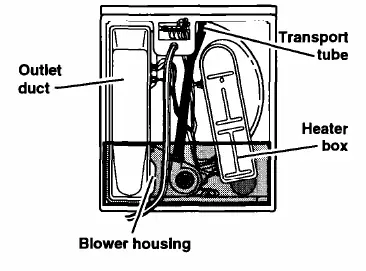
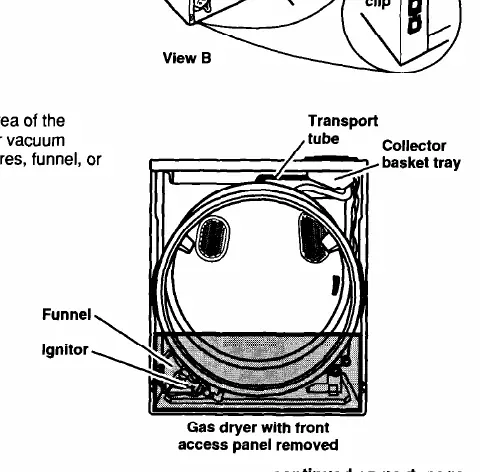
Removing Cabinet Lint: Lint should be removed from inside the cabinet every 2-3 years by a qualified person. For electric dryers, remove the back panel. For gas dryers, remove the front access panel. Use a vacuum or soft brush to clean the shaded areas shown in the manual.
Laundry Tips
- Sorting: Separate dark from light colors and heavy fabrics from light fabrics.
- Load Sizes: Do not overload; mix large and small items for better tumbling.
- Drying Tips: Close zippers and hooks. Remove heat-sensitive trim. Check pockets for metal objects.
- Fabric Softeners: Use dryer-safe sheets. Place on top of the load before starting.
Troubleshooting
- Dryer won't start: Check door closure, power cord, and circuit breakers.
- No heat: Check gas valves or circuit breakers.
- Slow drying: Check if the lint collector is full or the exhaust duct is clogged.
- Noises: Ensure the transport tube is reinserted correctly after cleaning.
Manufacturer information
Whirlpool Corporation
Practical help
Common problems
Dryer will not start
Ensure the door is firmly closed, the controls are set to an ON position, the power cord is plugged in, and the circuit breaker has not tripped.
No heat
For gas dryers, check if gas valves are open. For electric dryers, check for blown fuses or tripped circuit breakers.
Slow drying / Lint accumulation
Check if the lint collector basket is full or if the exhaust duct/hood is clogged.
Noises
If the dryer has not been used for a while, thumping may occur from support rollers. If noise persists after cleaning, ensure the transport tube is reinserted correctly.
Before use
- Wipe the dryer drum with a damp cloth to remove dust.
- Ensure the lint collector basket is clean and properly inserted.
- Check that the exhaust duct is not clogged.
- Verify the room temperature is above 45°F (7°C).
- Ensure the dryer is properly leveled.
Specs in practice
- Automatic Cycle
- Senses moisture or exhaust temperature to automatically shut off when the load is dry.
- Timed Drying
- Runs for a set duration; useful for damp items or small loads.
- FINISH GUARD
- Tumbles the load without heat for up to 45 minutes after the cycle ends to prevent wrinkles.
Images and diagrams
- Lint collector basket removal: Shows lifting the lid and sliding the basket out.
- Drum light replacement: Shows removing the cover and bulb.
- Cabinet lint removal: Shows the internal transport tube and blower housing for cleaning.
Model compatibility
- Drying rack is an optional accessory (Part #692990).
- Gas dryers must be vented outdoors.
- Some features (FINISH GUARD, Towels, Drum light) are model-dependent.

Manual page author
David Miller
Documentation analyst
Organizes user manual content into clear summaries, with attention to model details, product context, and everyday usability.