Garden / Outdoor
User Manual for Apexx Predator Bow
Comprehensive user guide for the Apexx Predator bow, covering spring tuning, bow inspection, cam timing, and center shot adjustment procedures.
Table of contents
Manual images
Click an image to enlargeQuick guide from the manual
This guide provides essential maintenance and tuning procedures for the Apexx Predator bow. Regular maintenance is critical for safety and performance. Key procedures include inspecting the bow for wear, ensuring correct cam timing, and performing center shot tuning to ensure straight arrow flight.
Bow Inspection
Perform a thorough inspection of your bow to ensure all components are secure and in good condition:
- Limbs: Examine for cracks, nicks, dents, or delamination.
- Screws: Ensure all screws are tightened. Specific sizes include:
- Limb Stops: 8-32 screw
- Mod: 6-32 screw
- Cable Rod: 8-32 screw
- Hardware: Check e-clips to ensure they are not missing or loose.
- Strings and Cables: Check for wear, wax the strings, and ensure the peep is tied securely.
- D-loop: Check for fraying; replace immediately if damaged.
- Cleaning: Wipe down the bow to remove dust and dirt accumulated during the hunting season.
Cam Timing
Proper cam timing is essential for accuracy, consistency, and efficiency. The Apexx Predator features a solid back wall with no "squish." When drawn, both top and bottom cams should rotate, and the limb stops should contact the limbs at full draw at the exact same time.
How to check and adjust:
- Use a draw board paired with a bow scale for the most accurate results.
- Alternatively, have someone observe the bow at full draw to see if limb stops hit simultaneously.
- If timing is off, twist the cable on the side that is hitting early. Add a twist or two, recheck, and repeat until timing is correct.
Center Shot Tuning
A correctly tuned center shot ensures straight arrow flight. Follow this 3-step process:
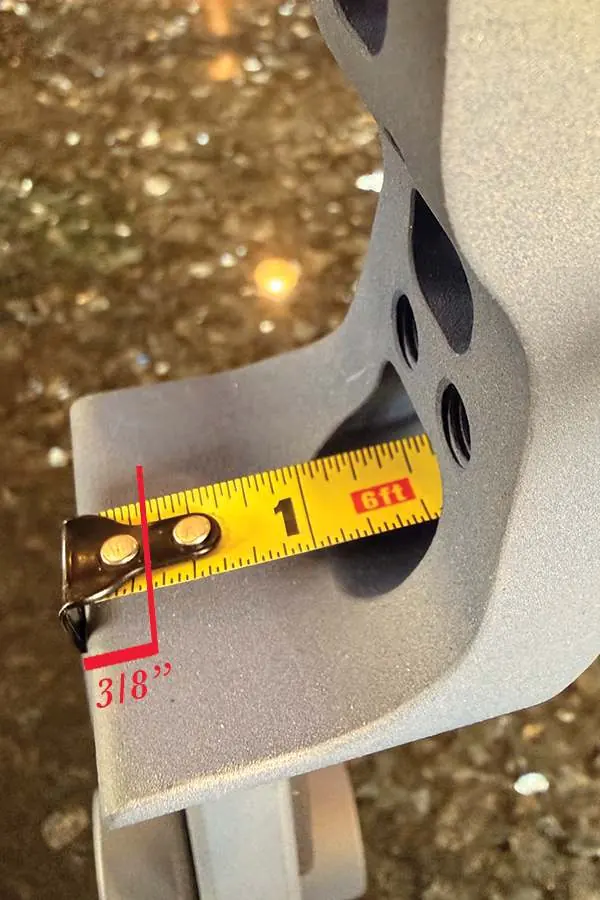
- Rough Tune: With the bow at rest, nock an arrow and measure the distance between the arrow and the end of the shelf. The center shot should be approximately 3/8” from the end of the shelf. Adjust the rest accordingly.
- Paper Tune: Shoot through paper to observe arrow flight. Adjust the rest up or down to achieve a bullet hole (field tip and nock are even or have a slight point-up tear).
- Walk Back Tune: Apply a vertical piece of tape to a target. Shoot at 20, 30, and 40 yards using the 20-yard pin. If groups drop vertically along the tape, the rest is tuned. If groups angle away, nudge the rest left or right until groups fall vertically.
Bow Case Specifications
The Apexx bow case is designed for rugged, waterproof protection.
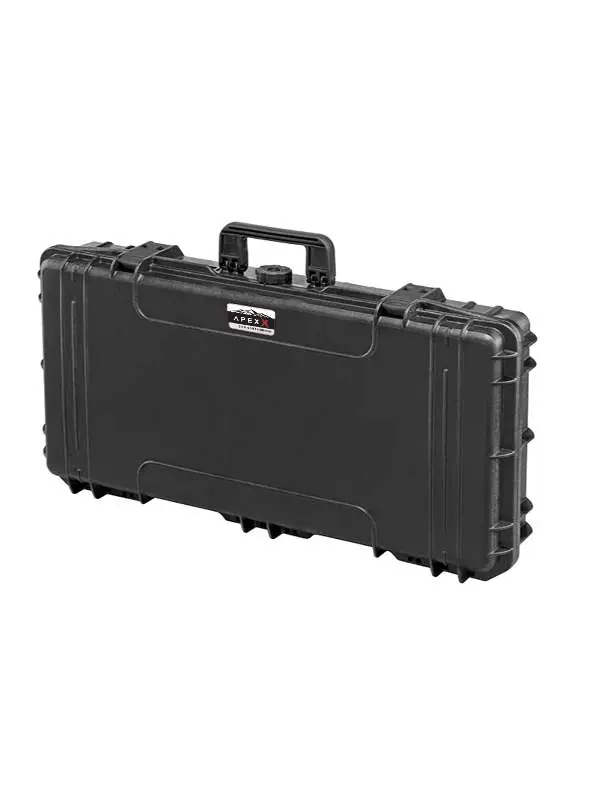
- Exterior Dimensions: 33.46” wide, 14.57” tall, 6.22” deep.
- Interior Dimensions: 31.49” wide, 14.57” tall, 5.51” deep.
Practical help
Common problems
Cam timing is off
Twist the cable on the side that is hitting early until the limb stops contact the limbs at the same time.
Arrow flight is not straight
Perform the 3-step tuning process: adjust rest to 3/8” from shelf, paper tune, and walk back tune.
Fraying D-loop
Replace the D-loop immediately to prevent failure.
Before use
- Examine limbs for cracks, nicks, or delamination
- Ensure all screws are tightened (Limb Stops, Mod, Cable Rod)
- Check e-clips for looseness
- Verify peep is tied securely
- Wipe down the bow to remove dust and dirt
Specs in practice
- Case Exterior
- 33.46” wide, 14.57” tall, 6.22” deep.
- Case Interior
- 31.49” wide, 14.57” tall, 5.51” deep.
Images and diagrams
- The center shot tuning diagram illustrates how to measure the 3/8” distance from the shelf using a tape measure.
Model compatibility
- Procedures are specific to the Apexx Predator bow.

Manual page author
David Miller
Documentation analyst
Organizes user manual content into clear summaries, with attention to model details, product context, and everyday usability.