Home Appliances / Commercial Kitchen Equipment
Buying Guide for Avantco, Mainstreet, and CPG Floor Fryers
A comprehensive buying guide for commercial floor fryers, covering tube, open pot, flat bottom, and electric models from Avantco, Mainstreet, and CPG. Includes details on oil capacities, ideal food types, and key advantages for each fryer...
Table of contents
Manual images
Click an image to enlargeBuying Guide Overview
This guide provides an overview of different types of commercial floor fryers to help you select the right equipment for your kitchen. It covers four main categories: Tube Floor Fryers, Open Pot Fryers, Flat Bottom Fryers, and Electric Floor Fryers.
Tube Floor Fryers
Tube fryers feature a series of tubes running through the oil near the bottom of the vat, which house gas-fired burners. These are submerged in the oil to provide even heating and high energy efficiency.
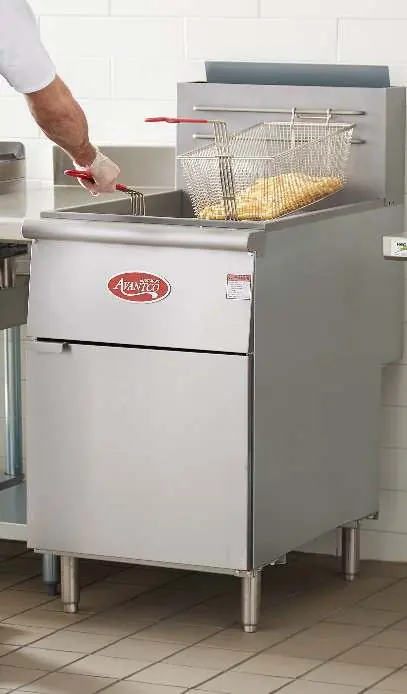
- Best for: High-sediment foods like fish, chicken wings, mozzarella sticks, French fries, and onion rings.
- Advantages: Large cold zones extend oil life, versatile, energy-efficient, great for high-sediment foods.
- Disadvantages: Tubes make the unit harder to clean; requires a higher percentage of oil.
- Oil Capacity: 40 lb., 50 lb., 100 lb.
Open Pot Fryers
Open pot fryers do not have tubes or burners inside the frypot. Instead, they use a heating element on the outside, which allows for 15% more frying capacity and easier cleaning.
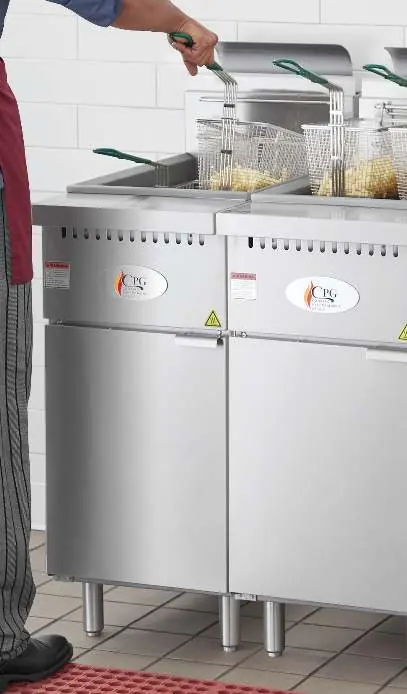
- Best for: Low-sediment foods like French fries and frozen items.
- Advantages: Extremely easy to clean (30% faster), 15% more frying capacity, less oil used in the cold zone, reliable burners.
- Disadvantages: Best used only for low-sediment foods; less energy-efficient.
- Oil Capacity: 40 lb., 50 lb.
Flat Bottom Fryers
These fryers feature a wide flat bottom design that reduces the cold zone, maximizing frying capacity for high-output operations.
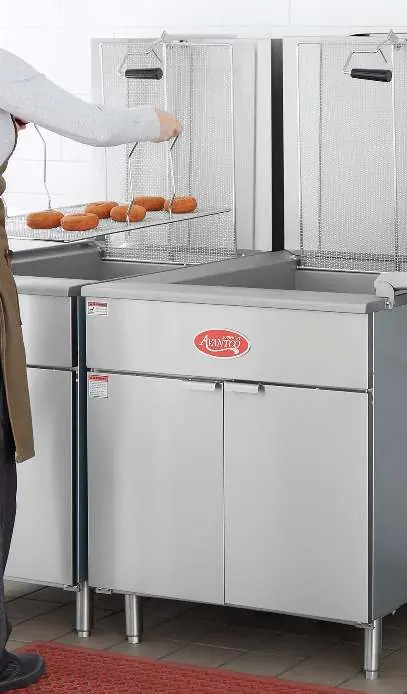
- Best for: Foods made of wet batter or dough, such as donuts, funnel cakes, tempura, and battered chicken.
- Advantages: Food does not stick and floats freely, maximizes frying capacity, includes a stainless steel drip tray that doubles as a lid.
- Disadvantages: Reduced cold zone; requires frequent filtering as sediment can burn easily.
- Oil Capacity: 125 lb., 170 lb.
Electric Floor Fryers
Electric fryers feature heating elements submerged directly in the oil, providing high heat efficiency and fast recovery times.
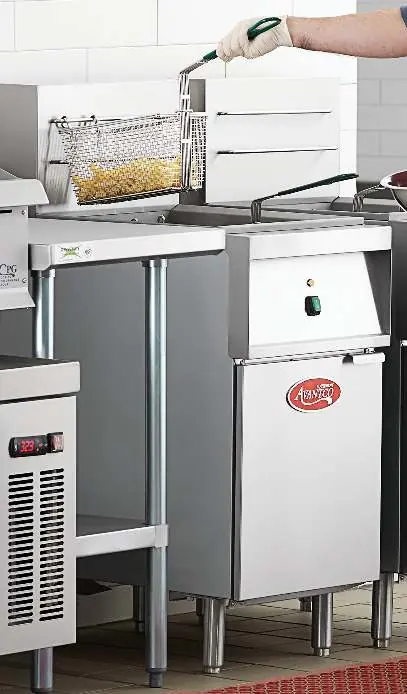
- Best for: Fish, chicken wings, mozzarella sticks, French fries, onion rings, and other frozen products.
- Advantages: Quick recovery, energy-efficient, extra-wide cold zones, affordable 14kW heating elements.
- Disadvantages: Hard to clean.
- Oil Capacity: 40 lb.
Manufacturer information
Avantco Equipment
Practical help
Common problems
Difficult cleaning process
Tube and electric fryers are harder to clean due to internal components; consider an open pot fryer if cleaning time is a priority.
Sediment burning
Flat bottom fryers have a reduced cold zone, meaning sediment can burn easily; ensure you filter the oil frequently.
Energy efficiency
Open pot fryers are generally less energy-efficient than tube fryers.
Before use
- Identify the sediment level of the food you intend to fry (high sediment vs. low sediment).
- Select a fryer type based on your frying volume and food type.
- Verify the oil capacity requirements for your operation.
- For electric models, ensure the correct voltage and phase (208V/240V, 1 or 3 phase) are available.
Specs in practice
- Oil Capacity
- The amount of oil the fryer holds, ranging from 40 lb. to 170 lb. depending on the model.
- Voltage/Phase
- Electrical requirements for electric fryers; must match your facility's power supply (e.g., 208V 1 Phase vs 240V 3 Phase).
Model compatibility
- Tube fryers are ideal for high-sediment foods.
- Open pot fryers are recommended for low-sediment foods.
- Flat bottom fryers are specifically designed for wet-battered foods.

Manual page author
Michael Turner
Technical manual editor
Reviews PDF manuals for structure, safety notes, and practical product details so readers can find the right information quickly.