Electronics / Cables & Adapters
Technical Specification Guide for Corning MIC Tight-Buffered Plenum Cables
Access the technical specifications, installation guidelines, and performance data for Corning MIC Tight-Buffered Plenum Cables (2-24 fibers). Includes temperature ranges, bend radii, and ordering information.
Table of contents
Manual images
Click an image to enlargeQuick Guide for Corning MIC Plenum Cables
This document provides technical specifications for the Corning MIC Tight-Buffered Plenum Cable family (2-24 fibers). These cables are designed for indoor backbone and horizontal installations, featuring an all-dielectric construction that requires no grounding or bonding. The cables utilize 900 µm buffered fibers for easy stripping and termination.
Environmental Specifications
Ensure the cable is stored and installed within the following temperature ranges to maintain performance:
- Storage: -40°C to 70°C (-40°F to 158°F)
- Installation: 0°C to 60°C (32°F to 140°F)
- Operation: 0°C to 70°C (32°F to 158°F)
Note: Corning recommends storing the cable in a proper temperature environment prior to installation to allow the cable temperature to meet installation specifications.
Mechanical Characteristics
The cable's mechanical performance depends on the fiber count. Always adhere to the minimum bend radius specifications provided in the technical tables for both installation and operation to ensure signal integrity and prevent damage to the fibers.
Ordering Information
Cables are available in 12 different jacket colors (blue, orange, green, brown, slate, white, red, black, yellow, violet, rose, and aqua) for easy visual identification. Black is the standard jacket color. For custom orders or specific part number configurations, contact Customer Care at 1-800-743-2675.
Standards and Compliance
These cables meet the application requirements of the National Electrical Code (NEC) Article 770 and are OFNP and FT-6 listed. They are designed for plenum, riser, and general building applications.
Manufacturer information
Corning Optical Communications
Practical help
Common problems
Signal loss or fiber damage during installation
Ensure the cable is not bent beyond the specified minimum bend radius for installation and operation.
Cable temperature outside of range
Store the cable in a controlled environment before installation to ensure it reaches the required 0°C to 60°C installation temperature range.
Before use
- Verify the required fiber count (2-24 fibers).
- Confirm the fiber type (Multimode OM1-OM4 or Single-mode SMF-28).
- Check that the installation environment is between 0°C and 60°C.
- Ensure appropriate tools are available for 900 µm buffered fiber stripping.
- Identify the required jacket color for your application.
Specs in practice
- Min. Bend Radius (Installation)
- The minimum radius the cable can be bent during the installation process without causing permanent damage or signal loss.
- Max. Tensile Strength
- The maximum pulling force the cable can withstand during installation (short-term) and while in place (long-term).
Images and diagrams
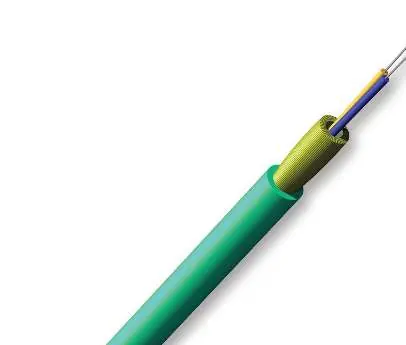
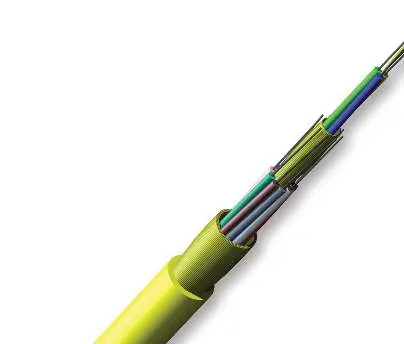
- The cable cross-section diagram illustrates the flame-retardant outer jacket, dielectric strength members, and the tight-buffered fibers.
Model compatibility
- Compatible with NEC OFNP and FT-6 standards.
- Suitable for plenum, riser, and general building environments.
- Available in 12 jacket colors for identification.

Manual page author
Emily Carter
User documentation editor
Prepares concise manual descriptions and highlights the most useful setup, operation, and maintenance information for readers.