Home Appliances / Cookers & Ranges
User Manual for Defy Kitchenaire Multifunction Solid Plate Stove DSS 697
Quick guide for the Defy Kitchenaire Multifunction Solid Plate Stove DSS 697. Includes installation, anti-tilt setup, oven operation modes, cleaning, and troubleshooting.
Table of contents
Manual images
Click an image to enlargeQuick Guide
This manual provides essential instructions for the safe and efficient operation of your Defy Kitchenaire stove. Always ensure the appliance is installed by a qualified electrician and that the anti-tilt mechanism is fitted to prevent accidents. For daily use, ensure the oven door is closed during grilling and that you use appropriate cookware for the solid plates.
Installation
The stove must be installed by a licensed electrician. Ensure the appliance is earthed and connected to an all-pole isolating switch with a minimum 3 mm contact clearance. Surfaces adjacent to the oven must withstand temperatures up to 100°C.
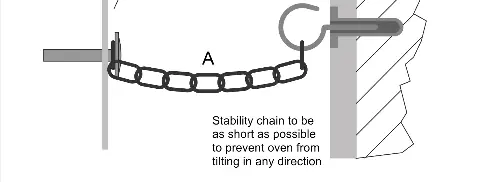
Anti-tilt Mechanism: Safety regulations require the anti-tilt mechanism to be fitted. This involves securing a stability hook (B) to the wall and engaging the stability chain (A) attached to the rear of the stove. This prevents the stove from tipping if downward pressure is applied to an open oven door.
Operating the Oven
The oven features multiple operating modes selectable via the function knob:
- Defrost: Fan only, no heat.
- Conventional Bake: Top and bottom elements.
- Fan Assisted Cooking: Even heat distribution for multi-shelf cooking.
- Thermofan Heating: Rear heater with fan for multi-tray cooking.
- Static Bake & Steam Assisted Clean: Bottom element only.
- Turbo Grill: For small/medium portions.
- Full Grill: For large amounts of meat.
- 3D Function: Top, bottom, and Thermofan heating combined.
Baking and Grilling Tips: Always preheat the oven if required. For grilling, use the wire shelf and place the roast pan on a lower rack to collect fats. Keep the oven door closed during grilling.
Solid Plates
Before first use, switch plates on for 4 minutes at the highest setting to burn in the protective coating. Use pots with a solid, level base slightly larger than the plate for maximum efficiency. Clean spills immediately to prevent corrosion. Periodically apply sewing machine oil or electrical hotplate polish to prevent rust.
Maintenance and Cleaning
Switch off the electrical power supply before cleaning. Use a damp, hot soapy cloth for general cleaning. Avoid steam cleaners, abrasive powders, and metal scourers.
Steam Assisted Cleaning: Pour 100 ml of water into the emboss on the oven floor, select the steam cleaning function, and run for 5 minutes. Wait 5 minutes before opening the door to wipe clean.
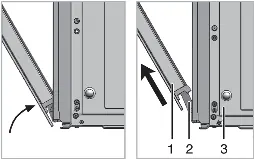
Oven Door Removal: The door can be removed for easier access. Open the door, push down the clips at the hinge housing on both sides, move the door to a half-open position, and pull upwards to release.
Troubleshooting
If the appliance does not operate, check the mains fuse and wall switch. If the oven does not heat, ensure the function and temperature knobs are correctly set. Steam emission and metal noises during heating/cooling are normal.
Practical help
Common problems
Oven emits steam during use
This is normal operation.
Appliance emits metal noises
This is caused by expansion of metal parts during heating/cooling and is normal.
Appliance does not operate
Check the mains distribution board for tripped circuit breakers and ensure the wall switch is on.
Oven light does not work
The lamp may be defective; replace with a 25W bulb rated for 300°C.
Oven does not heat
Ensure the function and temperature knobs are set to the desired positions.
Before use
- Remove all packaging from the oven cavity.
- Ensure the appliance is earthed by a qualified electrician.
- Install the anti-tilt mechanism.
- Burn in solid plates for 4 minutes on the highest setting.
- Ensure the room is well-ventilated if using gas (if applicable).
Specs in practice
- Voltage / frequency
- 220-240V~ 50 Hz
- Max power consumption
- 8211 W
- Energy efficiency class
- A
Images and diagrams
- Anti-tilt mechanism: Shows the stability chain (A) and hook (B) connection to the wall.
- Oven door removal: Illustrates the hinge clip mechanism and the angle for removal.
Model compatibility
- Use pots with a solid, level base.
- Pot base diameter should be slightly larger than the hotplate.
- Always cover pots with a lid to conserve energy.

Manual page author
Emily Carter
User documentation editor
Prepares concise manual descriptions and highlights the most useful setup, operation, and maintenance information for readers.