Tools / Woodworking Tools
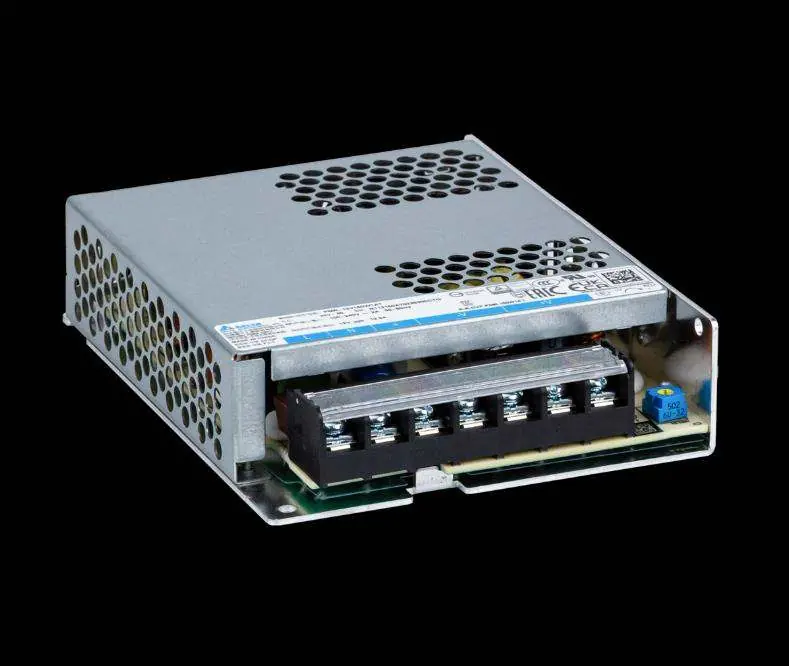
User Manual for Delta PMR 150W Series Panel Mount Power Supply
Quick guide for the Delta PMR 150W series panel mount power supply. Includes installation instructions, safety warnings, technical specifications, and protection features.
Table of contents
Manual images
Click an image to enlargeQuick guide from the manual
The Delta PMR 150W series is a panel mount power supply designed for industrial and household applications. It features a universal AC input, compact 1U low-profile design, and wide operating temperature range (-40°C to +70°C). Key operational requirements include proper mounting on a grounded metal surface, maintaining a 50mm clearance for convection cooling, and using appropriate wire gauges (AWG 18-12).
Product Description
The PMR 150W series provides nominal output voltages of 12V, 24V, 36V, or 48V. It includes built-in active PFC, overvoltage protection, overload protection, and over-temperature protection. The unit is housed in an aluminum chassis with an SGCC cover and includes a green DC OK LED indicator.
Installation and Mounting
Mounting Requirements:
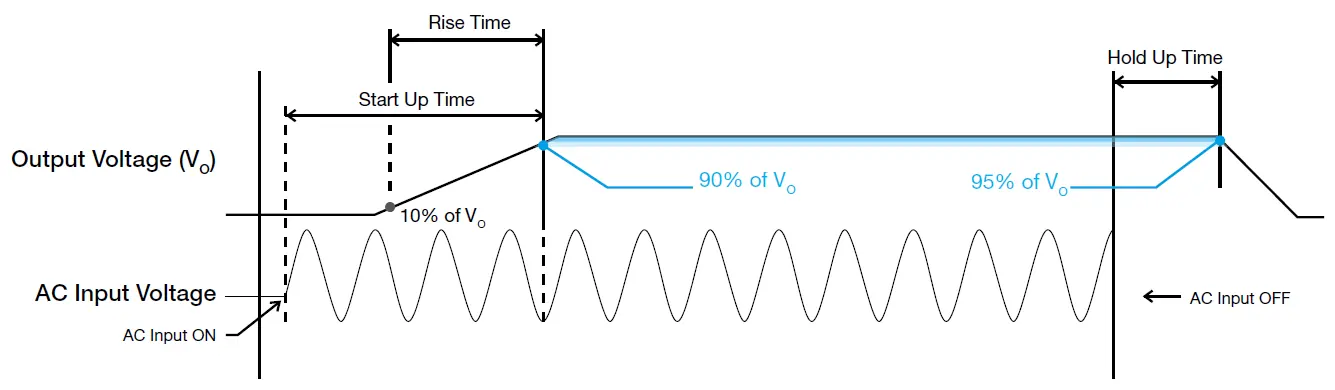
- Mount the power supply onto a grounded metal surface.
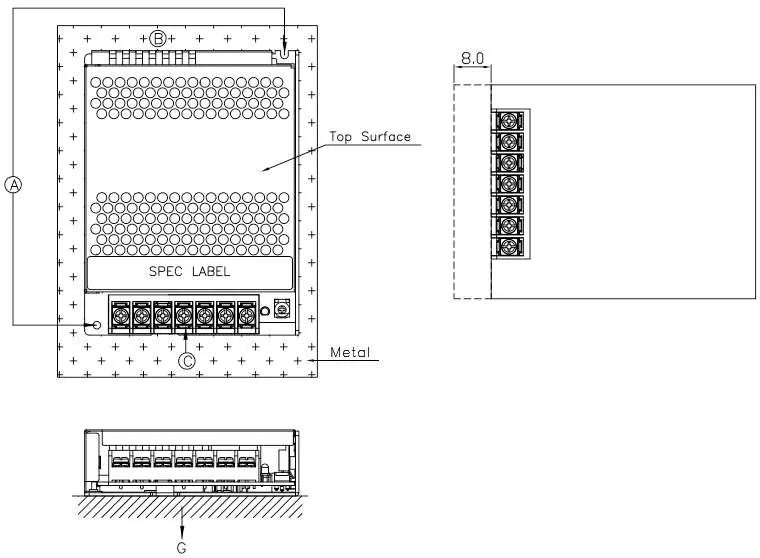
- Use M3 screws for base mounting.
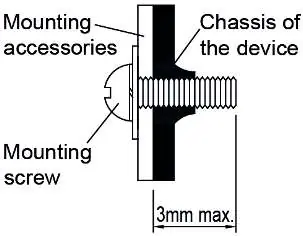
- Ensure the screw depth does not exceed 3mm to maintain a safe distance from internal components.
- Recommended mounting tightening torque is 4-5 Kgf.cm.
- Maintain a safety distance of at least 50mm from all ventilated surfaces to ensure sufficient convection cooling.
- Do not place the device on low thermal conductive surfaces like plastics.
Wiring:
- Use flexible cable (stranded or solid) of AWG 18-12.
- Calculate wire specification based on the actual output current.
- The torque at the connector must not exceed 8 Kgf.cm.
- Insulation stripping length should not exceed 7mm.
Safety Instructions
- Do not touch the device while in operation or immediately after power is turned off due to the risk of burning.
- Do not touch terminals while power is being supplied to avoid electric shock.
- Prevent foreign metal particles or conductors from entering the device openings.
- If mounting orientation differs from recommended guidelines, consult the manufacturer.
Technical Specifications
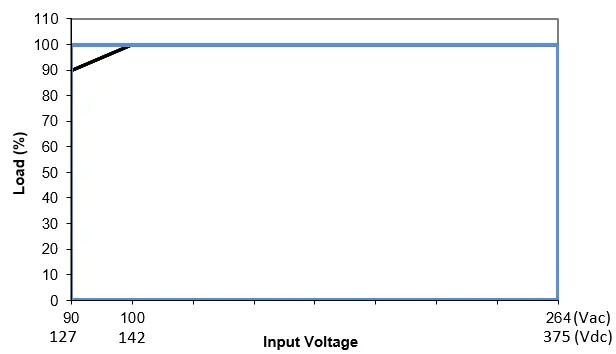
- Input Voltage: 90-264 Vac (127-375 Vdc).
- Operating Temperature: -40°C to +70°C.
- Cooling System: Convection.
- MTBF: > 700,000 hours (Telcordia SR-332).
- Protection: Overvoltage (Latch Mode), Overload/Overcurrent (Hiccup Mode), Over Temperature (Latch Mode), Short Circuit (Hiccup Mode).
Protections and Functions
Overload & Overcurrent (OLP/OCP): Activated when output current exceeds 110% of max load. The unit enters "Hiccup mode" (Auto-Recovery) until the fault is removed.
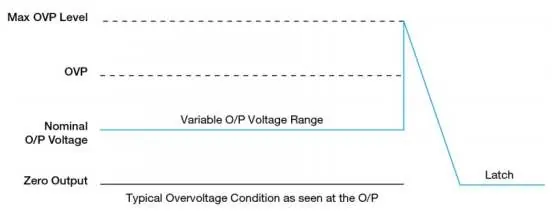
Overvoltage Protection (OVP): Activated if internal feedback fails. The unit enters "Latch mode" and requires removal and re-application of AC input power to restart.
Over Temperature Protection (OTP): Activated if operating temperature exceeds limits. The unit enters "Latch mode" until the temperature drops to normal operating levels.
Official resources from the manual
Practical help
Common problems
Power supply latches off (Over Temperature Protection)
Ensure ambient temperature is within limits or reduce the load. The unit will restart once the temperature drops.
Output voltage drops or unit enters Hiccup mode
Check for short circuits or overload conditions (load > 110%). The unit will auto-recover once the fault is removed.
Device becomes very hot
Ensure at least 50mm clearance around ventilated surfaces for convection cooling.
Before use
- Verify input voltage is within 90-264 Vac.
- Ensure the mounting surface is metal and properly grounded.
- Use M3 screws for mounting (max 3mm depth).
- Use AWG 18-12 wire for connections.
- Maintain 50mm clearance around ventilated surfaces.
- Check that the output voltage adjustment is within the specified range.
Images and diagrams
- Fig 3: Illustrates mounting hole locations and assembly reference for base mounting.
- Fig 4: Shows the correct mounting screw depth (max 3mm) to avoid internal damage.
Model compatibility
- Certified for industrial and household applications (IEC/EN 62368-1, 60335-1, 61558-1).

Manual page author
David Miller
Documentation analyst
Organizes user manual content into clear summaries, with attention to model details, product context, and everyday usability.