Automotive / Towing Accessories
DK2 10HYW, 15HYW, 20HYW Hydraulic Winch
A comprehensive guide for the DK2 10HYW, 15HYW, and 20HYW hydraulic winches. This manual covers safety precautions, installation procedures, hydraulic and electrical wiring, operation instructions, and maintenance.
Table of contents
Manual images
Click an image to enlargeQuick guide from the manual
This manual provides essential instructions for the DK2 hydraulic winch series. Before operating, ensure the clutch is fully engaged, check fluid levels, and verify that at least 5 wraps of cable remain on the drum. Always operate with caution, keeping hands away from the fairlead and never lifting loads over people.
Safety Warnings
- Keep children away from the work area.
- Wear impact safety goggles and a face shield if producing debris.
- Do not operate the winch if you are tired or under the influence of alcohol or drugs.
- Inspect the winch for damaged parts before use.
- Never cross over or under the cable while it is under load.
- Always use a glove when handling the cable.
Installation
Mounting: Mount the winch to a solid part of the vehicle (front or rear) using high-strength cap screws. Ensure the winch is aligned and secured so the rated load is evenly distributed.
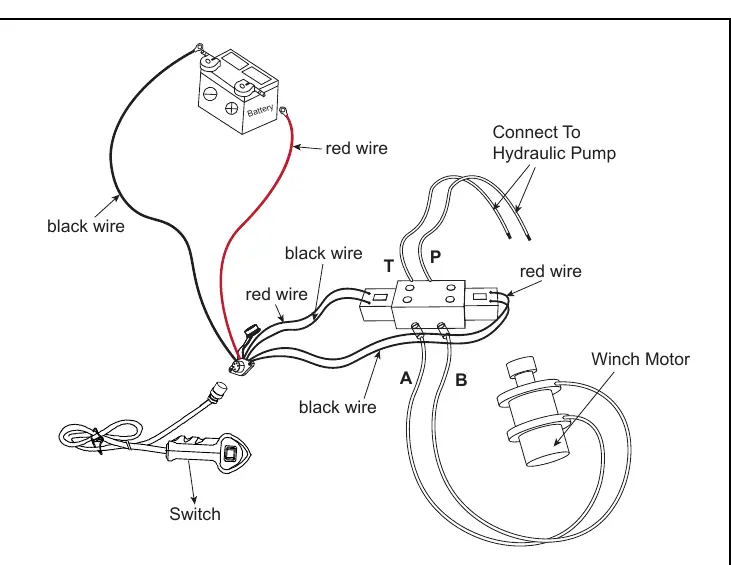
Solenoid Valve: Mount the directional solenoid valve away from extreme heat sources like exhaust manifolds or turbos. Use the supplied bracket and screws.
Electrical Connections: Connect the two-color positive battery cables from the female connector to the positive terminal of the 12/24V battery. Mount the female 3-pole plug connector on the front grill.
Hydraulic and Plumbing Connections
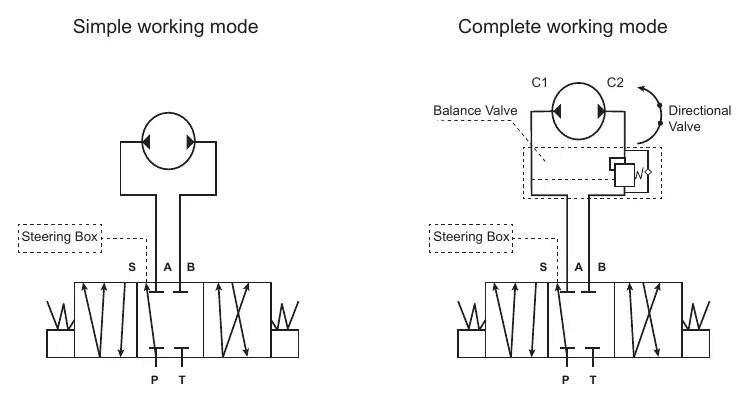
Keep hoses away from extreme heat and avoid rubbing against abrasive surfaces. Use 90-degree fittings if necessary for flexibility. Install O-ring fittings supplied to the valve and winch motor. Connect ports as follows: Port A (motor/balance valve) to Port A (directional valve), Port B (motor/balance valve) to Port B (directional valve), Port P (directional valve) to pump high-pressure port, and Port T (directional valve) to the reservoir.
Operation
- Disengage the clutch by turning it to the OUT position.
- Pull the cable to the desired length and attach it to the load.
- Re-engage the clutch by turning it to the IN position.
- Connect the switch assembly to the female connector.
- Press and hold the red button on the switch to operate.
Maintenance and Troubleshooting
Lubrication: Moving parts are lubricated at the factory with high-temperature lithium grease. Periodically lubricate the cable assembly with light penetrating oil.
Troubleshooting: If the winch does not turn, check electrical connections and ensure the switch is fully inserted. If the motor runs but the drum does not turn, ensure the clutch is engaged. If the winch runs slowly, check for insufficient fluid or incorrect balance valve direction.
Practical help
Common problems
Winch does not turn
Check electrical connections and ensure the switch assembly is fully inserted into the connector.
Motor runs but cable drum does not turn
Ensure the clutch is fully engaged in the IN position.
Winch runs slowly or lacks power
Check fluid levels, ensure the system is purged of air, or verify the balance valve is connected in the correct direction.
Switch assembly works backwards
Exchange the blue and yellow wire connectors at the solenoid of the directional valve.
Before use
- Ensure the clutch is fully engaged.
- Check hydraulic fluid levels.
- Verify at least 5 full wraps of cable remain on the drum.
- Inspect cable for signs of weakening, knots, or kinks.
- Ensure the vehicle is secured before using the winch.
Specs in practice
- Single line pull
- The maximum weight capacity the winch can pull on a single line.
- Mounting bolt pattern
- The specific dimensions required for mounting the winch to the vehicle.
Images and diagrams
- Hydraulic principle chart: Illustrates simple vs. complete working modes for hydraulic connections.
- Installation illustration: Shows the routing of hydraulic lines and electrical wiring for different pump configurations.
- Hydraulic wiring diagram: Details the connection between the battery, switch, solenoid, and motor.
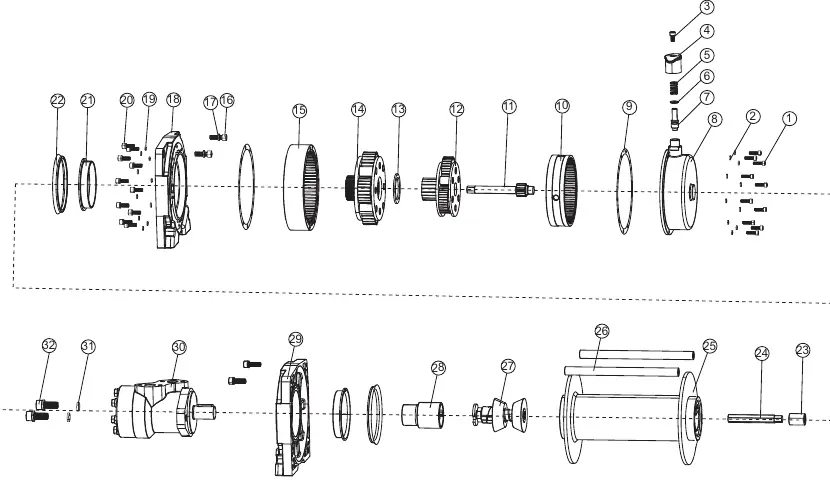
- Parts list diagram: Exploded view showing all components for assembly and maintenance.
Model compatibility
- The winch can be powered by an individual pump or the vehicle's existing power steering pump.
- If using a balance valve, ensure the installation direction meets the hydraulic principle chart requirements.
- The winch is sealed and can be used underwater.

Manual page author
Michael Turner
Technical manual editor
Reviews PDF manuals for structure, safety notes, and practical product details so readers can find the right information quickly.