Automotive / Towing Accessories
Warrior 12000 / 12000-SR Electrical Winch User Manual
Quick guide for the Warrior 12000 / 12000-SR electrical winch. Includes assembly, wiring, safe operation, rigging techniques, maintenance, and troubleshooting.
Table of contents
Manual images
Click an image to enlargeQuick guide from the manual
The Warrior 12000 / 12000-SR is a powerful electrical winch designed for intermittent use. Safety is paramount: never use the winch for overhead lifting or moving people. Always maintain a safe distance from the cable when under tension, and ensure at least five wraps of cable remain on the drum to hold the rated load. The winch is designed for intermittent duty; if the motor becomes hot, stop winching immediately and allow it to cool.
Winch Assembly and Mounting
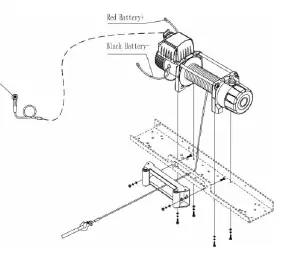
The winch features a standard bolt pattern compatible with most mounting kits. Ensure the winch is mounted on a flat surface to keep the motor, drum, and gear housing properly aligned. Connect the roller fairlead to the mounting channel using the provided bolts, washers, and nuts. When assembling the winch to the channel, ensure the clutch is in the 'Off' (Free Spooling) position to allow cable movement.
Wiring Connections
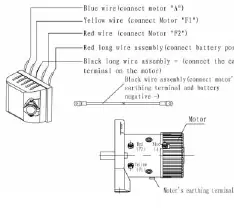
Proper electrical connection is critical. The winch requires a 12V or 24V battery. Connect the motor leads as follows: Blue wire to motor 'A', Yellow wire to motor 'F1', Red wire to motor 'F2', and the Black wire assembly to the motor's earthing terminal and the battery negative. Ensure all connections are tight and free of corrosion.
Safe Operation and Rigging
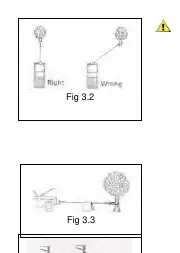
Before operating, inspect the wire rope and mounting bolts. Always wear gloves when handling the cable. To perform a pull, disengage the clutch, pull out the required length of cable, and secure the hook to an anchor point using a sling or chain—never attach the hook back onto the cable itself. Use a snatch block for heavy loads (over 10,000 lbs) to reduce the load on the winch by approximately 50%. Always keep the vehicle engine running during operation to minimize battery drain.
Maintenance
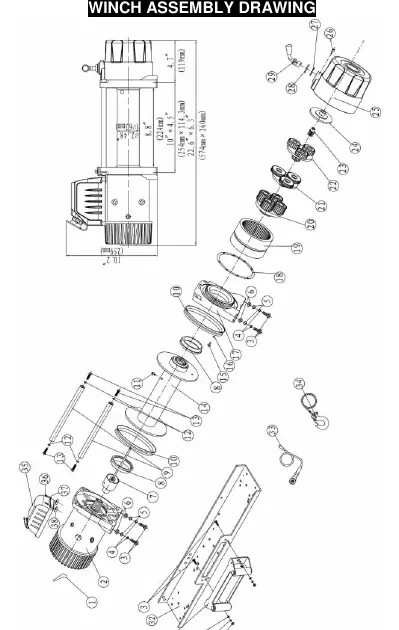
Periodically check the tightness of all mounting bolts and electrical connections. Keep the winch clean and free of dirt or corrosion. Do not attempt to disassemble the gear box, as it is sealed at the factory and lubricated with high-temperature lithium grease. If the wire rope shows signs of wear or broken strands, replace it immediately with an identical replacement part.
Practical help
Common problems
Motor does not turn on
Check switch assembly connection, tighten battery cable connections, or check for voltage at the armature port.
Motor runs but cable drum does not turn
Ensure the clutch is engaged in the 'In' position.
Motor runs slowly or lacks power
Battery may be weak; recharge or run the winch with the vehicle engine running. Check for loose or corroded battery cable connections.
Motor overheating
Winch running time is too long; allow the winch to cool down periodically.
Before use
- Inspect wire rope for fraying or damage.
- Check that all mounting bolts are tight.
- Ensure at least 5 wraps of cable are on the drum.
- Wear gloves when handling the cable.
- Clear the area of spectators.
- Ensure the vehicle is in neutral with the emergency brake released (when winching).
Specs in practice
- Rated line pull
- 12000 lbs (5443 Kgs) on the first rope layer.
- Gear reduction ratio
- 230:1.
Images and diagrams
- Wiring diagram: Shows specific connections for Blue, Yellow, Red, and Black wires to the motor terminals.
- Assembly diagram: Illustrates the mounting channel, bolt pattern, and orientation of the winch components.
- Rigging diagrams: Show correct vs. incorrect anchor points and the use of snatch blocks for double-line pulls.
Model compatibility
- Designed for 12V or 24V DC power systems.
- Intermittent use only; do not use for constant duty applications.
- Not for overhead lifting or moving people.

Manual page author
Emily Carter
User documentation editor
Prepares concise manual descriptions and highlights the most useful setup, operation, and maintenance information for readers.