Automotive / Garage Equipment
Sealey 1153SUV 3 Tonne Trolley Jack
Quick guide for the Sealey 1153SUV 3 Tonne Trolley Jack. Includes safety instructions, operating procedures, maintenance tips, and troubleshooting steps for lifting SUVs and vehicles.
Table of contents
Manual images
Click an image to enlargeQuick Guide from the Manual
The Sealey 1153SUV is a high-lift, long-reach trolley jack designed for SUVs, cars, and light commercial vehicles. Before first use, it is critical to purge the hydraulic system of air. Always use the jack on level, solid ground and support the vehicle with axle stands immediately after lifting, as the jack is a lifting device only and not intended for supporting loads.
Safety Precautions
- Always use the jack on level, solid ground (preferably concrete). Avoid tarmacadam.
- Ensure the vehicle handbrake is engaged and the engine is off.
- Place wedges under the vehicle wheels.
- Ensure a minimum distance of 0.5m between the vehicle and static objects.
- Never exceed the rated capacity of 3 Tonne.
- Never work under the vehicle until axle stands have been correctly positioned.
- Do not use the jack to move the vehicle.
- Do not adjust the safety overload valve.
Specifications
- Capacity: 3 Tonne
- Length: 625 mm
- Max. Chassis Height: 160 mm
- Max. Saddle Height: 533 mm
- Min. Saddle Height: 192 mm
Operation
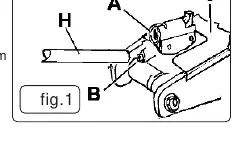
Before First Use
Purge the hydraulic unit to eliminate air:
- Place the handle onto the release valve (B) and turn anti-clockwise to open.
- Place the handle into the jacking point (A) and pump for 30 to 40 seconds.
- Close the release valve by turning clockwise.
Jacking the Vehicle
- Ensure the release valve is closed (turn clockwise).
- Place the handle into the socket (A) and pump until the saddle reaches the vehicle lifting point.
- Verify the lifting point is stable and centered on the saddle before raising the vehicle.
Lowering the Vehicle
- Raise the jack slightly to remove axle stands.
- Place the handle on the release valve (B) and turn anti-clockwise very slowly.
- Control the descent speed by the amount you turn the handle; avoid sudden changes.
Maintenance
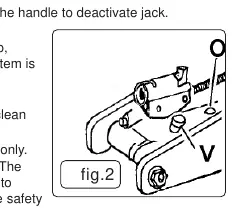
- Storage: Keep the jack in the lowered position when not in use.
- Cleaning: Keep the jack clean and lubricate moving parts regularly.
- Inspection: Before each use, check for broken, cracked, or loose parts.
- Oil Replacement: Replace the oil after one year to extend the jack's life. Use only hydraulic jack oil.
- Checking Oil Level: Lower the jack fully, remove the front cover plate and filler plug. The correct level is the bottom of the filler hole. Pump 5-6 times to expel air after refilling.
Troubleshooting
If the jack fails to operate correctly, check the following:
- Jack will not lift: Check for overload, low oil level, or air in the system. Ensure the release valve is fully closed.
- Jack feels spongy: Likely air in the system or incorrect oil level.
- Jack will not hold load: Release valve may be partially open, or there is dirt on the valve seats.
- Jack will not lower completely: May require lubrication, or the frame/link system is distorted due to overloading.
Manufacturer information
Sealey Group
Practical help
Common problems
Jack will not lift the load
Check for overload, low oil level, or air in the system. Ensure the release valve is fully closed.
Jack feels spongy
Air in the system or incorrect oil level. Purge the system by pumping the handle 15-20 times with the release valve open.
Jack will not hold load
Release valve may be partially open or dirt is on the valve seats. Clean valve seats or close the valve fully.
Jack will not lower completely
Unit may require lubrication, or the frame/link system is distorted due to overloading.
Before use
- Ensure the jack is on level, solid ground (not tarmacadam).
- Check that the vehicle handbrake is engaged and the engine is off.
- Verify the lifting point is stable and centered on the saddle.
- Purge the hydraulic unit of air before first use.
- Inspect for broken, cracked, or loose parts.
Specs in practice
- Capacity: 3 Tonne
- The maximum weight the jack is designed to lift safely.
- Max. saddle height: 533 mm
- The highest point the saddle can reach for lifting.
- Min. saddle height: 192 mm
- The lowest point the saddle can reach, useful for clearance.
Images and diagrams
- Fig 1: Illustrates handle placement on the release valve (B) and jacking point (A).
- Fig 2: Shows the location of the filler plug (O) and safety overload valve (V) for maintenance.
Model compatibility
- Suitable for SUVs, cars, and light commercial vehicles requiring high ground clearance.
- Always use axle stands to support the load; the jack is a lifting device only.

Manual page author
Emily Carter
User documentation editor
Prepares concise manual descriptions and highlights the most useful setup, operation, and maintenance information for readers.