Automotive / Electric Vehicles
Toyota 1ZZ-FE Engine Fuel System Service Manual
Technical service guide for the Toyota 1ZZ-FE engine fuel system, detailing the fuel returnless architecture, ORVR system operation, and fuel tank overfill check valve mechanics.
Table of contents
Manual images
Click an image to enlargeImportant Information
This document provides technical specifications and operational descriptions for the fuel system of the Toyota 1ZZ-FE engine. It covers the fuel returnless system, the On-Board Refueling Vapor Recovery (ORVR) system, and the operation of the fuel tank overfill check valve. This information is intended for service and maintenance reference.
Fuel System Overview
The 1ZZ-FE engine utilizes a fuel returnless system designed to reduce evaporative emissions. Key features include:
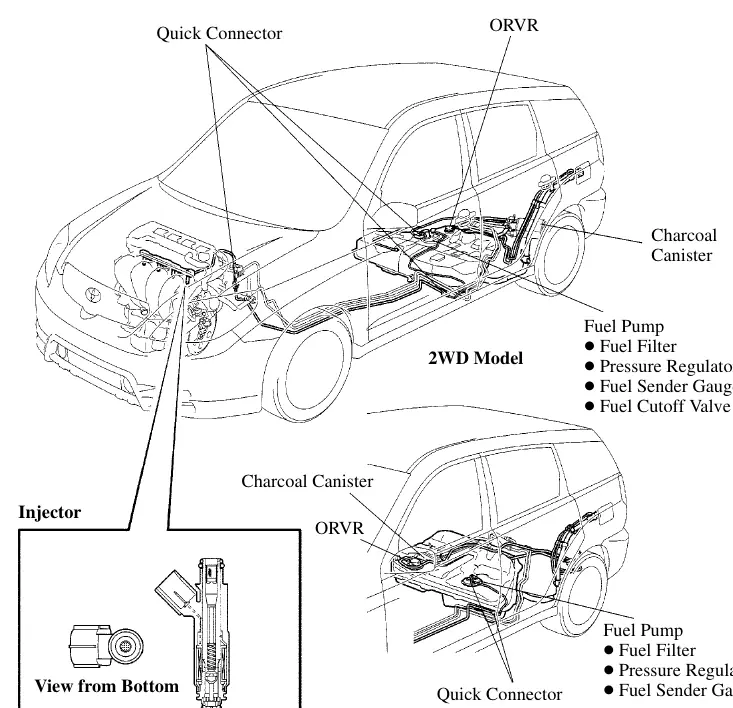
- Fuel Cut Control: Automatically stops the fuel pump when the SRS airbag is deployed during a front or side collision.
- Quick Connectors: Used to connect the fuel pipe with the fuel hose for improved serviceability.
- Fuel Injectors: Uses a compact 12-hole type injector to increase fuel atomization.
Configuration Differences:
- 2WD Models: Feature a compact fuel pump assembly that integrates the fuel filter, pressure regulator, fuel sender gauge, and fuel cutoff valve.
- 4WD Models: Feature a compact fuel pump assembly that integrates the fuel filter, pressure regulator, and fuel sender gauge.
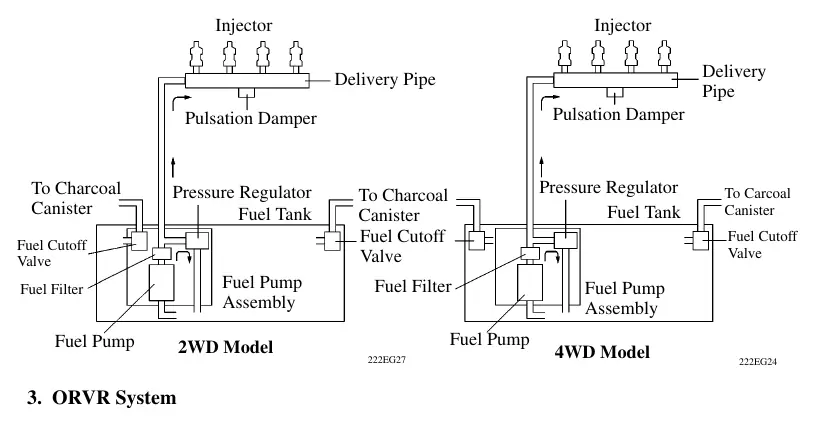
Fuel Returnless System
This system is designed to reduce evaporative emissions by discontinuing the return of fuel from the engine area, which also prevents the temperature from rising inside the fuel tank.
ORVR (On-Board Refueling Vapor Recovery) System
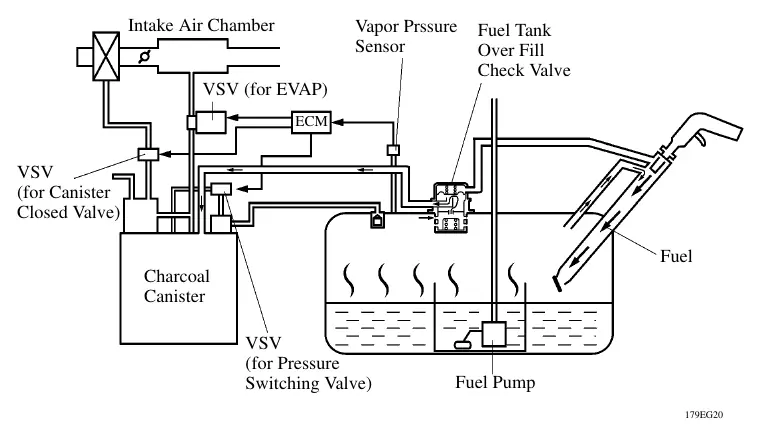
The ORVR system uses an onboard charcoal canister to recover fuel vapor generated during refueling, significantly reducing the discharge of fuel vapor into the atmosphere.
Fuel Tank Over Fill Check Valve
The operation of the check valve is as follows:
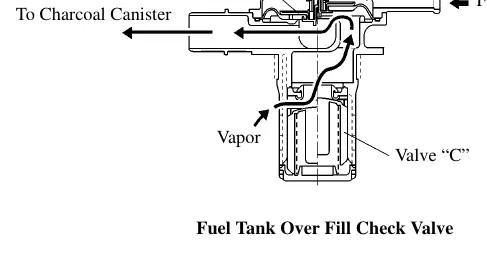
- During Refueling: When the fuel tank cap is removed, atmosphere is applied to the valve's chamber "A". As internal pressure increases, vapor flows to the charcoal canister while valve "B" is closed, allowing the vapor to be absorbed.
- When Tank is Full: Valve "C" closes, shutting off the passage to the charcoal canister to prevent overfilling.
Manufacturer information
Toyota Motor Corporation
Practical help
Common problems
Fuel pump remains active after a collision
The system is designed to cut fuel pump power upon SRS airbag deployment. If the pump remains active, inspect the SRS system and the fuel cut control circuit.
Fuel vapor discharge during refueling
Ensure the ORVR system and charcoal canister are functioning correctly. Check the fuel tank overfill check valve for proper operation.
Before use
- Identify if the vehicle is 2WD or 4WD to determine the correct fuel pump assembly configuration.
- Inspect the fuel pipe quick connectors for secure attachment.
- Verify the integrity of the charcoal canister for vapor recovery.
- Check the fuel tank overfill check valve if refueling issues persist.
Specs in practice
- 12-hole injector
- A design used to increase fuel atomization, improving combustion efficiency.
- Fuel Returnless System
- A system that eliminates fuel return lines to the tank, reducing evaporative emissions and fuel temperature rise.
Images and diagrams
- The fuel system diagram illustrates the routing of fuel lines and the integration of components like the fuel filter and pressure regulator within the pump assembly.
- The ORVR diagram shows the path of fuel vapors from the tank to the charcoal canister and the intake air chamber.
- The check valve diagram details the internal chambers and valves (B and C) that manage vapor flow during refueling.
Model compatibility
- The fuel pump assembly configuration is specific to the drivetrain (2WD vs 4WD). Ensure the correct parts are used for the specific model.

Manual page author
Michael Turner
Technical manual editor
Reviews PDF manuals for structure, safety notes, and practical product details so readers can find the right information quickly.