Automotive / Brake Systems
Brake Pedal Inspection Guide for 2000 Toyota Tacoma
Step-by-step guide for inspecting and adjusting the brake pedal on a 2000 Toyota Tacoma, including specifications for pedal height, freeplay, and reserve distance.
Table of contents
Manual images
Click an image to enlargeImportant Inspection Information
This document provides the official on-vehicle inspection and adjustment procedures for the brake pedal on a 2000 Toyota Tacoma. It covers critical measurements including pedal height, freeplay, and reserve distance. Always ensure the vehicle is on a level surface and follow safety protocols when working on the brake system.
Brake Pedal Height Inspection and Adjustment
Inspection: Measure the pedal height from the asphalt seat. The standard height is 154.6 – 164.6 mm (6.087 – 6.480 in.).
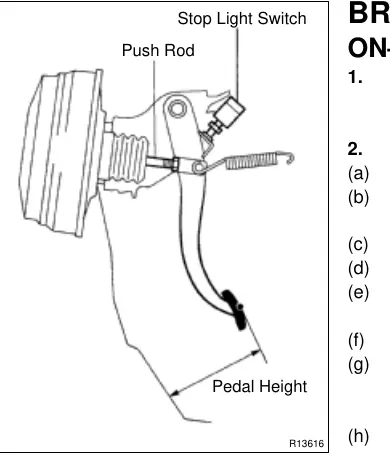
Adjustment Procedure:
- Disconnect the connector from the stop light switch.
- Loosen the stop light switch lock nut and remove the stop light switch.
- Loosen the push rod lock nut.
- Adjust the pedal height by turning the pedal push rod.
- Tighten the push rod lock nut to 25 N·m (260 kgf·cm, 19 ft·lbf).
- Install the stop light switch.
- Push the brake pedal in 5 – 15 mm (0.20 – 0.59 in.) and turn the stop light switch to lock the nut in the position where the stop light goes off.
- Push the brake pedal in 5 – 15 mm (0.20 – 0.59 in.) and verify that the stop light illuminates.
- After adjustment, check the pedal freeplay.
Pedal Freeplay Inspection
Procedure:
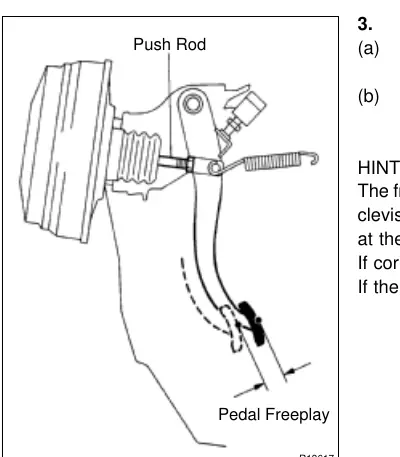
- Stop the engine and depress the brake pedal several times until all vacuum is removed from the booster.
- Push the pedal by hand until the second resistance is felt and measure the distance.
- The standard pedal freeplay is 3 – 6 mm (0.12 – 0.24 in.).
Note: The freeplay to the first resistance is due to play between the clevis and pin, magnified up to 1 – 3 mm at the pedal. If the freeplay is correct, check the stop light switch clearance (0.5 – 2.4 mm). If clearance is correct but issues persist, troubleshoot the brake system.
Pedal Reserve Distance Inspection
Procedure:
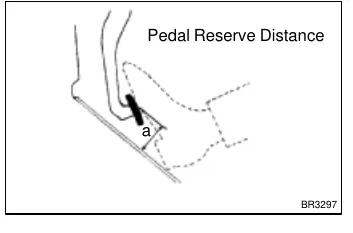
- Release the parking brake.
- With the engine running, depress the pedal and measure the reserve distance.
- The standard pedal reserve distance at 490 N (50 kgf, 110.2 lbf) is more than 72 mm (2.83 in.).
- If the distance is incorrect, troubleshoot the brake system.
Manufacturer information
Toyota Motor Corporation
Practical help
Common problems
Incorrect pedal height
Adjust by turning the pedal push rod after loosening the lock nut.
Incorrect pedal freeplay
Verify stop light switch clearance (0.5–2.4 mm) or troubleshoot the brake system.
Incorrect pedal reserve distance
Troubleshoot the brake system.
Before use
- Ensure the engine is stopped for freeplay inspection.
- Ensure the engine is running for reserve distance inspection.
- Release the parking brake before checking reserve distance.
- Depress the pedal several times to remove vacuum from the booster before checking freeplay.
Specs in practice
- Pedal height
- 154.6 – 164.6 mm (from asphalt seat)
- Push rod lock nut torque
- 25 N·m (260 kgf·cm, 19 ft·lbf)
- Pedal freeplay
- 3 – 6 mm
- Stop light switch clearance
- 0.5 – 2.4 mm
- Pedal reserve distance
- More than 72 mm (at 490 N)
Images and diagrams
- The pedal height diagram shows the push rod and stop light switch location.
- The freeplay diagram illustrates the measurement point between the pedal and the push rod.
- The reserve distance diagram shows the pedal position relative to the floor.
Model compatibility
- Specifications apply to the 2000 Toyota Tacoma.

Manual page author
Emily Carter
User documentation editor
Prepares concise manual descriptions and highlights the most useful setup, operation, and maintenance information for readers.