Tools / Welding Equipment
User Manual for VEVOR Welding Gas Pressure Regulator 1C020-0064-CGA520
Quick guide for the VEVOR welding gas pressure regulator (Model 1C020-0064-CGA520). Includes safety warnings, installation steps, operating procedures, and maintenance tips.
Quick answers from the manual
Quick answer
- This manual provides instructions for the safe operation and maintenance of the VEVOR cylinder pressure regulator, including connection, pressure setting, and safety precautions. p. 3, 4, 5
Key actions
- Connect regulator to cylinder valve p. 5
- Set working pressure p. 5
First start
- Ensure regulator is unpressurised (wheel fully screwed out anti-clockwise) before opening cylinder valve slowly. p. 5
Problems and fixes
Leakage or malfunction
Close cylinder valve and remove from service immediately.
p. 6Maintenance and reset
- Regularly check visually for damage. Do not perform unauthorized repairs. p. 6
Where to find it in the PDF
- Operation p. 5
- Maintenance p. 6
Table of contents
Manual images
Click an image to enlargeQuick guide from the manual
This document provides essential safety, installation, and operating instructions for the VEVOR welding gas pressure regulator. It is designed to reduce cylinder pressure and ensure a constant outlet working pressure. Always keep these instructions accessible in your workshop.
Safety Instructions
- Oxygen Warning: Keep hands and tools clean. Oil and grease can cause an explosion on contact with oxygen.
- Ventilation: Operate only in well-ventilated areas.
- Modifications: Do not modify or tamper with the regulator without written consent from the manufacturer.
- Prohibited Connections: Intermediary connections between the cylinder valve and the regulator are strictly forbidden.
- Usage Restrictions: Not intended for use by children or persons with reduced physical, sensory, or mental capabilities without supervision. Do not use for gases in a liquid state or corrosive gases (e.g., ethylamine, dimethylamine, ammonia).
Installation and Operation
Before connecting, ensure the cylinder valve connection is clean and undamaged. If the regulator is abnormal, stop using it immediately.
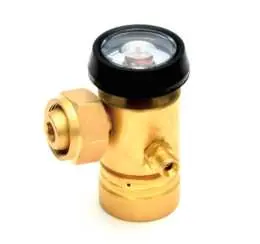
- Preparation: Swiftly open and close the cylinder valve to dislodge water or foreign matter from the inlet seating. Do not stand in front of the valve.
- Connection: Connect the regulator to the cylinder valve. Connect the hose to the outlet using hoses compliant with EN 559 and connections compliant with EN 560, secured with appropriate clamps.
- Setting Pressure: Before releasing gas, ensure the regulator is unpressurised by screwing the pressure adjusting wheel fully out (anti-clockwise). Ensure downstream valves are closed.
- Operation: Open the cylinder valve slowly. Check the cylinder pressure on the contents gauge. Open the downstream valve (blowpipe or welding gun) and set the working pressure by rotating the pressure adjusting wheel clockwise until the required pressure/flow is reached on the outlet gauge.
Closing Down
For prolonged interruptions:
- Close the cylinder valve.
- Unwind the pressure adjusting wheel.
- Vent the pressure in the system (using the blowpipe valve or welding gun).
- Once the system is purged, close the downstream valves.
Maintenance and Repairs
- Visual Checks: Regularly inspect the regulator for signs of damage.
- Seals: Ensure all gaskets, O-rings, and mating surfaces are in satisfactory condition.
- Repairs: If the regulator malfunctions or leaks, close the cylinder valve and remove it from service immediately. Repairs must only be carried out by competent personnel at an authorized service workshop using original spare parts.
Special Note for Flow Meter Gauges
If your regulator has an integrated flow meter gauge, and the downstream equipment also has a flow meter, remove the downstream flow meter as it will not be calibrated with this regulator.
Manufacturer information
VEVOR
Practical help
Common problems
Leakage or malfunction
Close the cylinder valve immediately and remove the regulator from service. Do not attempt unauthorized repairs.
Oil or grease contamination
Keep hands and tools clean. Oil and grease can cause an explosion upon contact with oxygen.
Before use
- Check the product visually for any signs of damage.
- Ensure the cylinder valve connection is clean and undamaged.
- Verify the regulator is suitable for the specific gas being used.
- Ensure all gauge pointers are at zero.
- Check that the regulator is unpressurised (pressure adjusting wheel fully screwed out anti-clockwise).
- Ensure all downstream valves are closed.
Specs in practice
- Pressure adjusting wheel
- Used to set the working pressure. Turn clockwise to increase pressure/flow, anti-clockwise to decrease.
- Cylinder valve
- The main valve on the gas cylinder. Must be opened slowly to prevent damage.
Images and diagrams
- The regulator connects directly to the cylinder valve and features an outlet for hose connection.
Model compatibility
- Use hoses compliant with EN 559.
- Use hose connections compliant with EN 560.
- Not suitable for liquid state gases.
- Not suitable for corrosive gases such as ethylamine, dimethylamine, or ammonia.

Manual page author
David Miller
Documentation analyst
Organizes user manual content into clear summaries, with attention to model details, product context, and everyday usability.