HVAC / Heat Pumps
Installation and Service Instructions for Viessmann Vitodens 100-W Gas Condensing Boiler
Professional installation and service guide for the Viessmann Vitodens 100-W (Type B1GA) wall-mounted gas condensing boiler. This manual covers system setup, electrical connections, commissioning, maintenance procedures, and a...
Table of contents
Manual images
Click an image to enlargeQuick Guide for Contractors
This manual is intended exclusively for qualified contractors. The Vitodens 100-W (Type B1GA) is a wall-mounted gas condensing boiler. Key procedures include mounting the boiler, connecting the gas and heating water circuits, electrical wiring, and commissioning via the built-in assistant or software tool. Always ensure the condensate trap is filled with water before commissioning.
Safety Instructions
Work on gas and electrical installations must only be carried out by registered professionals. Always isolate the system from the power supply and close the main gas shut-off valve before performing maintenance. Use personal protective equipment and ensure the system is safeguarded against unintentional reconnection.
Installation Sequence
The installation process involves:
- Mounting: Position the installation template, drill holes, and fit the wall mounting bracket.
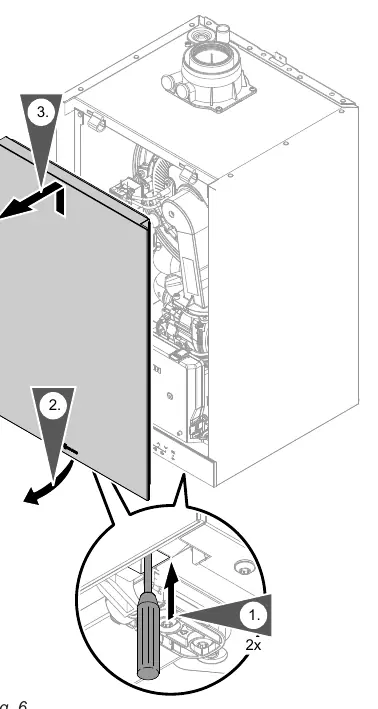
- Removing the front panel: Unlock the panel on the underside and lift it away.
- Connections: Connect the heating flow and return, gas supply, and condensate drain. Ensure all pipework is free of load and torque stress.
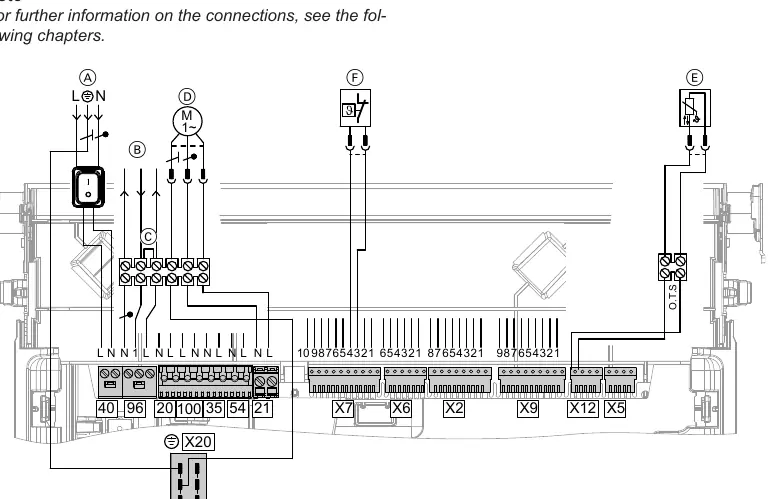
- Electrical: Open the wiring chamber, connect the power supply (230V, 50Hz), and route accessory cables. Ensure proper earthing and strain relief.
Commissioning and Maintenance
Commissioning is performed using the built-in assistant or the ViGuide app. Key steps include:
- Filling the heating system and checking for leaks.
- Venting the system.
- Checking the gas type and supply pressure.
- Performing a combustion quality test (CO2/O2 levels).
- Cleaning the heating surfaces and condensate trap.
- Checking and adjusting ignition/ionisation electrodes.
Troubleshooting
The boiler features a fault display on the programming unit. Common fault codes include:
- Fault 7/8: Cylinder temperature sensor issues (lead break or short circuit).
- Fault 13/14: Outside temperature sensor issues.
- Fault 59: Fan power supply/undervoltage.
- Fault 62: High limit safety cut-out has responded.
- Fault 357: Insufficient gas supply.
Always reset the burner only after the fault has been remedied and the appliance has cooled down.
Technical Specifications
The Vitodens 100-W is available in various outputs (3.2 to 32 kW). It has an IP rating of IP X4, making it suitable for installation in wet rooms. The boiler is compatible with natural gas and LPG. Detailed gas pressure requirements and flue system types are provided in the specification section.
Manufacturer information
Viessmann Climate Solutions
Practical help
Common problems
Fault 7 or 8 (No DHW heating)
Check the cylinder temperature sensor (terminal 2) for lead breaks or short circuits. Replace the sensor if necessary.
Fault 59 (Burner locked out)
Check mains voltage. If voltage is correct, the fan unit may need replacement.
Fault 62 (Burner in fault state)
High limit safety cut-out has responded. Check heating system fill level, expansion vessel pressure, and circulation pump flow.
Fault 357 (Insufficient gas supply)
Ensure main gas valve is open. Measure static and flow gas pressure. Check gas line sizing.
Fault 416 (Burner locked out)
Flue gas temperature sensor incorrectly positioned. Check installation and perform a mains reset.
Before use
- Verify gas type and supply pressure.
- Ensure the flue system is clear and airtight.
- Fill the condensate trap with at least 0.3L of water.
- Flush the heating system thoroughly.
- Check electrical connections and ensure proper earthing.
- Verify the system pressure is at least 0.8 bar (sealed system).
Specs in practice
- Rated heating output
- 3.2 to 32 kW depending on the specific model variant.
- Max. gas supply pressure
- 25 mbar for natural gas; 57.5 mbar for LPG.
- Permissible CO content
- Must be < 1000 ppm for all gas types.
Images and diagrams
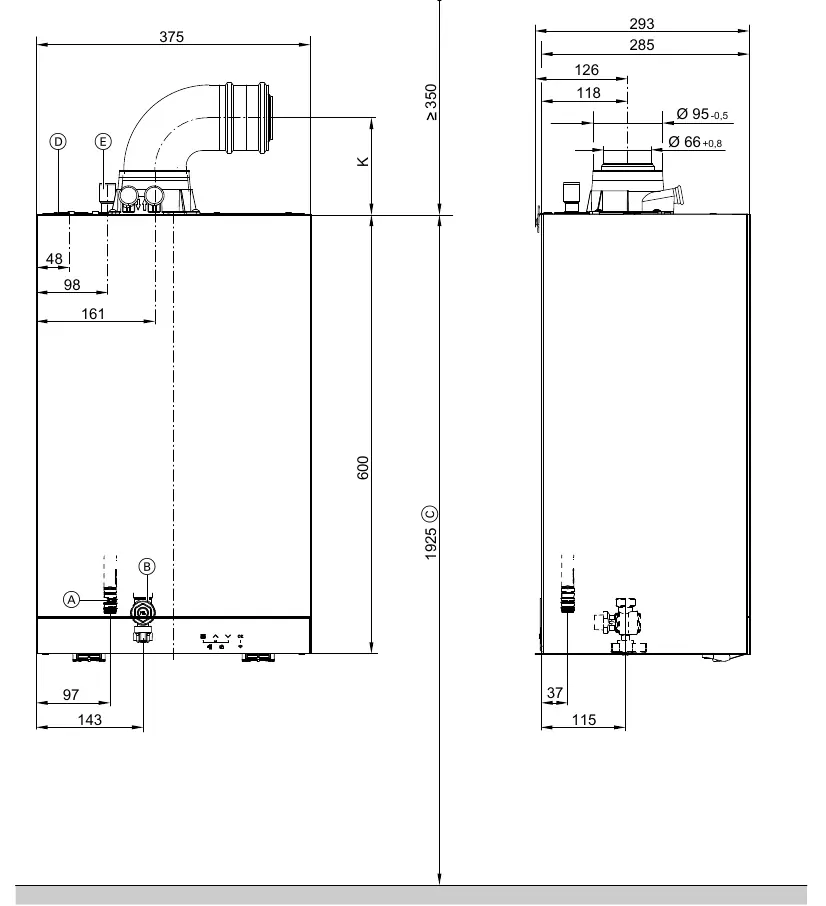
- Fig 3/4: Dimensions and connection points for 11-25kW and 32kW models.
- Fig 14: Layout of electrical connections on the HBMU heat management unit.
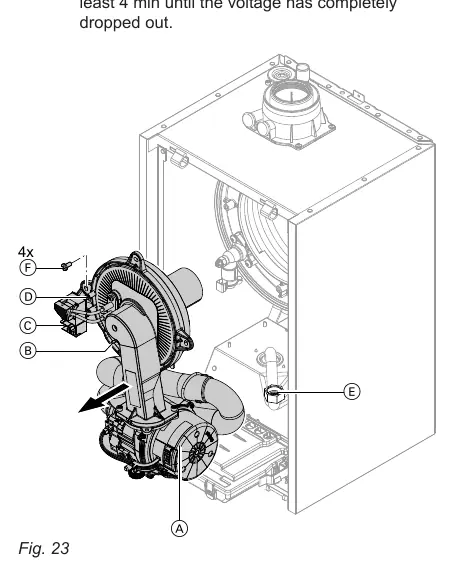
- Fig 23: Burner removal procedure.
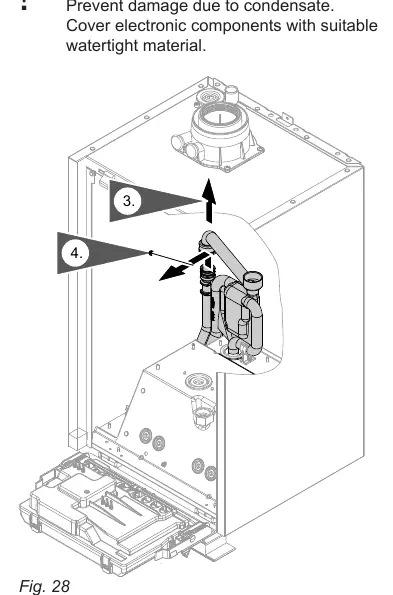
- Fig 28: Condensate trap removal and cleaning.
Model compatibility
- Compatible with natural gas and LPG.
- Requires qualified contractor for installation and commissioning.
- Suitable for open vented and sealed unvented heating systems.

Manual page author
Emily Carter
User documentation editor
Prepares concise manual descriptions and highlights the most useful setup, operation, and maintenance information for readers.