HVAC / Water Heaters
Operating and Service Instructions for Viessmann Vitosol DHW Solar Pack
Comprehensive operating and service guide for the Viessmann Vitosol DHW Solar Pack. Includes installation, system flushing, filling, control setup, maintenance procedures, and technical specifications.
Table of contents
Manual images
Click an image to enlargeImportant Information
This document provides operating and service instructions for the Viessmann Vitosol DHW Solar Pack, including Vitosol 200-F collectors and Vitocell 100-W tanks. Installation, service, and maintenance must be performed by a licensed professional heating contractor.
Safety Requirements
- Protective Gear: Always wear gloves and eye protection when handling solar panels.
- Hot Surfaces: Solar panel connection pipes and heating fluid can cause severe burns.
- Handling: Never step on collectors or solder near the glass surface. Avoid scratching or shocking the glass.
- Electrical Safety: Ensure main power is deactivated before service. Never turn on power to the electric element until the tank is full of water.
Quick Start-up Guide
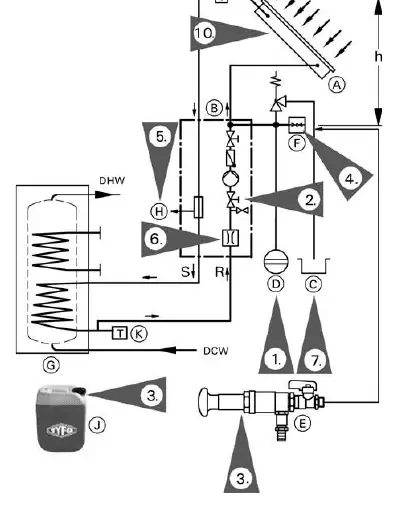
- Check and adjust nitrogen cushion pressure in the expansion tank.
- Flush the system through the fill manifold to remove debris.
- Fill the system with solar fluid using a charge pump.
- Purge all air from the air vent by running the solar loop pump at maximum speed.
- Set the system flow rate.
- Set control settings (differentials, maximum tank temperature).
- Fill the DHW tank with water.
- Remove protective film from flat plate collectors.
System Flushing and Filling
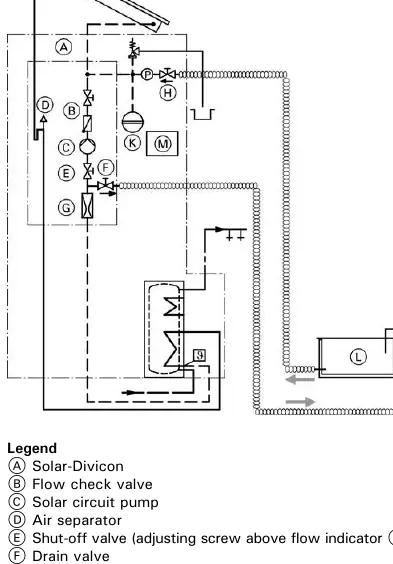
Use a compact mobile charge station for flushing and filling. Ensure the system is flushed with heat transfer medium to avoid mixing with residual water. After filling, the fluid pressure must not drop for at least 1 hour. If air remains, the flow meter float will cycle up and down; repeat filling and venting until the float holds a constant position.
Initial Control Setup
Upon power-up, the controller runs an initialization phase. Use the commissioning menu to set:
- Language
- Unit
- Time and Date
- Maximum tank temperature
- Pump control type
- Flow rate and pressure sensor ranges
Maintenance and Inspection
Regular maintenance is critical for system efficiency. Required tasks include:
- Annual: Check freezing point and pH of heat transfer medium (pH should be 7.5-10).
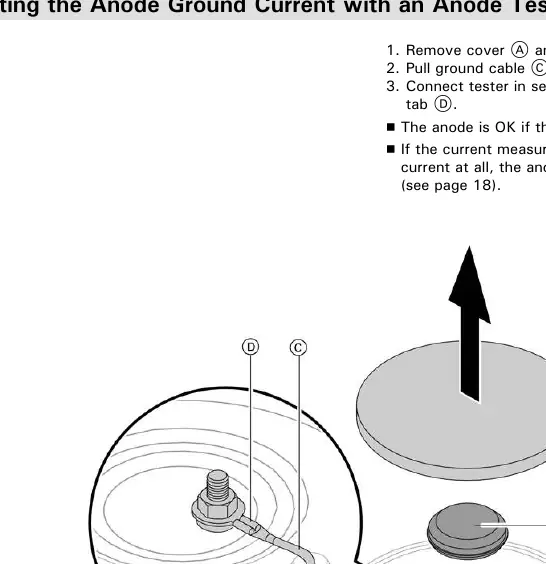
- Annual: Inspect magnesium anode (replace if degraded to 0.4-0.6 in. / 10-15 mm).
- Every 5 years: Inspect storage tank heat exchanger.
- Regularly: Check pressure gauge, bleed air from separator, and inspect collector mounting hardware.
Troubleshooting and Service
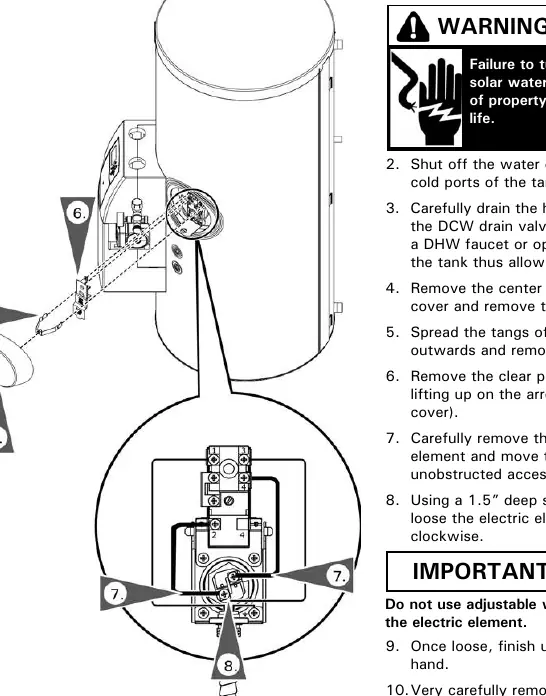
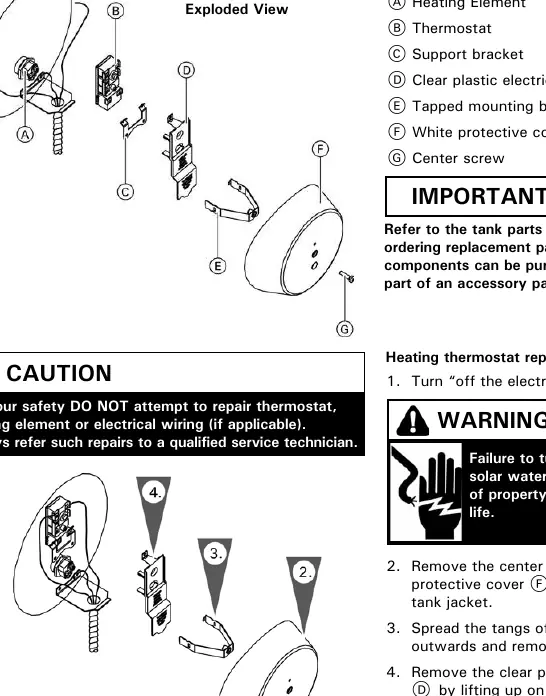
If the system pressure drops or the solar control/pump fails, notify a heating contractor immediately. For replacing the electric heating element or thermostat, ensure the tank is depressurized and power is disconnected. Always use original Viessmann replacement parts.
Manufacturer information
Viessmann Climate Solutions
Practical help
Common problems
Air in the system
Flow meter float cycles up and down. Repeat filling and venting until no air is present.
System pressure drop
Check for leaks, top up with heat transfer medium, and repeat venting process.
High limit trip
If collector/tank cooling features are enabled incorrectly, the high limit may trip. Manually reset the safety device.
Before use
- Check and adjust nitrogen cushion pressure in the expansion tank.
- Flush the system thoroughly to remove debris.
- Fill the system with solar fluid using a charge pump.
- Purge all air from the system.
- Set the system flow rate.
- Fill the DHW tank with potable water.
- Remove protective film from collectors only after all steps are complete.
Specs in practice
- Recommended Flow Rate
- 0.8 to 1.1 USG/min (3 to 4 L/min).
- Max. Stagnation Temperature
- 401°F (205°C) for Vitosol 200-F.
- Heat Transfer Medium pH
- Must be between 7.5 and 10. If below 7.5, drain and refill.
Images and diagrams
- Quick Start-up diagram shows the layout of the solar loop, including pump, expansion vessel, and fill manifold.
- Expansion tank diagram illustrates the calculation of static head and pre-charge pressure.
- Flushing diagram shows the connection of the charge station to the drain and fill valves.
Model compatibility
- Use only Viessmann heat transfer medium 'Tyfocor-HTL' or equivalent.
- Do not mix Tyfocor-HTL with water or other fluids.
- In extremely cold climates (below -31°F / -35°C), use a higher concentration of glycol.

Manual page author
Michael Turner
Technical manual editor
Reviews PDF manuals for structure, safety notes, and practical product details so readers can find the right information quickly.