Tools / Air Tools Painting
User Manual for Wagner W 250 18V Wood and Metal Sprayer
Quick guide and user manual for the Wagner W 250 18V Wood and Metal Sprayer. Includes setup, spraying techniques, cleaning, maintenance, and troubleshooting.
Table of contents
Manual images
Click an image to enlargeQuick guide from the manual
The Wagner W 250 18V is a cordless paint sprayer designed for wood and metal coatings. Before use, ensure the battery is charged and the device is assembled correctly. Always perform a test spray on cardboard to adjust the spray pattern and material volume before working on your final project. Keep the device clean to ensure longevity and proper function.
Description of the device
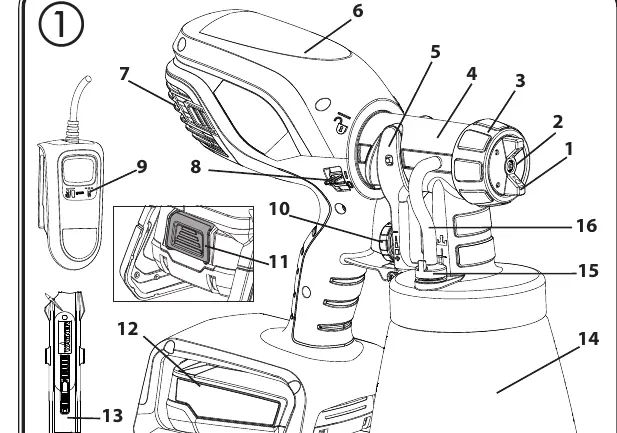
The sprayer consists of several key components, including the air cap, nozzle, union nut, spray gun, container, and suction tube. The device is powered by a compatible 18V battery.
Coating materials
Suitable materials: Lasers, wood preservatives, stains, oils, and impregnations (use undiluted). Water-based and solvent-based lacquers and primers (dilute 5-10% if necessary).
Unsuitable materials: Wall paint, materials containing highly abrasive components, facade paint, lye, acid-containing spray materials, and flammable coating materials.
Setup and preparation
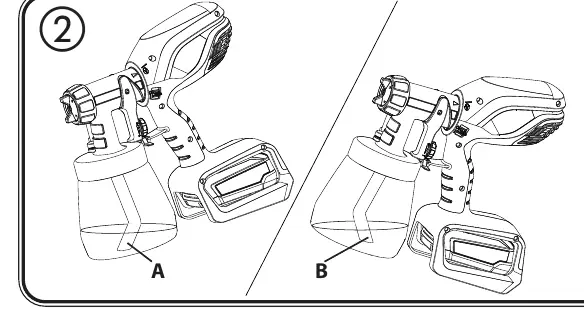
- Suction tube adjustment: For horizontal surfaces, turn the suction tube forward. For overhead work, turn it backward.
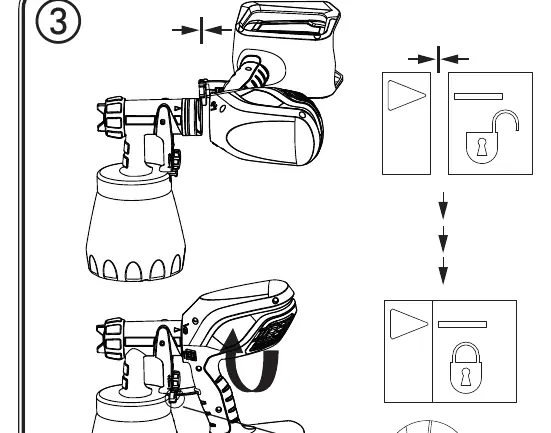
- Assembly: Connect the front and back parts of the gun. Ensure the container is securely attached.
- Battery: Insert the battery and ensure it is locked in place.
Spraying technique
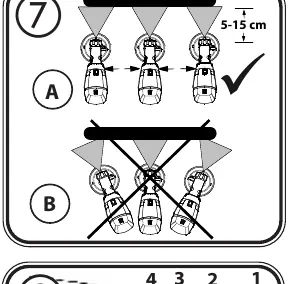
Maintain a consistent distance of 5-15 cm from the object. Move the spray gun in uniform motions. Start spraying outside the target area to avoid uneven application. Regularly wipe the nozzle and air cap during use to prevent clogging.
Cleaning and maintenance
Thorough cleaning is essential for proper operation. Disassemble the gun after use. Clean the container and suction tube with a brush. Clean the air vent. Do not use sharp metal objects to clean seals, the diaphragm, or nozzle holes. The air filter should be checked and replaced if dirty. If paint enters the air hose, clean or replace the diaphragm.
Troubleshooting
If the device fails to spray, check if it is switched on, if the battery is charged, if the nozzle or suction tube is clogged, or if the material volume setting is too low. If the device drips, tighten the nozzle or replace the seal. If the spray pulses, check the material level or the air filter.
Manufacturer information
Wagner Group
Practical help
Common problems
No material flow
Check if the device is switched on, battery is charged, nozzle/suction tube is clogged, or material volume setting is too low.
Dripping from nozzle
Tighten the nozzle, replace worn nozzle/seal, or clean the air cap and nozzle.
Pulsing spray
Refill the container, clean or replace the air filter, or replace a worn seal.
Paint in air hose
Clean or replace the diaphragm.
Before use
- Check battery charge level.
- Ensure nozzle and air cap are clean.
- Verify material viscosity (dilute if necessary).
- Check that the suction tube is positioned correctly for the task.
- Ensure the container is securely tightened.
Specs in practice
- Max. viscosity
- 60 DIN-s
- Max. spray volume
- 250 ml/min
Images and diagrams
- Fig 1: Overview of parts.
- Fig 2: Suction tube positioning (A: horizontal, B: overhead).
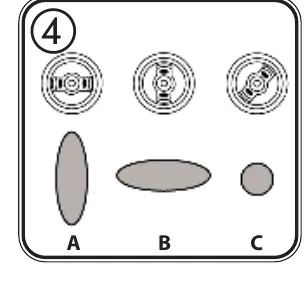
- Fig 4: Spray pattern adjustment (A: vertical, B: horizontal, C: round).
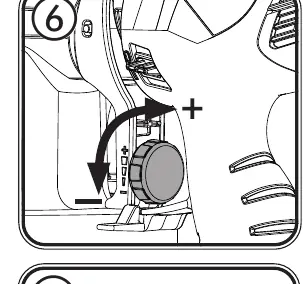
- Fig 6: Material volume adjustment.
Model compatibility
- Compatible with BOSCH POWER FOR ALL 18V batteries.
- Not recommended for use with Wall Extra I-Spray pistol.

Manual page author
David Miller
Documentation analyst
Organizes user manual content into clear summaries, with attention to model details, product context, and everyday usability.