Tools / Power Tools
User Manual for CLAS 1" Torque Wrench 300-1500Nm
Quick guide for the CLAS 1" 300-1500Nm torque wrench. Learn how to set torque values, lock the handle, use the tool correctly, and maintain calibration.
Table of contents
Manual images
Click an image to enlargeQuick guide from the manual
This torque wrench is designed for precise tightening. Key operational points include unlocking the handle to adjust torque, locking it before use, and listening for the "click" sound to indicate the target torque has been reached. Always reset the tool to its minimum torque setting (10 Nm) before storing it for long periods to prevent spring fatigue.
Product description
The torque wrench consists of a main pipe, main scale, secondary scale, locking ring, and handle. It is designed for use with appropriate sockets to tighten bolts and nuts to specific torque values.
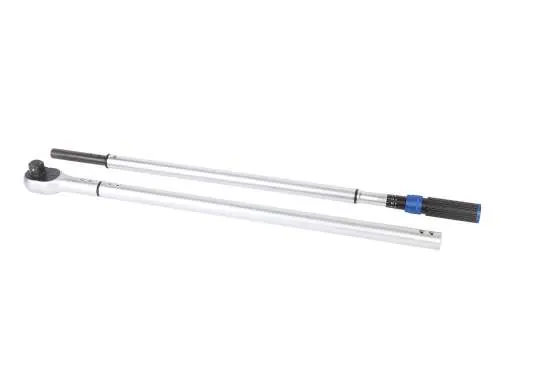
Operation
To set the desired torque value, follow these steps:
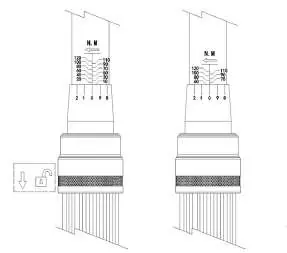
- Pull the locking ring back to unlock the wrench.
- While keeping the lock pulled back, turn the handle to adjust the torque.
- Turn the handle clockwise to increase the torque value or anticlockwise to decrease it.
- Align the desired value on the secondary scale with the central mark on the main scale.
- Release the locking ring to secure the handle in place.
During the tightening process, apply force evenly without inertial force. When the set torque is reached, the wrench will emit a "click" sound. Stop applying force immediately upon hearing this sound. If using a low torque setting where the "click" is not audible, look for a slight slip in the tool, which indicates the target torque has been reached.
Precautions and maintenance
- Calibration: To ensure accuracy, the wrench must be recalibrated after one year or 5000 uses.
- Storage: If the wrench is not used for a long period, set it to the minimum torque value (10 Nm) to avoid long-term compression of the spring, which can affect accuracy.
- Usage: Do not use the torque wrench to strike objects.
- Selection: Always verify that you have selected the correct wrench and socket for the specific tightening task.
Technical data and conversion
The manual provides a conversion table for various units (lb-in, lb-ft, Nm, kg-cm, kg-m) and a common torquemeter table based on bolt diameter and strength grade (4.6 to 12.9). For technical support, contact CLAS via email at [email protected] or by phone at +33(0)4 79 72 69 18.
Manufacturer information
CLAS EQUIPEMENTS
Practical help
Common problems
The "click" sound is not audible.
When using a small torque setting, the click may not be evident. Look for a slight slip in the tool, which indicates the target torque has been reached.
Inaccurate torque readings.
The tool requires recalibration after one year or 5000 uses to maintain precision.
Spring fatigue or loss of accuracy.
Always reset the wrench to the minimum torque value (10 Nm) before storing it for long periods.
Before use
- Select the correct torque wrench for the tightening task.
- Verify that the selected torque value matches the requirement.
- Ensure the socket is appropriate for the bolt or nut.
- Check that the wrench is unlocked before attempting to adjust the torque.
Images and diagrams
- The main scale and secondary scale are used together to set the precise torque value.
- The locking ring must be pulled back to allow the handle to rotate for adjustment.
Model compatibility
- The tool is compatible with various bolt diameters and strength grades as detailed in the common torquemeter table.

Manual page author
David Miller
Documentation analyst
Organizes user manual content into clear summaries, with attention to model details, product context, and everyday usability.