Home / Garage Door Openers
Craftsman 139.53964SRT 1/2 HP Garage Door Opener User Manual
Comprehensive user guide for the Craftsman 139.53964SRT 1/2 HP garage door opener. Includes installation steps, safety instructions, programming, and troubleshooting.
Table of contents
Manual images
Click an image to enlargeQuick Guide
This manual provides instructions for the assembly, installation, and operation of the Craftsman 1/2 HP Garage Door Opener (Model 139.53964SRT). Before beginning, ensure your garage door is properly balanced and that you have all necessary tools. Always follow safety warnings to prevent serious injury or death.
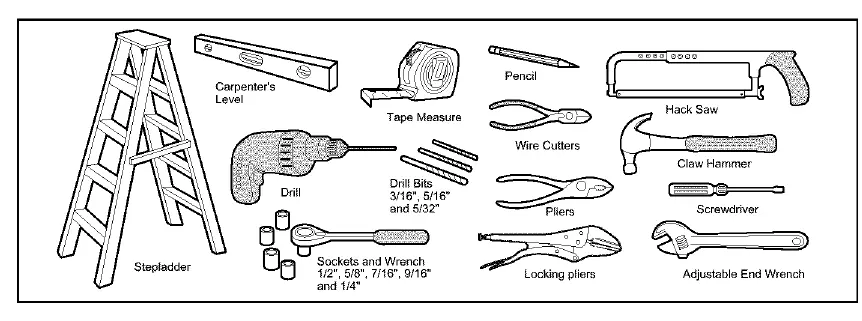
Assembly
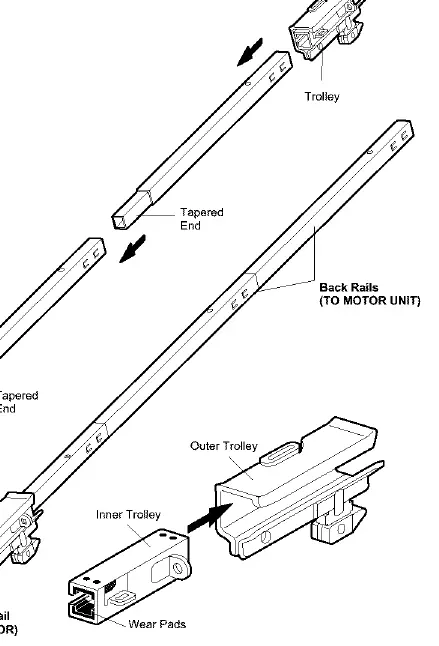
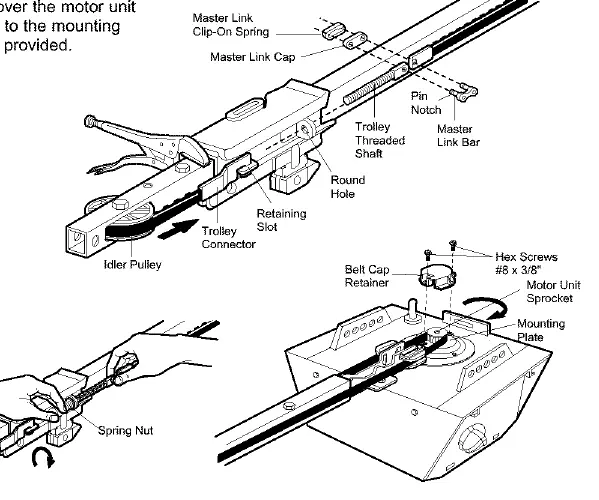
Rail and Trolley: Align rail sections and slide them together. Install the trolley onto the rail. Ensure the belt is not twisted when installing it around the idler pulley and motor sprocket. Set the belt tension by tightening the spring nut until the nut ring snaps against the trolley.
Installation
Header Bracket: Must be rigidly fastened to a structural support on the header wall or ceiling. Do not install over drywall.
Motor Unit: Hang the motor unit securely from structural supports using the provided hanging brackets. Ensure the rail is centered over the door.
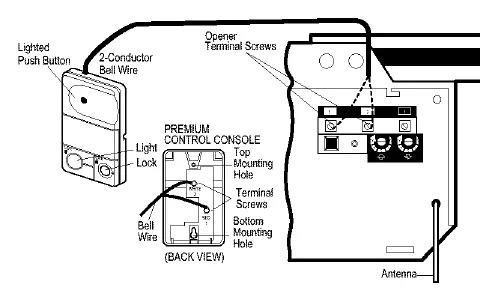
Door Control: Install the wall-mounted door control within sight of the garage door, at least 5 feet above the floor, and out of reach of children.
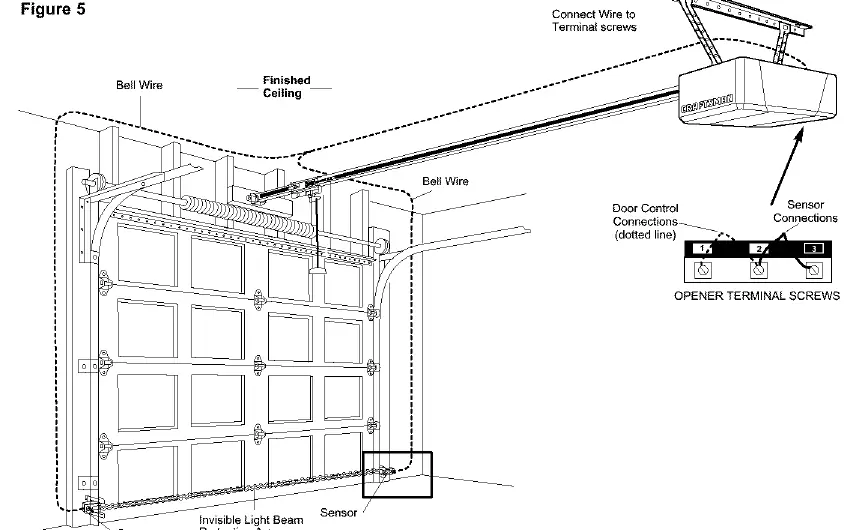
Safety Sensors: The Protector System must be installed and aligned correctly. Sensors must be placed no higher than 6 inches above the floor. The sending eye (orange light) and receiving eye (green light) must face each other.
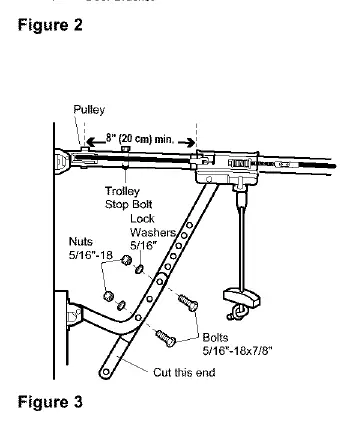
Door Arm: Connect the door arm to the trolley and the door bracket. Ensure the door is fully closed when making these connections.
Adjustment
Travel Limits: Adjust the UP and DOWN travel limits to define where the door stops. Run the opener through a complete cycle after each adjustment.
Force Settings: Adjust the force controls to regulate the power required to open and close the door. Do not increase force to compensate for a binding door.
Safety Reversal Test: Place a 1-inch board (or 2x4 laid flat) on the floor under the door. The door must reverse upon contact with the object.
Operation
Activation: The door can be operated via the hand-held remote, wall-mounted door control, or keyless entry system. If the safety sensor beam is obstructed while closing, the door will reverse.
Manual Release: Use the emergency release handle to disconnect the trolley if power fails or for manual operation. Pull the handle down to disconnect and toward the opener to reconnect.
Programming
Remotes: To add a remote, press the learn button on the motor unit, then press the button on the remote. The lights will blink to confirm.
Keyless Entry: Program the PIN by pressing the learn button on the motor unit, entering your 4-digit PIN, and holding the ENTER button.
Maintenance
Monthly: Manually operate the door to check for balance and binding. Test the safety reversal system. Adjust limits and force if necessary.
Yearly: Oil door rollers, bearings, and hinges. Do not grease the door tracks.
Troubleshooting
If the opener does not operate, check for power, ensure door locks are disabled, and verify that the garage door spring is not broken. If the door reverses for no reason, check for obstructions and ensure safety sensors are aligned.
Manufacturer information
CRAFTSMAN
Practical help
Common problems
Opener does not operate from door control or remote
Check power supply, ensure door locks are disabled, check for ice/snow under the door, or wait 15 minutes if the motor overload protector tripped.
Remote control has short range
Change the location of the remote in your car, ensure the antenna on the motor unit is fully extended downward, or check for metal door interference.
Door reverses for no apparent reason
Check safety sensors for obstruction or misalignment, or clear ice/snow from the floor area.
Door does not close completely
Review travel limit adjustments or check if the door is binding.
Before use
- Disable all door locks.
- Remove all ropes connected to the garage door.
- Test door balance (should stay in place when lifted halfway).
- Ensure power supply is 120V, 60Hz.
- Verify safety sensors are installed and aligned.
Specs in practice
- Safety Reversing Sensor
- Required safety device that detects obstructions in the door path.
- Travel Limits
- Settings that define the fully open and fully closed positions of the door.
Images and diagrams
- Wiring diagram for safety sensors: Connect white wire to terminal 2 and white/black wire to terminal 3.
- Door arm connection: Shows how to attach the arm to the trolley and door bracket for sectional doors.
Model compatibility
- For residential use only.
- Requires 120V, 60Hz power supply.
- Not for use with doors that are not properly balanced.

Manual page author
Emily Carter
User documentation editor
Prepares concise manual descriptions and highlights the most useful setup, operation, and maintenance information for readers.