Sports / Fitness
Decathlon 20CC GP/EP RC Plane Instruction Manual
Comprehensive assembly and setup guide for the Phoenix Model Decathlon 20CC GP/EP 1:4 scale RC plane. Includes detailed installation steps for servos, engine, landing gear, and flight balancing.
Quick answers from the manual
Quick answer
- The Decathlon 20CC is a 1:4 scale ARF RC plane. This manual provides step-by-step assembly instructions for the airframe, engine/motor installation, radio setup, and flight balancing. p. 1
Key actions
- Assemble the airframe, including wings, tail, and landing gear. p. 6, 11, 17, 18
- Install the engine or electric motor and fuel tank/ESC. p. 27, 30, 40
- Balance the plane at the specified Center of Gravity (CG). p. 44
First start
- Charge transmitter and receiver batteries. p. 46
- Perform a range check and verify control surface directions. p. 4, 46
Problems and fixes
Plane is nose heavy
Move the battery pack further back in the fuselage.
p. 44
Plane is tail heavy
Move the battery/receiver forward or add weight to the firewall.
p. 44Technical specifications
| Parameter | Value | Meaning | Pages |
|---|---|---|---|
| Wingspan | 2300mm | p. 1 | |
| Flying weight | 5.5-6.5 kg | Total weight of the aircraft | p. 1 |
Where to find it in the PDF
- Specifications p. 1
- Assembly Instructions p. 6, 43
- Balancing p. 44
Table of contents
Manual images
Click an image to enlargeQuick guide from the manual
The Decathlon 20CC is a 1:4 scale Almost Ready to Fly (ARF) RC plane. This manual provides instructions for assembling the airframe, installing the engine or electric motor, setting up the radio system, and balancing the aircraft for flight. Important: Always verify the Center of Gravity (CG) at 86mm back from the leading edge of the wing before flight.
Specifications
- Wingspan: 2300mm (90.5 in)
- Length: 1534mm (60.3 in)
- Flying weight: 5.5-6.5 kg
- Engine requirements: 1.20/2-stroke or 1.40/4-stroke glow or 20cc gas engine
- Electric motor requirements: 1600-2200W, 450 KV
Assembly and Installation
The assembly process requires basic modeling tools, including CA glue, epoxy, and a hobby knife. Key assembly steps include:
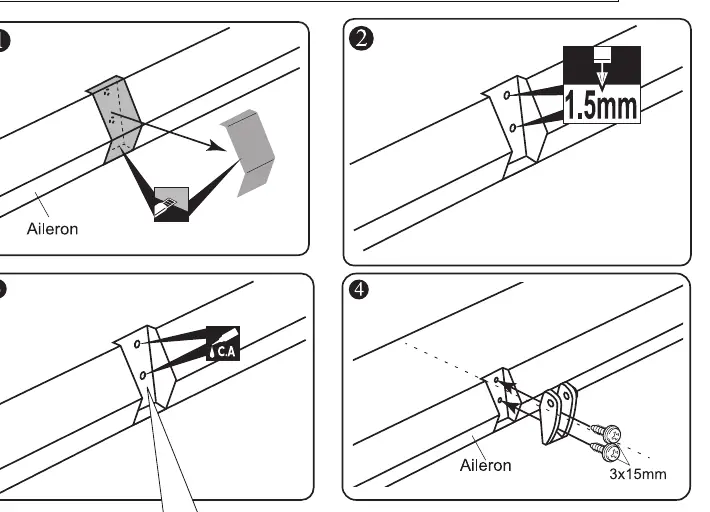
- Ailerons and Servos: Install hinges, control horns, and servos into the wing. Ensure hinges are securely glued.
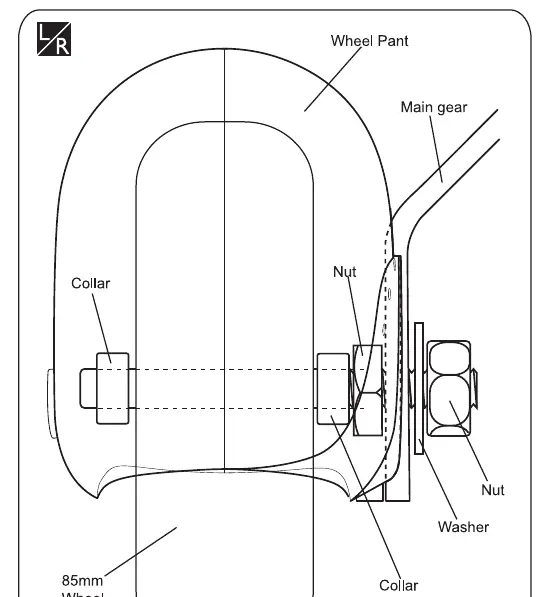
- Wing and Landing Gear: Secure the main wing to the fuselage and assemble the main landing gear, including wheel pants.
- Tail Section: Install the horizontal and vertical stabilizers, ensuring they are perfectly aligned with the fuselage.
- Engine/Motor: The model supports both glow/gas engines and electric motors. Follow the specific section for your chosen power plant to mount the engine/motor and cowl.
- Fuel Tank (GP version): Assemble the fuel tank with proper tubing and install it in the fuselage.
Radio and Electronics
Install the receiver and battery pack in the fuselage, ensuring they are protected from vibration using foam padding. Connect all servos (aileron, rudder, elevator, throttle) to the receiver and perform a range check before flight.
Balancing and Setup
Proper balance is critical for flight stability:
- Center of Gravity (CG): 86mm back from the leading edge of the wing at the fuselage. Balance the plane upside down with an empty fuel tank.
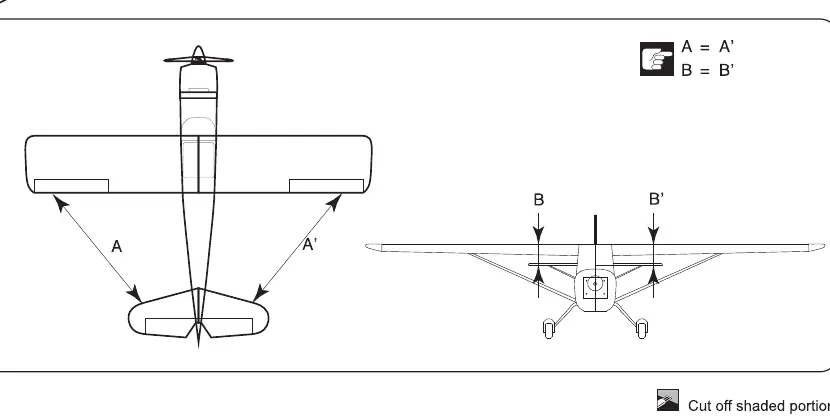
- Lateral Balance: Ensure the plane is laterally balanced so it tracks straight.
- Control Throws: Set control throws according to the manual's recommendations for Low and High rates to ensure safe handling.
Flight Preparation
Before every flight, perform a pre-flight check: charge all batteries, verify all bolts and glue joints are tight, check control surface movement directions, and ensure the receiver antenna is fully extended.
Manufacturer information
Decathlon
Practical help
Common problems
Plane is nose heavy
Move the battery pack further back in the fuselage.
Plane is tail heavy
Move the battery or receiver forward, or add weight to the firewall.
Control surfaces not moving correctly
Check servo direction and reverse on the transmitter if necessary.
Before use
- Charge transmitter and receiver batteries.
- Check all bolts and glue joints for tightness.
- Verify Center of Gravity (CG) at 86mm.
- Check control surface movement directions.
- Ensure receiver antenna is fully extended.
Specs in practice
- Flying weight
- 5.5-6.5 kg
- Center of Gravity (CG)
- 86mm back from the leading edge of the wing at the fuselage
Images and diagrams
- Exploded views show component assembly order.
- Control throw diagrams illustrate high/low rate settings.
Model compatibility
- Requires 4-channel minimum radio.
- Engine: 1.20/2-stroke or 1.40/4-stroke glow or 20cc gas engine.
- Electric motor: 1600-2200W, 450 KV.

Manual page author
Emily Carter
User documentation editor
Prepares concise manual descriptions and highlights the most useful setup, operation, and maintenance information for readers.