Toys / RC Models & Drones
User Manual for FMS 1500mm Cessna 182
Comprehensive user manual for the FMS 1500mm Cessna 182 RC airplane. Includes detailed assembly instructions, pre-flight checks, ESC programming, control settings, and troubleshooting guide.
Table of contents
Manual images
Click an image to enlargeQuick Guide from the Manual
This manual provides essential instructions for the assembly, setup, and operation of the FMS 1500mm Cessna 182. Before your first flight, ensure you have read the safety warnings, particularly regarding Lithium Polymer (Li-Po) battery handling. Always perform a ground range test and verify control surface movements before takeoff.
Model Assembly
The aircraft features a snapper assembly structure for ease of use. Follow these steps to assemble the model:
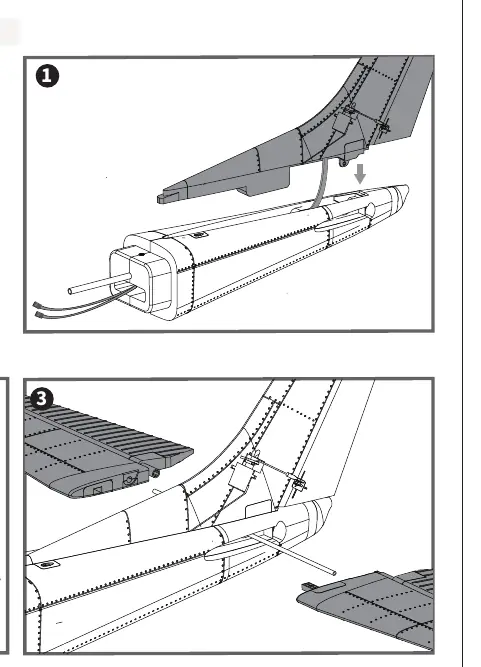
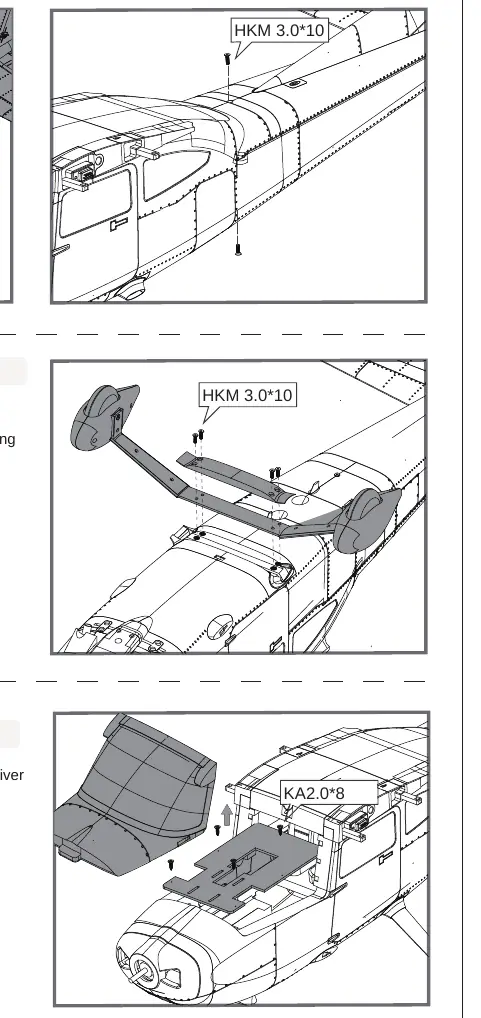
- Tail Wing: Thread servo and LED wires through the rear fuselage. Insert the horizontal tail connecting spar and secure the horizontal tails until they click into place.
- Fuselage: Connect servo wires for the rudder, elevator, and LED lights. Secure the front and rear fuselage sections using the provided screws.
- Landing Gear: Install the main landing gear into the fuselage slots and secure with screws. Attach the front landing gear and connect the rocker arm to the servo.
- Main Wing: Insert the connecting spar, attach the wings, and lock them into place until you hear a click.
- Propeller: Assemble the spinner and propeller as shown in the manual.
Setup and Pre-flight
Proper setup is critical for flight stability:
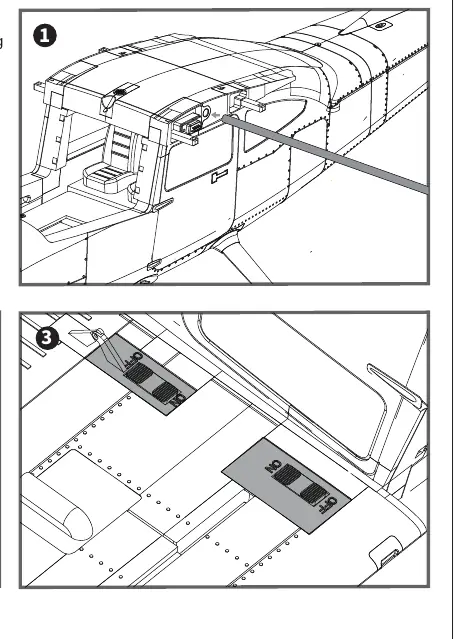
- Battery Installation: Use a 14.8V 2200mAh-3200mAh 25C Li-Po battery. Ensure the battery is positioned to achieve the correct Center of Gravity (CG).
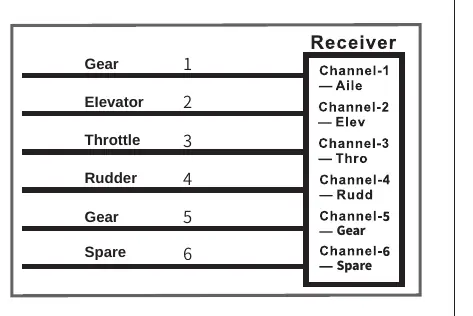
- Receiver Connection: Connect cables to the receiver in the specified order (Gear, Elevator, Throttle, Rudder, Spare).
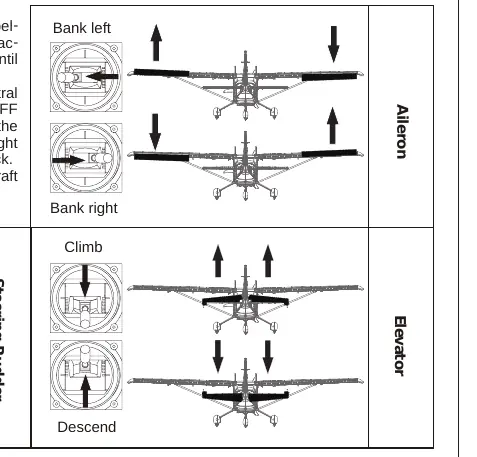
- Control Throws: Follow the recommended dual rate settings for Elevator, Aileron, Rudder, and Flaps to ensure predictable flight characteristics.
- Center of Gravity (CG): The recommended CG is 55-65mm from the leading edge of the main wing.
Brushless ESC Introduction
The included ESC is pre-connected but may require calibration or programming:
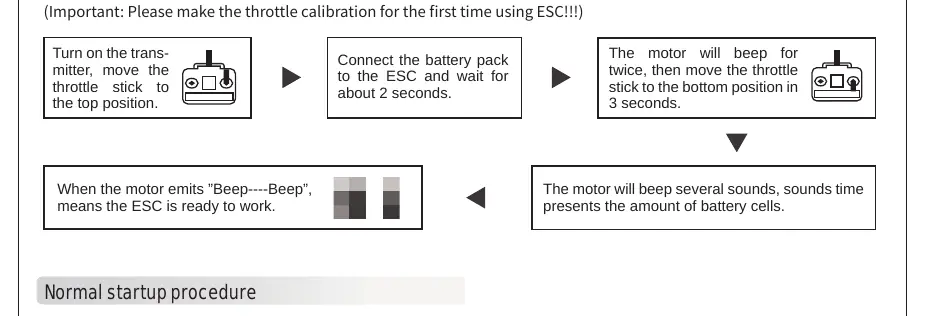
- Throttle Calibration: Perform this for the first time using the ESC. Turn on the transmitter, move the throttle to the top, connect the battery, and follow the beep sequences.
- Programming: The ESC can be programmed via the transmitter by entering the programming mode. You can adjust settings like Brake Type, Motor Timing, and Low Voltage Cutoff.
- Protection Functions: The ESC includes start-up, over-heat, throttle signal loss, and over-load protection.
Flying Course
Always fly in a wide-open space away from people and obstacles. During takeoff, apply power slowly to keep the model straight. Monitor your flight time using a timer; set it to a conservative 4 minutes for the first flight. When landing, align the model into the wind and manage power to settle gently on the main landing gear.
Maintenance
Regularly check that all screws are tightened and the spinner is secure. Repairs to the foam should be made using foam-safe adhesives like hot glue or 5-minute epoxy.
Manufacturer information
FMS Model
Practical help
Common problems
Aircraft will not respond to throttle
Ensure the ESC is armed. Lower the throttle stick and throttle trim to the lowest settings.
Extra propeller noise or vibration
Check for damaged spinner/propeller, loose parts, or if the propeller is installed backwards.
Reduced flight time or underpowered
Check if the flight battery is low or damaged. Ensure the propeller is installed correctly.
Motor runs in reverse
Swap any two of the three motor wires or change the motor rotation setting via ESC programming.
Before use
- Check all screws on the aircraft are tightened.
- Perform an operational ground range test.
- Ensure the transmitter and receiver are bound.
- Verify all control surfaces move in the correct direction.
- Ensure the battery is fully charged and securely installed.
- Check the Center of Gravity (CG) is within 55-65mm.
Specs in practice
- Flying weight
- ~2000g
- Recommended battery
- 14.8V 2200mAh-3200mAh 25C Li-Po
Images and diagrams
- Tail wing installation: Shows wire routing and locking mechanism.
- Receiver diagram: Illustrates correct channel connections for servos and ESC.
- Control throws: Details high and low rate settings for control surfaces.
- ESC Calibration: Step-by-step flow for throttle calibration.
Model compatibility
- Compatible with Reflex V3 (sold separately) for custom tuning.
- ESC supports 2-6S LiPo batteries (depending on specific model variant).

Manual page author
Emily Carter
User documentation editor
Prepares concise manual descriptions and highlights the most useful setup, operation, and maintenance information for readers.