Toys / RC Models & Drones
Operating Manual for FMS 1100MM PC-21 RC Airplane
Quick guide for the FMS 1100MM PC-21 RC airplane. Includes assembly instructions, battery setup, control throw settings, center of gravity (CG) balancing, and troubleshooting.
Table of contents
Manual images
Click an image to enlargeQuick Guide from the Manual
This manual provides instructions for the FMS 1100MM PC-21 RC airplane. Key specifications include a wingspan of 1100mm, a flying weight of approximately 1680g, and a 40A ESC. The model requires a 14.8V 2600-3300mAh 35C Li-Po battery. Always ensure the Center of Gravity (CG) is balanced at 90-95mm from the leading edge of the main wing before flight.
Assembly Instructions
The model is designed for assembly without glue, using screws.
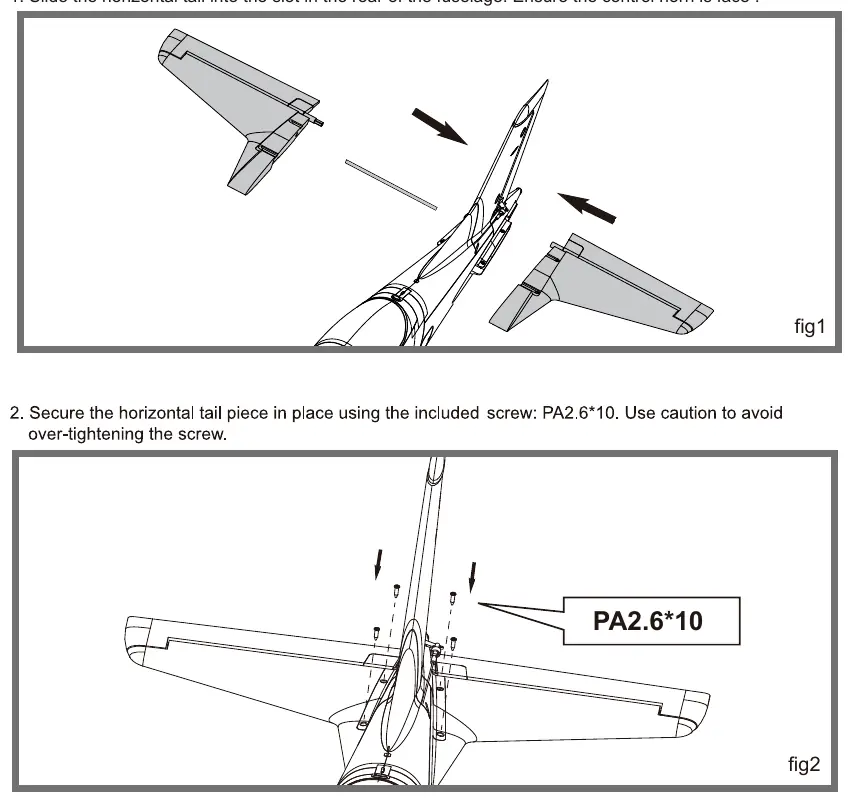
- Horizontal Tail: Slide the horizontal tail into the slot at the rear of the fuselage. Secure it using the included PA2.6*10 screws.
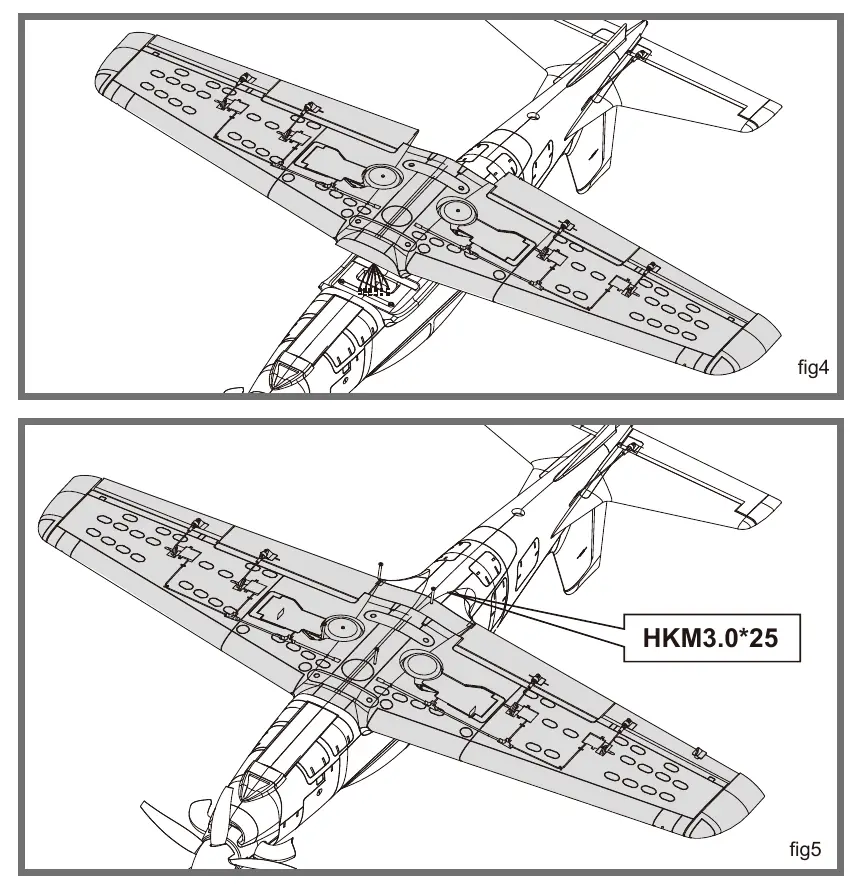
- Main Wing: Remove the canopy hatch, guide the Multi Connector wires through the hole in the bottom of the fuselage, align the wing, and secure it using HKM3.0*25mm screws.
- Propeller and Spinner: Assemble the spinner and propeller components as shown in the diagram on page 13.
Battery and Radio Setup
Ensure your transmitter is bound to the receiver before proceeding. The ESC has a safe start feature; the motor will not arm until the throttle stick is in the low or off position. If the motor rotates in the wrong direction, reverse two of the three motor wires. The recommended battery is a 14.8V 2600-3300mAh 35C Li-Po.
Pre-Flight Checks
- Control Throws: Ensure all control surfaces move in the correct direction. Suggested settings (dual rate): Elevator (16mm high/12mm low), Aileron (14mm high/10mm low), Rudder (22mm high/16mm low).
- Center of Gravity (CG): Balance the plane at 90-95mm forward from the leading edge of the main wing with the battery installed.
- Range Check: Always perform a ground range test with an assistant before the first flight of the day.
Flying and Maintenance
Take off by applying power and steering to keep the model straight. Land when you hear the motor pulsing (LVC) or notice a power reduction. For maintenance, use foam-safe adhesives like hot glue or 5-minute epoxy for repairs. Regularly check that all screws are tightened, especially the spinner.
Troubleshooting
If the aircraft does not respond to the throttle, ensure the ESC is armed and the throttle stick is at the lowest setting. If you experience extra noise or vibration, check for damaged propeller parts or loose components. If controls are reversed, adjust the channel settings on your transmitter.
Manufacturer information
FMS Model
Practical help
Common problems
Aircraft will not respond to throttle
Lower throttle stick and trim to lowest settings; check ESC arming.
Extra propeller noise or vibration
Check for damaged spinner/propeller; tighten all propeller adapter parts.
Reduced flight time or underpowered
Check battery charge; ensure battery is not damaged; check for binding.
Controls reversed
Check transmitter settings and reverse channels if necessary.
Before use
- Ensure battery is fully charged (14.8V 2600-3300mAh 35C Li-Po).
- Check that all control surfaces move in the correct direction.
- Verify Center of Gravity (CG) is 90-95mm from the leading edge of the main wing.
- Perform a ground range test with an assistant.
- Ensure all screws are tightened, especially the spinner.
Specs in practice
- Flying Weight
- Around 1680g (59.3oz)
Images and diagrams
- Horizontal Tail Installation: Slide into slot and secure with PA2.6*10 screws.
- Wing Installation: Guide wires through fuselage hole and secure with HKM3.0*25mm screws.
- Propeller Assembly: Follow sequence a-e to attach spinner and propeller.
Model compatibility
- Recommended battery: 14.8V 2600-3300mAh 35C Li-Po.

Manual page author
David Miller
Documentation analyst
Organizes user manual content into clear summaries, with attention to model details, product context, and everyday usability.