Toys / RC Models & Drones
User Manual for FMS 1400mm Pitts V2 RC Airplane
Quick guide for the FMS 1400mm Pitts V2 RC airplane. Includes assembly instructions, center of gravity (CG) settings, control throws, ESC setup, and troubleshooting.
Table of contents
Manual images
Click an image to enlargeQuick guide from the manual
This manual provides essential setup and operation instructions for the FMS 1400mm Pitts V2 aerobatic biplane. Before your first flight, ensure the model is correctly assembled, the Center of Gravity (CG) is balanced, and all control surfaces are tested. Always perform a ground range check before flying.
Safety and warnings
- Age Recommendation: Not for children under 14 years. This is not a toy.
- Li-Po Battery Safety: Never charge unattended. Use a Li-Po compatible charger. Never discharge below 3V per cell. If the battery swells, discontinue use immediately.
- Operation: Always fly in an open area away from people, traffic, and buildings.
Specifications
- Wingspan: 1400mm
- Overall Length: 1298mm
- Flying Weight: ~3500g
- Motor: 4258 KV460
- ESC: 50A
- Recommended Battery: 22.2V 4000mAh 35c
Assembly instructions
The model features screw-together assembly for reduced build time.
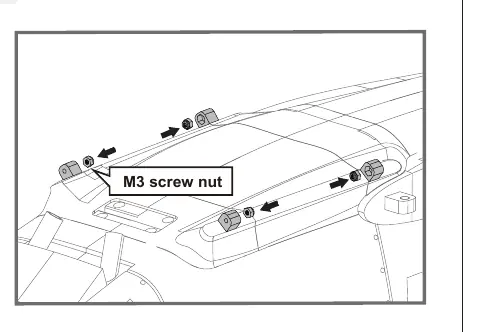
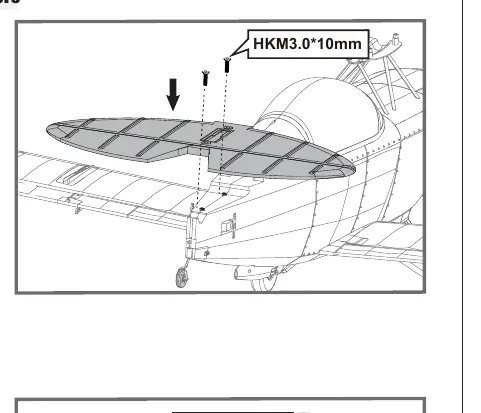
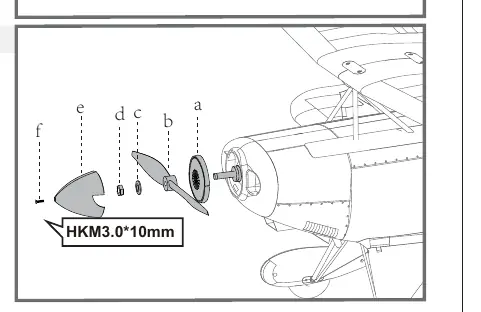
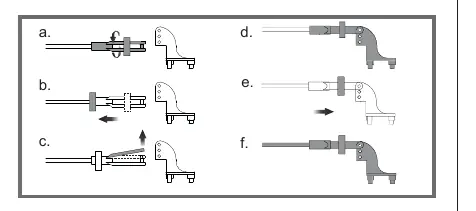
- Landing Gear: Install the landing gear assembly with the fuselage inverted, securing it with the provided screws.
- Wings: Install the wing spar and wing halves. Secure the interplane struts and connect aileron pushrods.
- Stabilizers: Install the horizontal and vertical stabilizers into the fuselage cutouts and secure with screws.
- Propeller: Assemble the propeller and spinner in the specified order.
Battery and CG setup
The battery compartment is designed for 6S packs. The Center of Gravity (CG) is critical for flight performance.
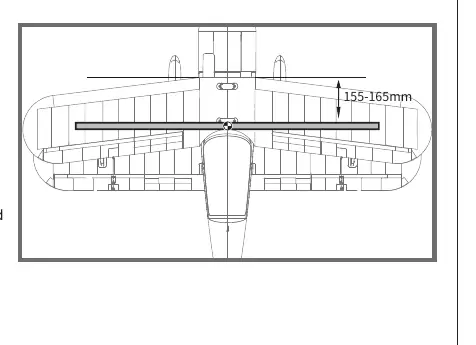
- CG Location: 155-165mm from the leading edge of the main wing.
- Balancing: Support the plane at the marked points on the bottom of the main wing. Adjust battery position forward or aft to achieve level or slightly nose-down balance.
Transmitter and control setup
Before flying, ensure all control sticks are in the neutral position and the throttle is OFF.
- Control Throws (High Rate): Elevator 20mm, Aileron 18mm, Rudder 24mm.
- Control Throws (Low Rate): Elevator 16mm, Aileron 14mm, Rudder 20mm.
- ESC Setup: The ESC has a safe start feature. If the motor does not start, ensure the throttle stick is in the low/off position.
Flying and maintenance
- Takeoff: Apply power slowly to keep the model straight.
- Landing: Land into the wind. Use 1/4-1/3 throttle for the approach, then decrease to idle before touchdown.
- Maintenance: Use foam-safe adhesives for repairs. Regularly check that all screws are tightened and the spinner is secure.
Troubleshooting
If the aircraft does not respond to throttle, ensure the ESC is armed and the throttle channel is not reversed on your transmitter. If you experience excessive vibration, check for damaged propeller parts or loose mounts. For power loss, check battery charge and ESC connections.
Manufacturer information
FMS Model
Practical help
Common problems
Aircraft will not respond to throttle
Ensure ESC is armed (throttle stick at low/off position). Check if throttle channel is reversed on the transmitter.
Extra propeller noise or vibration
Check for damaged propeller/spinner, ensure parts are tightened, and verify the propeller is installed in the correct direction.
Reduced flight time or underpowered
Recharge the flight battery, check for battery damage, or replace the battery if necessary.
Controls reversed
Reverse the corresponding channel on your transmitter.
Before use
- Ensure transmitter batteries are fresh.
- Perform a ground range test.
- Verify the Center of Gravity (CG) is 155-165mm from the leading edge.
- Check that all control surfaces move in the correct direction.
- Ensure all screws are tightened, especially the propeller and spinner.
- Verify the battery is fully charged and securely installed.
Specs in practice
- Recommended Battery
- 22.2V 4000mAh 35c Li-Po
Images and diagrams
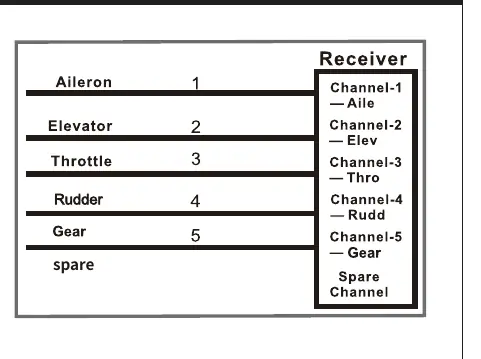
- Receiver wiring diagram showing channel assignments (Aileron, Elevator, Throttle, Rudder, Gear).
- Control throw settings for High and Low rates.
- Center of Gravity (CG) balancing point diagram.
Model compatibility
- Requires 6S Li-Po battery.
- Not intended for children under 14 years.
- Requires a transmitter with at least 5 channels.

Manual page author
David Miller
Documentation analyst
Organizes user manual content into clear summaries, with attention to model details, product context, and everyday usability.