Tools / Power Tools
Sealey GSA675 Air Die Grinder User Manual
Quick guide for the Sealey GSA675 15PC 90° Angle Kit Air Die Grinder. Includes setup, air supply requirements, operation, maintenance, and safety instructions.
Table of contents
Manual images
Click an image to enlargeQuick guide from the manual
The Sealey GSA675 is a 90° angle air die grinder. To ensure safe and trouble-free performance, always operate at a maximum air pressure of 90psi. Always disconnect the tool from the air supply before changing grinding stones, performing maintenance, or servicing. Wear appropriate personal protective equipment (PPE) including eye protection, ear defenders, safety gloves, and a mask.
Safety instructions
- Always follow workshop Health & Safety rules.
- Disconnect from air supply before changing grinding bits or servicing.
- Ensure the grinding bit is secure and not worn or damaged before each use.
- Always wear approved eye or face protection.
- Keep hands and body clear of the workpiece.
- Secure unstable workpieces with a clamp or vice.
- Do not use the grinder near flammable liquids, solids, or gases.
- Do not operate the grinder if tired or under the influence of alcohol or drugs.
- Avoid subjecting the grinding bit to excessive strain or harsh impacts.
Air supply and connection
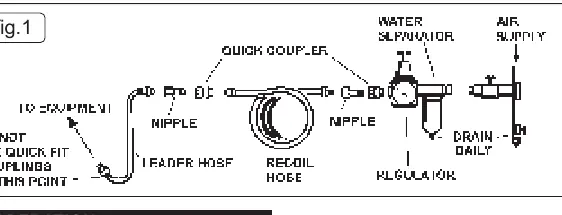
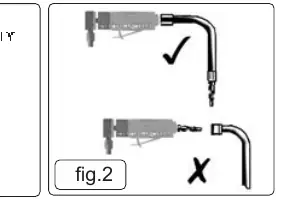
The tool requires a clean air supply at 90psi. Moisture in the air line will damage the tool; drain the air tank daily. Clean the air inlet filter weekly. If using long air hoses (over 8 metres), increase line pressure to compensate. Use a minimum hose diameter of 1/4" I.D. To prevent vibration damage, connect a leader hose to the grinder before attaching the main air line recoil hose.
Operation
To start the tool, hold it firmly and push the trigger locking lever forward while depressing the trigger. Allow the bit to reach maximum speed before bringing it into contact with the workpiece. Move the grinding stone slowly and smoothly toward the workpiece, avoiding jerky movements.
Changing grinding stones
Always disconnect the tool from the air supply first. Inspect grinding stones for cracks, deformations, or splinters before use; do not use damaged stones. Use the provided wrenches to loosen the collet locking collar, insert the grinding bit, and re-lock the collar.
Maintenance and troubleshooting
If your air supply does not have an automatic oiler, lubricate the tool daily by dripping a few drops of Sealey air tool oil into the air inlet. Clean the tool after every use. If the tool loses power or acts erratically, check for moisture or restrictions in the air pipe, incorrect hose connectors, or grit/gum deposits. If the air strainer is clogged, remove and clean it, or flush the tool with gum solvent oil or a mixture of SAE No 10 oil and paraffin.
Technical specifications
- Model No: GSA675
- Air Consumption: 4cfm
- Collet Diameter: 6mm
- Free Speed: 20000rpm
- Inlet Size: 1/4" BSP
- Operating Pressure: 90psi
- Vibration/Uncertainty: 1.4/0.7m/s²
Manufacturer information
Sealey Group
Practical help
Common problems
Loss of power or erratic action
Check for excessive drain on the air line, moisture/restriction in the pipe, or incorrect hose connectors. Clean the air strainer or flush the tool with gum solvent oil.
Grinding bit breakage
Avoid harsh impacts and excessive strain. Ensure the bit is not damaged before use and is suitable for the material being ground.
Vibration damage
Use a leader hose between the grinder and the main air line to prevent vibration from damaging the coupling.
Before use
- Ensure air supply is clean and set to 90psi.
- Drain the air tank.
- Check grinding bit for cracks or damage.
- Ensure air hose is clear of sharp edges and oil.
- Wear eye protection, ear defenders, gloves, and a mask.
- Secure the workpiece with a clamp or vice.
Images and diagrams
- Fig 1 illustrates the recommended air supply hook-up, including the air supply, regulator, water separator, and the use of a leader hose.
- Fig 2 shows the correct coupling method using a leader hose to prevent vibration damage.
Model compatibility
- Requires 1/4" BSP air inlet.
- Minimum hose diameter should be 1/4" I.D.

Manual page author
Michael Turner
Technical manual editor
Reviews PDF manuals for structure, safety notes, and practical product details so readers can find the right information quickly.