Plumbing / Sinks Faucets
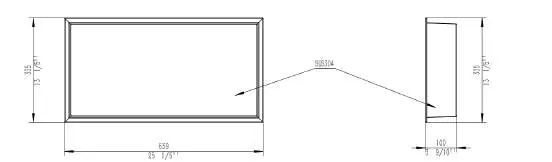
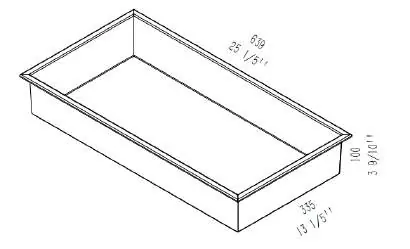
Installation Manual for SERA 1224-MB-NIC-1 Shower Niche
Quick installation and maintenance guide for the SERA 1224-MB-NIC-1 shower niche. Includes step-by-step mounting instructions, waterproofing requirements, and care tips to prevent surface damage.
Table of contents
Manual images
Jump to the sectionQuick guide from the manual
This document provides essential installation and maintenance instructions for the SERA 1224-MB-NIC-1 shower niche. Proper installation is critical to ensure a watertight seal and prevent damage to the surrounding wall structure. Always consult with a licensed professional for preparation and installation to ensure compliance with local building codes.
Installation Steps
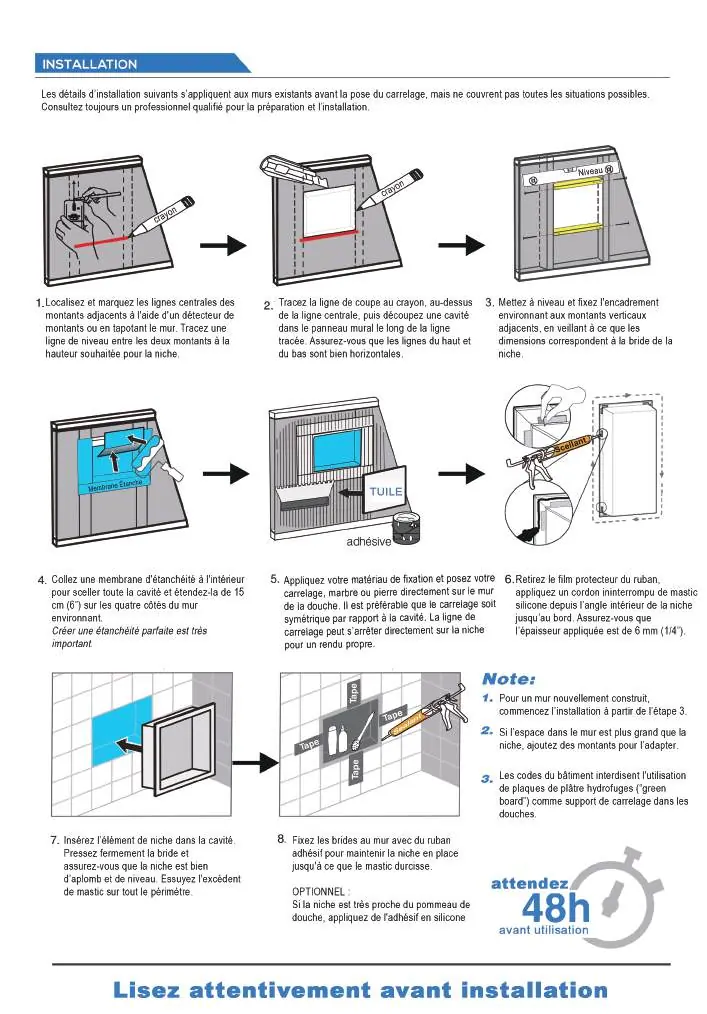
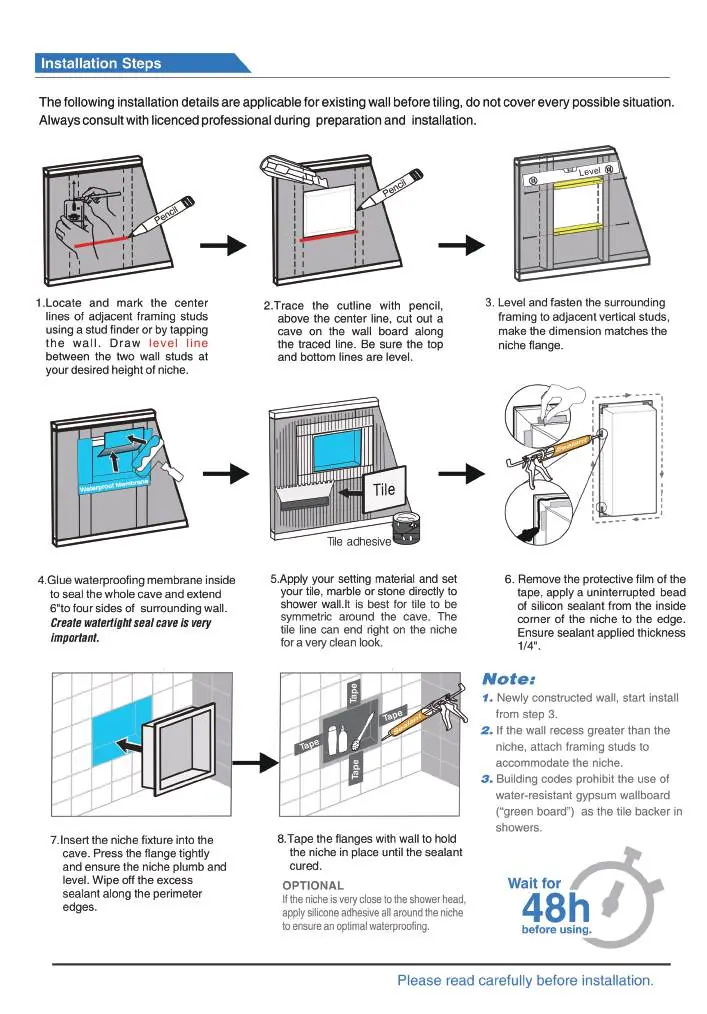
- Locate and mark the center lines of adjacent framing studs using a stud finder or by tapping the wall. Draw a level line between the two wall studs at your desired height.
- Trace the cutline with a pencil above the center line and cut out a cavity on the wall board along the traced line. Ensure the top and bottom lines are level.
- Level and fasten the surrounding framing to adjacent vertical studs, ensuring the dimensions match the niche flange.
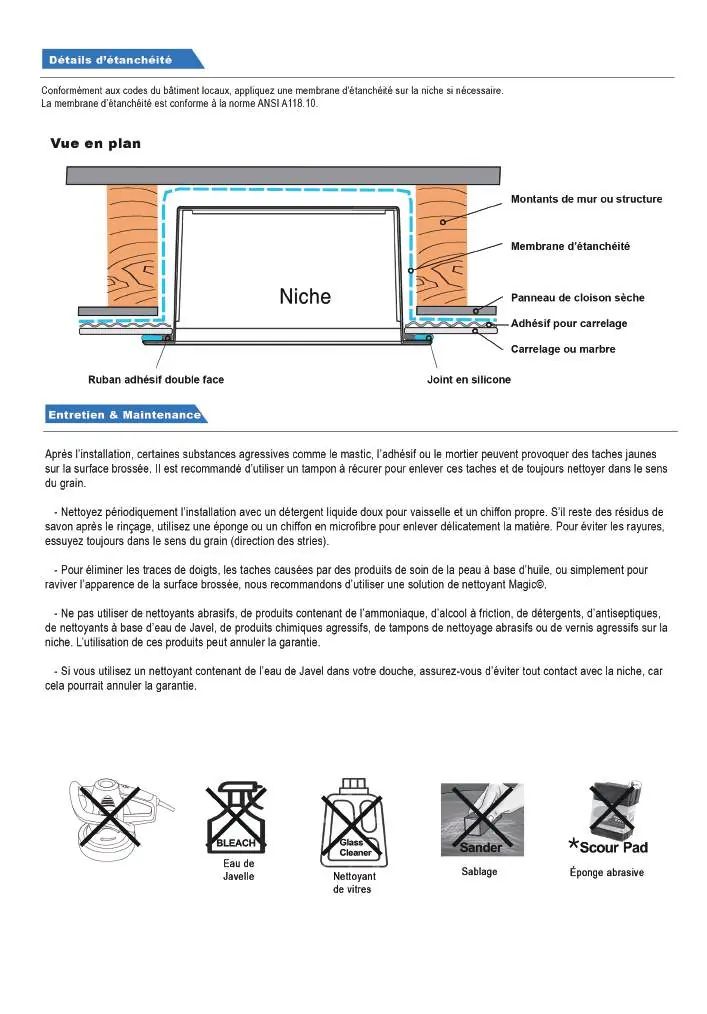
- Glue a waterproofing membrane inside to seal the entire cavity and extend 6 inches to the four sides of the surrounding wall. Creating a watertight seal is very important.
- Apply your setting material and set your tile, marble, or stone directly to the shower wall. It is best for the tile to be symmetric around the cavity.
- Remove the protective film from the tape and apply an uninterrupted bead of silicone sealant from the inside corner of the niche to the edge. Ensure the applied sealant thickness is 1/4 inch.
- Insert the niche fixture into the cavity. Press the flange tightly and ensure the niche is plumb and level. Wipe off the excess sealant along the perimeter edges.
- Tape the flanges to the wall to hold the niche in place until the sealant has cured. Wait 48 hours before using.
Care & Maintenance
To keep your shower niche in optimal condition, follow these guidelines:
- After installation, some aggressive substances like sealant, adhesive, or mortar may cause yellow spots on the brushed surface. Use a scour pad to remove such spots, always brushing in the direction of the grain.
- Periodically clean the fixture with mild liquid dish detergent and a clean rag. If soap scum remains after rinsing, use a sponge or micro-fiber rag to carefully remove the material.
- To remove fingerprints or stains from oil-based skin care products, use a solution of magic cleaner.
- Do not use abrasive cleaners, ammoniated products, rubbing alcohol, detergents, astringents, chlorine bleach-based cleaners, aggressive chemicals, abrasive cleaning pads, or harsh polishes. Use of such substances may void the warranty.
- If using a chlorine bleach-containing cleaner in your shower, avoid contact with the niche surface and promptly remove any residue.
Practical help
Common problems
Yellow spots on the brushed surface after installation
Use a scour pad to remove the spots, ensuring you always brush in the direction of the grain.
Soap scum buildup
Clean periodically with mild liquid dish detergent and a clean rag or micro-fiber cloth.
Before use
- Ensure the niche is properly leveled and plumb during installation.
- Verify that a waterproofing membrane is applied and extended 6 inches to all sides.
- Apply an uninterrupted bead of silicone sealant.
- Wait 48 hours for the sealant to cure before using the shower.
- Ensure the wall framing is adjusted to accommodate the niche size.
Specs in practice
- Sealant thickness
- Should be applied at a thickness of 1/4 inch for a proper seal.
- Waterproofing membrane
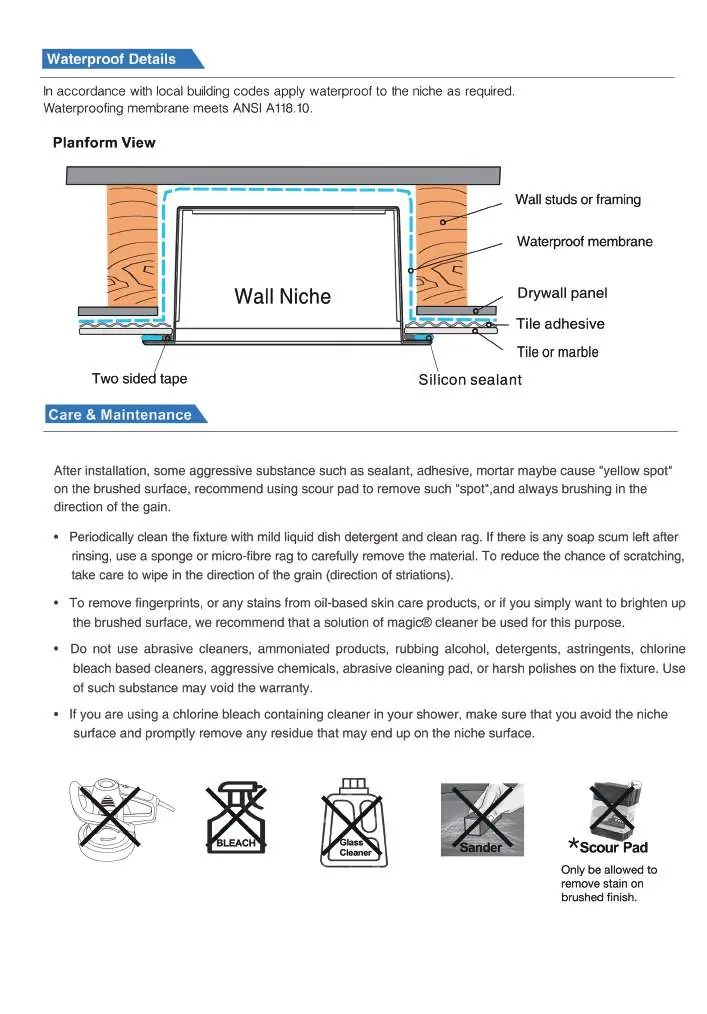
- Must meet ANSI A118.10 standards.
Images and diagrams
- The planform view illustrates the correct layering of wall studs, waterproofing membrane, drywall, adhesive, and tile.
- The installation sequence shows the transition from marking the wall to final sealing and curing.
Model compatibility
- Building codes prohibit the use of water-resistant gypsum wallboard (green board) as a tile backer in showers.
- For newly constructed walls, start the installation process from step 3.

Manual page author
Michael Turner
Technical manual editor
Reviews PDF manuals for structure, safety notes, and practical product details so readers can find the right information quickly.