Home Appliances / Food Processing Equipment
User Manual for Sirman PPJ 10-20 SC and LCJ 10-20 SC Potato Peeler and Mussel Cleaner
Quick guide for the Sirman PPJ 10-20 SC and LCJ 10-20 SC potato peeler and mussel cleaner. Includes installation, electrical connection, operation, cleaning, and maintenance instructions.
Table of contents
Manual images
Click an image to enlargeQuick Start Guide
This manual provides essential information for the safe operation and maintenance of the Sirman PPJ/LCJ SC series. Before using the machine, ensure all personnel are trained. The machine is designed exclusively for cleaning potatoes, mussels, and onions. Always disconnect the power plug before performing any cleaning or maintenance tasks.
Machine Description
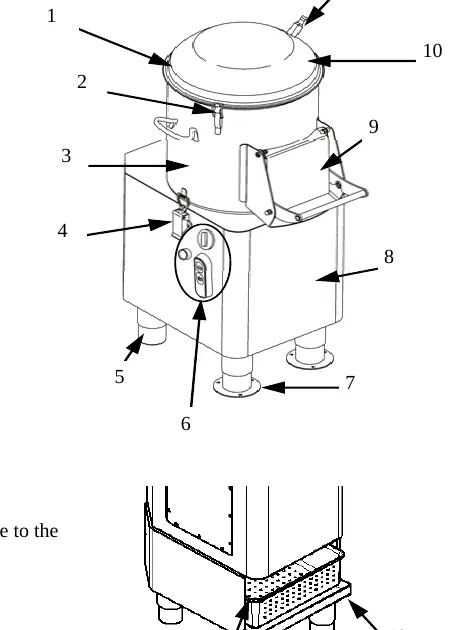
The machine consists of a hopper, pan, discharge door, and control panel. It features an upper transparent cover for monitoring the process. Safety devices include an IP34 control card, microswitches on the cover and discharge door that stop the machine if opened, and an N.V.R. device that prevents automatic restart after power loss.
Installation
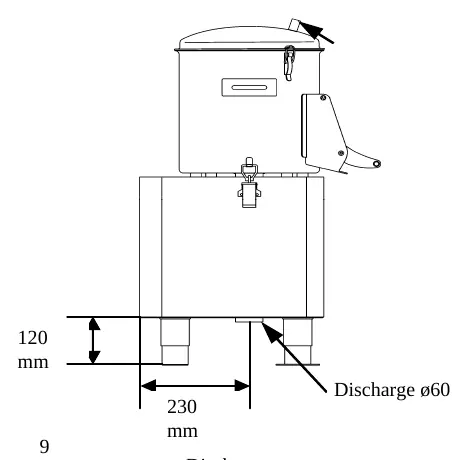
Placement: The machine must be installed on a level, dry surface. Ensure there is adequate space for operation. A discharge tube (ø60 mm) must be prearranged under the machine to a floor drain or grate. The machine should be placed near a water faucet (ø12 mm) for the feeding tube connection. Secure the machine to the floor using the setscrews on the flanged feet.
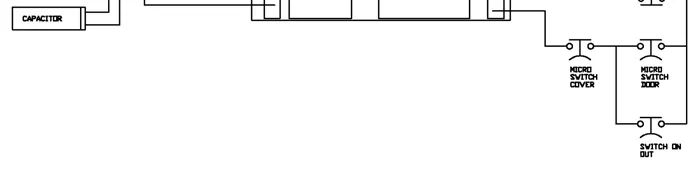
Electrical Connections: Ensure the power supply matches the data on the machine's serial plate. A magnetothermic-differential switch (10A, 0.03A) must be installed. For three-phase models, check the rotation direction; it must be counterclockwise when viewed from the discharge outlet. If incorrect, invert two of the three feeding wires.
Operation
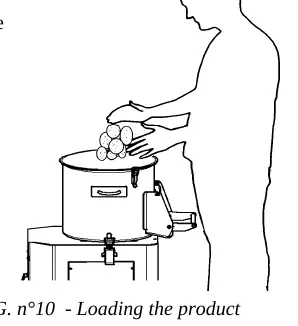
Loading: Load the product gradually through the upper cover while the motor is off. Do not exceed the abrasive band level inside the container. Close the cover and open the water faucet.
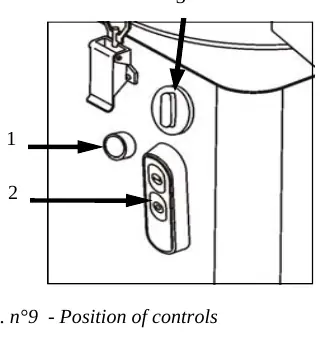
Working: Set the desired time using the timer (max 5 minutes) and press the START button. If the cover or discharge door is opened during operation, the machine will stop automatically.
Unloading: Close the water faucet and place a container under the discharge outlet. Open the discharge door and hold it open with your right hand while pressing the OUT and START buttons simultaneously with your left hand. The product will be unloaded by centrifugal force.
Cleaning and Maintenance
Cleaning: Clean the machine at the end of every workday. Remove all parts that come into contact with food for thorough cleaning. Do not use high-pressure water jets, brushes, or acidic/corrosive substances. Always empty the slag tray if equipped with a sieve.
Maintenance: The belt does not require adjustment but should be replaced every 3-4 years by an authorized assistance center. Periodically check the feeding cable for wear. If the machine malfunctions, contact the Assistance Center.
Practical help
Common problems
Machine does not start
Ensure the cover and discharge door are fully closed; the safety microswitches prevent operation if they are open.
Incorrect rotation direction (three-phase models)
Invert two of the three feeding wires in the plug or outlet.
Machine stops during operation
Check if the cover or discharge door was accidentally moved or opened; close them and press the START button.
Water dripping from the machine
If equipped with a stand and sieve, ensure the slag tray is emptied regularly.
Before use
- Ensure the machine is placed on a level, dry, and stable surface.
- Verify the discharge tube (ø60 mm) is correctly positioned.
- Connect the water feeding tube to a faucet (ø12 mm).
- Secure the machine to the floor using the flanged feet setscrews.
- Verify the electrical supply matches the machine's technical plate.
- Check that the cover and discharge door are closed and locked.
Images and diagrams
- Fig 1: Identifies main components like the hopper, discharge door, and controls.
- Fig 4: Shows the required installation clearances and discharge tube placement.
- Fig 9: Illustrates the control panel with START, STOP, and OUT buttons and the timer.
- Fig 10: Demonstrates the correct method for loading the product.
Model compatibility
- Suitable for cleaning potatoes, mussels, and onions only.
- Three-phase models can run on 230V or 400V; contact assistance for 230V adaptation.

Manual page author
David Miller
Documentation analyst
Organizes user manual content into clear summaries, with attention to model details, product context, and everyday usability.