Electronics / Audio
Voyager MKII Overdrive/Preamp User Guide
Quick guide for the Voyager MKII overdrive/preamp. Learn about controls, power requirements, EQ settings, and operating modes for this mid-focused pedal.
Table of contents
Manual images
Jump to the sectionQuick guide from the manual
The Voyager MKII is a mid-focused overdrive and preamp pedal designed to provide clarity across all gain settings. It features a true bypass switching system and a dedicated Mid-EQ circuit. To ensure optimal performance, always use a 9V DC, center-negative power supply. The pedal is designed for tone shaping, allowing users to blend clipped signals with dry signals and adjust mid-range frequencies.
Power requirements
Proper power is essential for the pedal's operation and to prevent noise issues:
- Voltage: 9V DC.
- Polarity: Center Negative.
- Current: 100mA.
- Recommendation: Use an isolated power supply. Daisy chain power supplies are not recommended.
Controls
The Voyager MKII features several knobs and switches to tailor your sound:
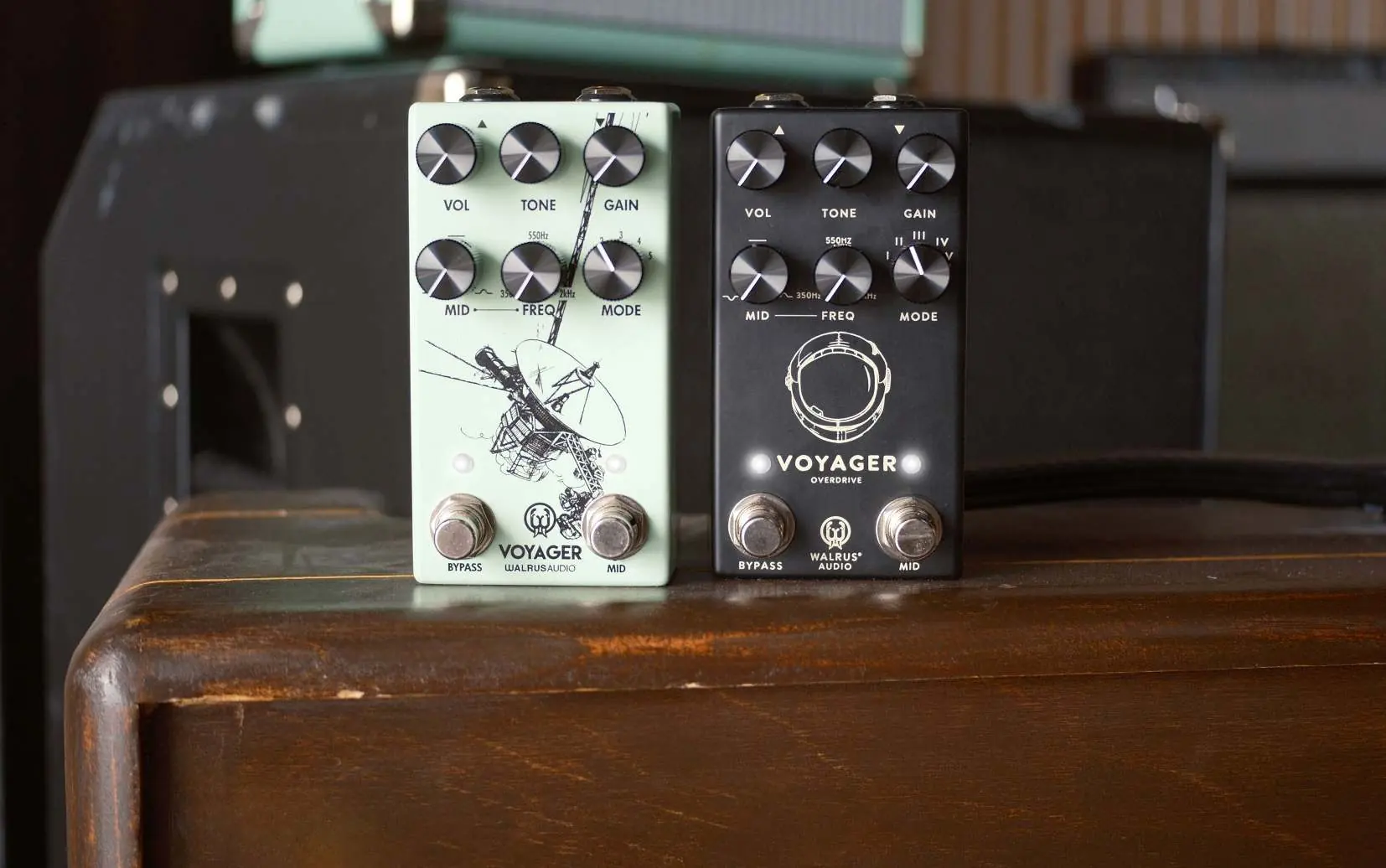
- Volume: Controls the overall output level. Clockwise increases volume; use this to set unity gain after adjusting the gain knob.
- Tone: Adjusts the cutoff frequency of a low-pass filter to tame or brighten the high end.
- Gain: Increases the overall gain of the drive circuit. It blends the clipped signal with your dry signal.
- Mid: Controls the gain of the parametric EQ (+/-12dB). 12 o'clock is flat.
- Freq: Controls the center frequency of the Mid-EQ (range: 250Hz-2kHz).
- Mode: Selects between five different clipping diode configurations.
- Bypass Switch: Engages or disengages the pedal.
- Mid Switch: Turns the Mid-EQ circuit on/off. This is only active when the bypass switch is engaged.
Modes
The Mode knob allows you to select from five distinct clipping configurations:
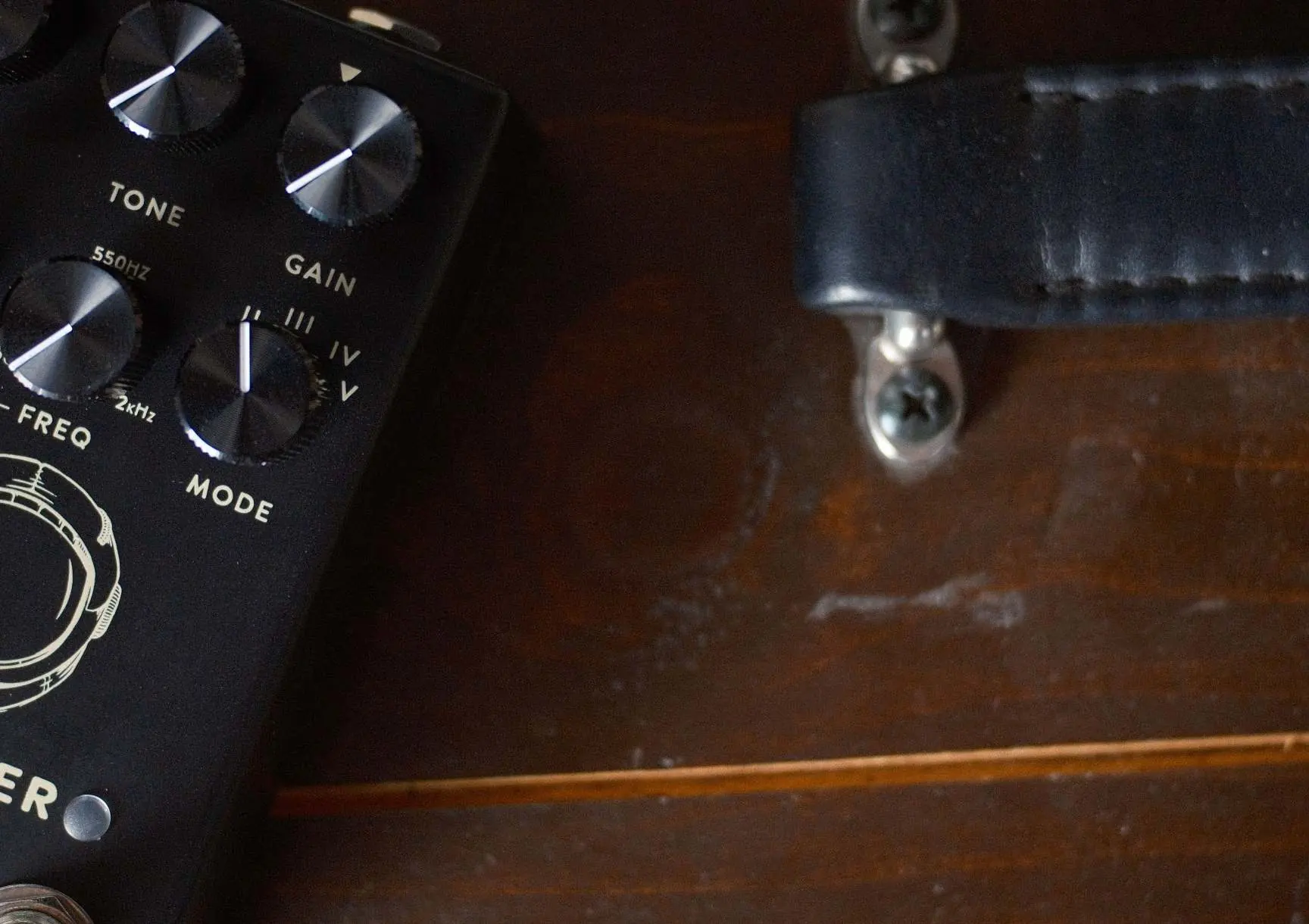
- Mode 1: Classic 1N34A Germanium Diodes (most compressed).
- Mode 2: Classic 1N34A Germanium Diodes with bass boost.
- Mode 3: Symmetric Silicon Diodes (more open and dynamic).
- Mode 4: Asymmetric Silicon Diodes (slight compression).
- Mode 5: Asymmetric Silicon Diodes with bass boost.
Technical specifications
- Enclosure Size: 2.62 x 4.77 x 2.25 inches (including knobs).
- Input: 1/4 inch TS, Unbalanced, 1M impedance.
- Output: 1/4 inch TS, Unbalanced, 100k impedance.
- Bypass: True-Bypass.
Practical help
Common problems
No sound or signal
Ensure the pedal is powered with a 9V DC, center-negative supply and that the bypass switch is engaged.
Excessive noise or hum
Avoid using daisy chain power supplies. Use an isolated power supply instead.
Mid-EQ settings have no effect
The Mid-EQ circuit is only active when the bypass switch is engaged. Ensure the pedal is turned on.
Before use
- Verify power supply is 9V DC, Center Negative, 100mA.
- Use an isolated power supply for best performance.
- Ensure instrument cables are 1/4 inch TS (unbalanced).
- Check that the bypass switch is engaged to activate the pedal.
Specs in practice
- Input Impedance (1M)
- Ensures high signal integrity from guitar pickups, preventing tone loss.
- Output Impedance (100k)
- Standard impedance for driving amplifiers or subsequent pedals in the signal chain.
- Mid-EQ Range (250Hz-2kHz)
- Allows precise frequency shaping to cut through a mix or clean up the lower-mid area.
Images and diagrams
- The pedal features six control knobs (Vol, Tone, Gain, Mid, Freq, Mode) and two footswitches (Bypass, Mid) for real-time tone shaping.
Model compatibility
- Power: Only use 9V DC, Center Negative.
- Cables: Requires 1/4 inch TS (unbalanced) cables.

Manual page author
David Miller
Documentation analyst
Organizes user manual content into clear summaries, with attention to model details, product context, and everyday usability.