Music / Instruments
Yamaha 10-Minute Basic Training Guide
A comprehensive 10-minute daily practice routine for various musical instruments, including exercises for tone, scales, rhythm, and technique.
Table of contents
Manual images
Click an image to enlargeQuick guide from the manual
This guide provides a structured 10-minute daily practice routine designed for various musical instruments. It focuses on fundamental skills such as long tones, scales, rhythm, and articulation to help musicians maintain and improve their technique.
Practice routine structure
The training is divided into several numbered exercises that should be performed daily. Each exercise targets a specific aspect of musical performance:
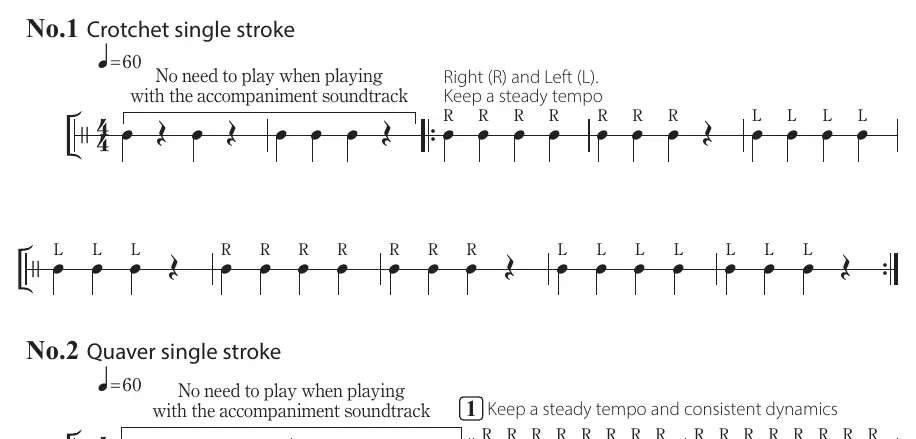
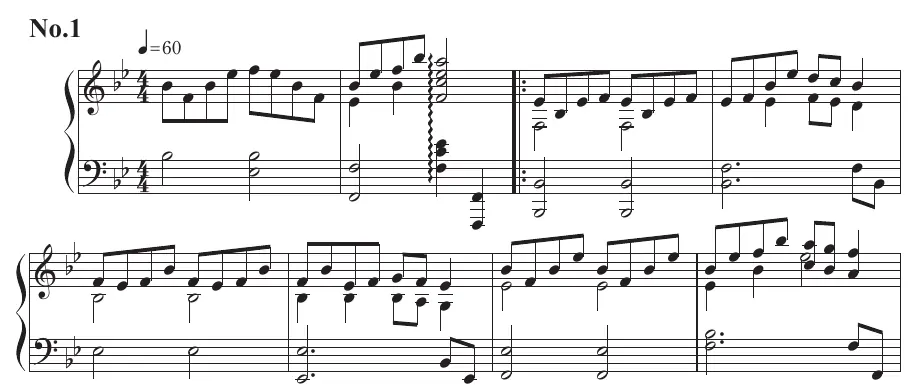
- Long tone practice (No. 1): Focuses on breath control and tone quality.
- Five-note long tone (No. 2 & 3): Helps memorize fingerings and maintain straight tones.
- Three scales (No. 4): Develops familiarity with key signatures and scale patterns.
- Slur practice (No. 5): Improves smooth transitions between notes.
- Quaver/Rhythm practice (No. 6 & 7): Enhances articulation, tonguing, and rhythmic precision.
General practice tips
- Airflow: Always take in a lot of air and play with consistent support.
- Rhythm: Count beats properly and use a metronome to maintain a steady tempo.
- Technique: Memorize fingerings or positions for your specific instrument.
- Dynamics: Keep straight tones and consistent sound intensity throughout the exercises.
- Articulation: Pay attention to slurs (connect notes smoothly) and tonguing (articulate clearly).
Instrument coverage
This manual includes specific exercises for the following instruments: Flute, Oboe, Bassoon, Clarinet (Eb, Bb, Bass), Saxophone (Soprano, Alto, Tenor, Baritone), Trumpet, Horn (F, Alto), Trombone, Euphonium, Tuba, String Bass, Snare Drum, Bass Drum, Suspended Cymbals, Mallet Percussion, and Piano.
Manufacturer information
Yamaha
Practical help
Common problems
Inconsistent tone quality
Focus on 'Long tone practice' (No. 1) to maintain steady airflow and straight tones.
Difficulty with rhythm
Practice 'Various rhythms' (No. 7) and count beats aloud or use a metronome.
Uneven articulation
Use 'Quaver practice' (No. 6) to focus on clear tonguing or bowing technique.
Before use
- Ensure your instrument is properly assembled and tuned.
- Check your posture and breathing technique.
- Set a metronome to the indicated tempo (e.g., 60, 76, 92, 100, 120 BPM).
- Warm up with long tones before moving to scales.
Specs in practice
- BPM (Beats Per Minute)
- The tempo at which the exercise should be played (e.g., 60 for slow, 120 for fast).
- Key Signatures
- The set of sharps or flats at the beginning of the staff that dictate the key of the exercise.
Images and diagrams
- Musical notation shows the notes to play.
- Numbers in boxes indicate specific exercises.
- Tempo markings (e.g., 60) indicate the speed.
Model compatibility
- This guide is universal for the listed instruments but requires specific knowledge of fingerings or positions for each.

Manual page author
David Miller
Documentation analyst
Organizes user manual content into clear summaries, with attention to model details, product context, and everyday usability.