Lighting / Fixtures
Anko 150LT Solar Powered Icicle String Lights
Quick guide for Anko 150LT Solar Powered Icicle String Lights. Learn how to install, position for optimal charging, select lighting modes, and maintain your solar lights.
Table of contents
Manual images
Click an image to enlargeQuick guide from the manual
The Anko 150LT Solar Powered Icicle String Lights are designed for outdoor use. The system is pre-assembled and relies on a solar panel to charge an internal, non-replaceable battery during the day to power the lights at night. No external power connections are required.
Siting instructions
Proper placement is critical for the performance of the solar lights:
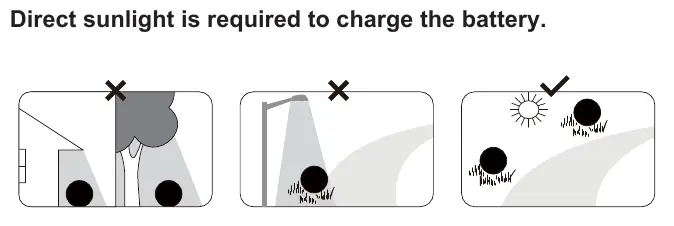
- Direct Sunlight: The solar panel must be located where it can receive direct sunlight. Avoid shadows from buildings, trees, walls, or hedges as these will reduce performance.
- Avoid Heat Sources: Do not place the lights near barbecues, heaters, or other direct sources of heat.
- Avoid Light Interference: Try to avoid locations where light from other sources (e.g., streetlights, floodlights) may affect the PIR sensor, as this may prevent the lights from turning on in dark conditions.
- Ground Conditions: Choose a location with soft ground to allow the anchor spike to be pushed in easily.
Assembly
The product is pre-assembled, but requires setup for ground installation:
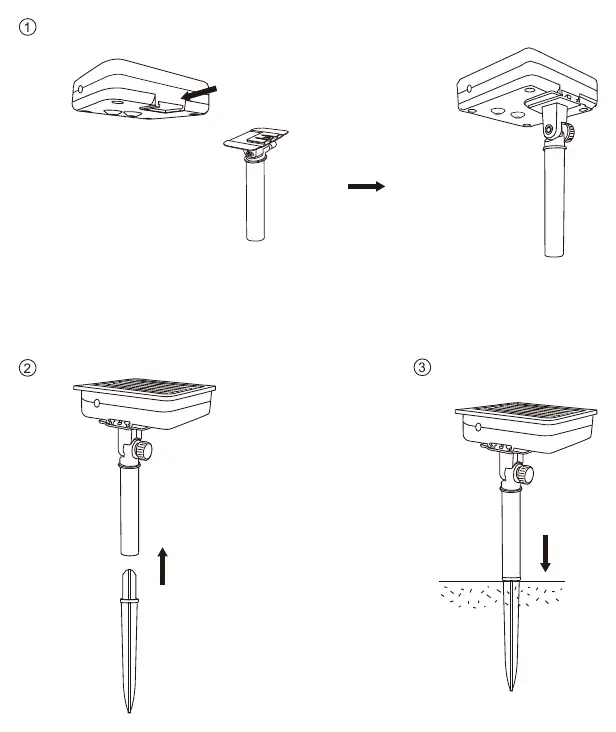
- Remove all packaging before use and dispose of it safely.
- Ensure there are no pipes or mains cables immediately underneath the chosen location.
- Attach the anchor spike to the solar panel assembly.
- Insert the spike firmly into the ground.
Operation
Once installed, follow these steps to operate the lights:
- Power: Turn the ON/OFF switch located at the bottom of the solar panel to the ON position.
- Modes: Press the MODE switch on the solar panel to toggle between 'Steady on' and 'Flashing' functions.
- Cables: Ensure cables are routed safely to avoid tripping hazards.
Maintenance and safety
- Battery and Bulbs: The battery and bulbs are non-replaceable. Do not attempt to open the unit or replace these components.
- Weather: The lights can be left outside in the rain but should not be exposed to water jets or immersed. Store the solar panel indoors during extreme weather conditions like prolonged snow or frost.
- Condensation: Some condensate may form inside the unit or solar panel in cold conditions; this is normal and can be ignored.
- Safety: Keep the product away from children as it contains small parts that may pose a choking hazard. The end point of the ground stake is sharp.
Manufacturer information
Anko
Practical help
Common problems
Lights do not turn on at night
Ensure the switch is set to ON and the solar panel is not being triggered by other light sources like streetlights.
Lights are dim or stay on for a short time
The solar panel may be shaded. Ensure it is in a location with direct sunlight during the day.
Before use
- Remove all packaging materials.
- Check the ground for underground pipes or cables before inserting the spike.
- Ensure the solar panel is in a location with direct sunlight.
- Turn the switch to the ON position.
- Select the desired lighting mode (Steady or Flashing).
Specs in practice
- Steady on / Flashing
- Selectable lighting modes controlled by the button on the solar panel.
Images and diagrams
- The assembly diagram illustrates attaching the anchor spike to the solar panel unit and inserting it into the ground.
- The placement diagram shows that direct sunlight is required for charging, while shadows from trees or buildings should be avoided.
Model compatibility
- Outdoor use only.
- Not suitable for immersion in water.
- Store indoors during extreme weather (snow/frost).

Manual page author
Michael Turner
Technical manual editor
Reviews PDF manuals for structure, safety notes, and practical product details so readers can find the right information quickly.