Computers / Laptops
MacBook Pro User Guide
Quick start guide for MacBook Pro. Learn about ports, trackpad gestures, Touch ID, and system navigation.
Table of contents
Manual images
Click an image to enlargeGetting Started
Your MacBook Pro is designed for ease of use. The device automatically starts up when you lift the lid. Upon first use, the Setup Assistant will guide you through the initial configuration to get you up and running.
Hardware Overview
Familiarize yourself with the key components of your MacBook Pro:
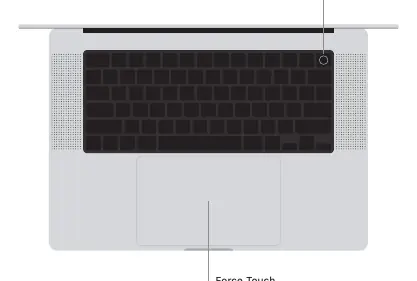

- Touch ID (Power Button): Located on the keyboard, this button allows you to unlock your Mac, sign in to apps, and make purchases using Apple Pay.
- Force Touch Trackpad: Supports various multi-touch gestures for navigation.
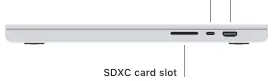
- Ports: Depending on your model, the device includes MagSafe 3 for charging, Thunderbolt 4 (USB-C) ports for data and display, a headphone jack, an HDMI port, and an SDXC card slot.
Trackpad Gestures
The Force Touch trackpad supports intuitive gestures to help you navigate macOS:
- Scroll: Brush with two fingers to scroll up, down, or sideways.
- Flip Pages: Swipe with two fingers to flip through web pages and documents.
- Right-Click: Click with two fingers.
- Force Click: Click and then press deeper to reveal options for text or items.
You can customize these settings by navigating to System Settings and selecting Trackpad.
System Navigation
The main interface includes several key elements:
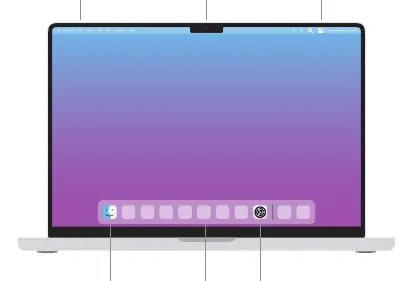
- Menu Bar: Located at the top of the screen for system-wide controls.
- Control Center: Provides quick access to settings like Wi-Fi, Bluetooth, and volume.
- Dock: Located at the bottom of the screen, providing quick access to your favorite apps.
- Finder: The primary way to access your files and folders.
- System Settings: The central hub for configuring your Mac.
Support and Resources
For detailed information on setting up and using your MacBook Pro, refer to the MacBook Pro Essentials guide at support.apple.com/guide/macbook-pro. For technical support, visit support.apple.com/mac/macbook-pro or contact Apple at support.apple.com/contact.
Official resources from the manual
Manufacturer information
Apple Inc.
Practical help
Common problems
Device does not turn on
Ensure the lid is lifted. The MacBook Pro automatically starts up when the lid is opened.
Cannot find system settings
Access System Settings via the Dock or the Apple menu to configure trackpad, display, and other preferences.
Before use
- Lift the lid to power on the device.
- Follow the on-screen Setup Assistant instructions.
- Configure Touch ID for secure sign-ins and payments.
- Check available ports (MagSafe 3, Thunderbolt 4, HDMI, SDXC) for peripheral connectivity.
Specs in practice
- Force Touch Trackpad
- Pressure-sensitive trackpad that supports multi-touch gestures and deep-press actions.
- Thunderbolt 4 (USB-C)
- High-speed ports for data transfer, charging, and connecting external displays.
Images and diagrams
- The top-down view highlights the keyboard, Touch ID button, and Force Touch trackpad.
- Side views illustrate the location of MagSafe 3, Thunderbolt 4, headphone jack, HDMI, and SDXC card slot.
- The screen view identifies the Menu bar, FaceTime HD camera, Control Center, Finder, Dock, and System Settings icon.
Model compatibility
- Not all features are available in all areas.
- Ensure peripherals are compatible with Thunderbolt 4 (USB-C) or the specific ports available on your model.

Manual page author
David Miller
Documentation analyst
Organizes user manual content into clear summaries, with attention to model details, product context, and everyday usability.