Tools / Air Compressors & Pneumatics
User Manual for California Air Tools 15020C Air Compressor
Quick guide for the California Air Tools 15020C 15-gallon air compressor. Includes assembly instructions, safety warnings, daily operation steps, maintenance procedures, and troubleshooting tips.
Table of contents
Manual images
Click an image to enlargeQuick guide from the manual
The California Air Tools 15020C is an ultra-quiet, oil-free air compressor designed for various pneumatic applications. This manual provides essential instructions for safe setup, operation, and maintenance. Key requirements include a dedicated 15 Amp electrical circuit and a flat operating surface. Always drain the air tank daily to prevent moisture buildup and rust.
Safety Instructions
Warning: Failure to follow safety instructions can result in serious injury or death.
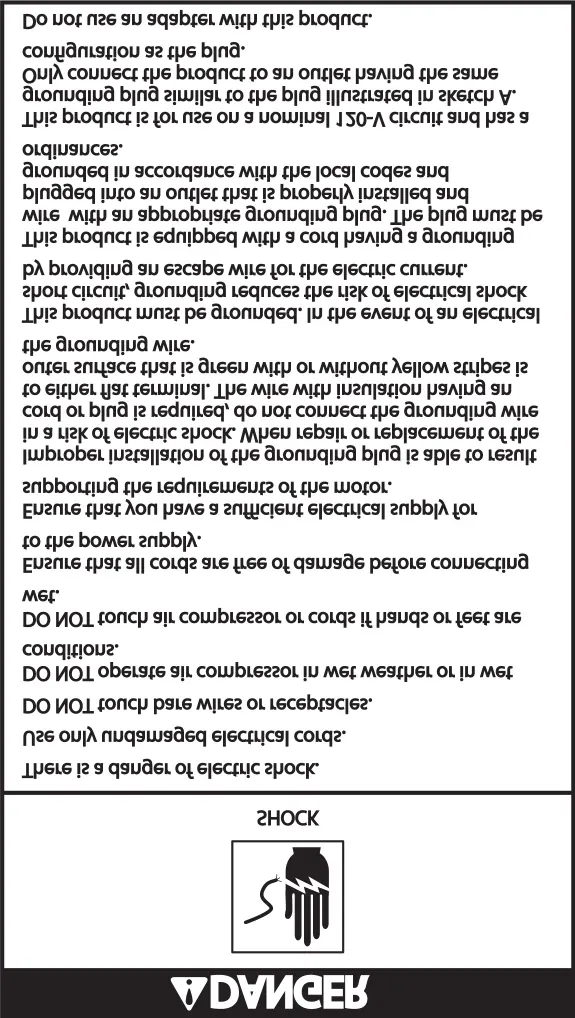
- Electrical Shock: Use only undamaged electrical cords. The unit must be grounded; do not use adapters.
- Breathing: Never breathe air directly from the compressor. Use in well-ventilated areas.
- Flying Objects: Always wear approved eye and head protection. Keep bystanders at a safe distance.
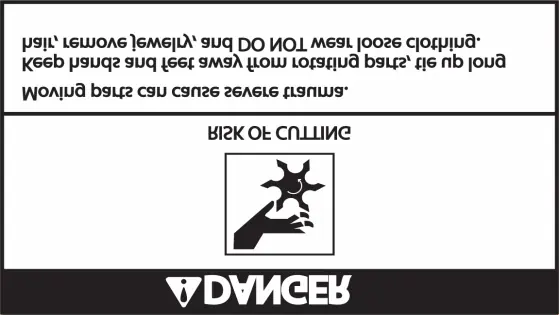
- Hot Surfaces: Cylinder head and delivery pipe become hot during operation. Allow to cool before touching.
- Fire/Explosion: Operate away from flammable items. Do not exceed maximum rated pressure.
Assembly
Before operation, complete the following assembly steps:
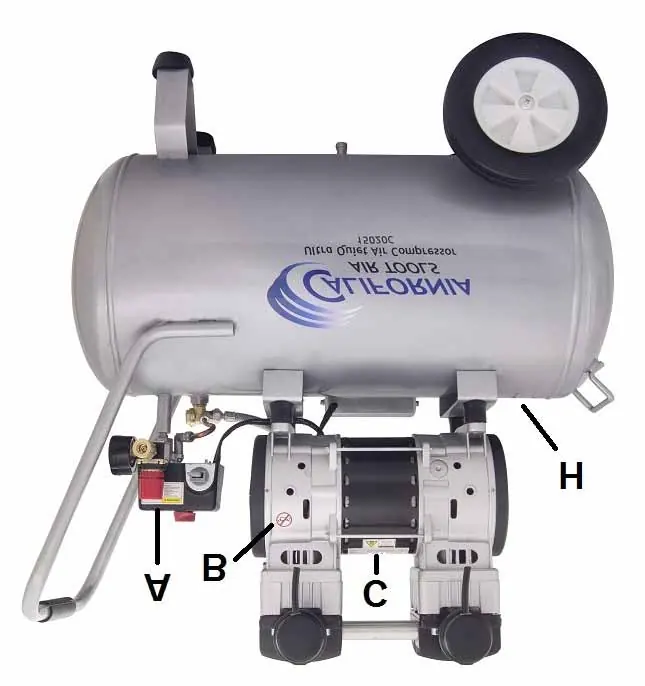
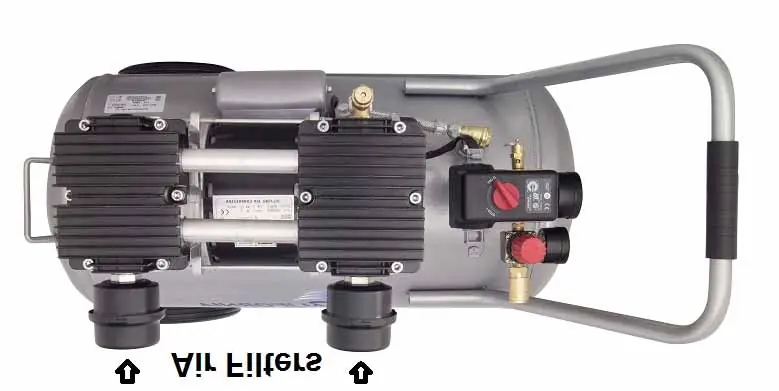
- Air Filters: Screw the two air filters into the ports on the top right side of the motor head.
- Wheel Kit: Slide the wheel bolt through the wheel, washer, and wheel support hole on the back of the tank. Secure with washer and nut. Repeat for the second wheel.
- Cushion Foot: Slide the bolt through the washer, cushion foot, and support hole on the front bottom of the tank. Secure with washer and nut.
Operating the Air Compressor
Test Run: Before first use, plug in the unit, turn the power switch to ON, and let the tank fill until the pressure switch automatically turns the power off (approx. 130 PSI). Check for proper function.
Daily Operation:
- Ensure the drain valve is closed.
- Attach your air hose to the quick coupler.
- Plug in the power cord and turn the switch to ON.
- Allow the motor to run until it stops automatically.
- Regulate airflow using the regulator knob.
- Do not run continuously for more than 1 hour.
Shutting Down: Turn the power switch to OFF, unplug the power cord, and release pressure from the air tank through the air hose.
Maintenance
- Draining the Air Tank: Drain daily or after each use to prevent moisture buildup. Turn the drain valve knob to the open position until water is removed, then close.
- Air Filter: Clean or replace the air filter element regularly if it becomes clogged to maintain performance.
- Testing for Leaks: Spray soapy water on connections. If bubbles appear, tighten or replace the leaking part.
Troubleshooting
If the compressor fails to operate, check the following:
- Pressure drop: Check for air leaks at connections or check valve spring.
- Motor does not start: Check if the thermal protector tripped due to overheating, low voltage, or an inadequate extension cord. Allow the motor to cool.
- Noisy operation: If metallic clangs occur, the head gasket or reed valve may be damaged; stop use and contact support.
Practical help
Common problems
Pressure drop in the tank
Check for air leaks at connections using soapy water. If the check valve spring is compressed, release all pressure, remove the valve cap, and stretch the spring.
Compressor stopped and does not start
The thermal protector may have tripped due to overheating. Ensure the main voltage is correct, avoid long/thin extension cords, and allow the motor to cool.
Motor does not start or starts slowly
Check for low voltage supply. Ensure you are using a heavy-duty extension cord (max 25ft, 14 gauge) and a fully functional power outlet.
Compressor is noisy with metallic clangs
Compressor head gasket or reed valve may be damaged. Stop the compressor immediately and contact the parts dealer.
Before use
- Inspect all parts for damage.
- Ensure the air tank is not damaged.
- Place on a flat surface (incline no greater than 15 degrees).
- Ensure at least 2 feet of obstacle-free space around the unit.
- Install air filters.
- Verify the drain valve is closed.
- Ensure the power supply is a dedicated 15 Amp circuit.
Images and diagrams
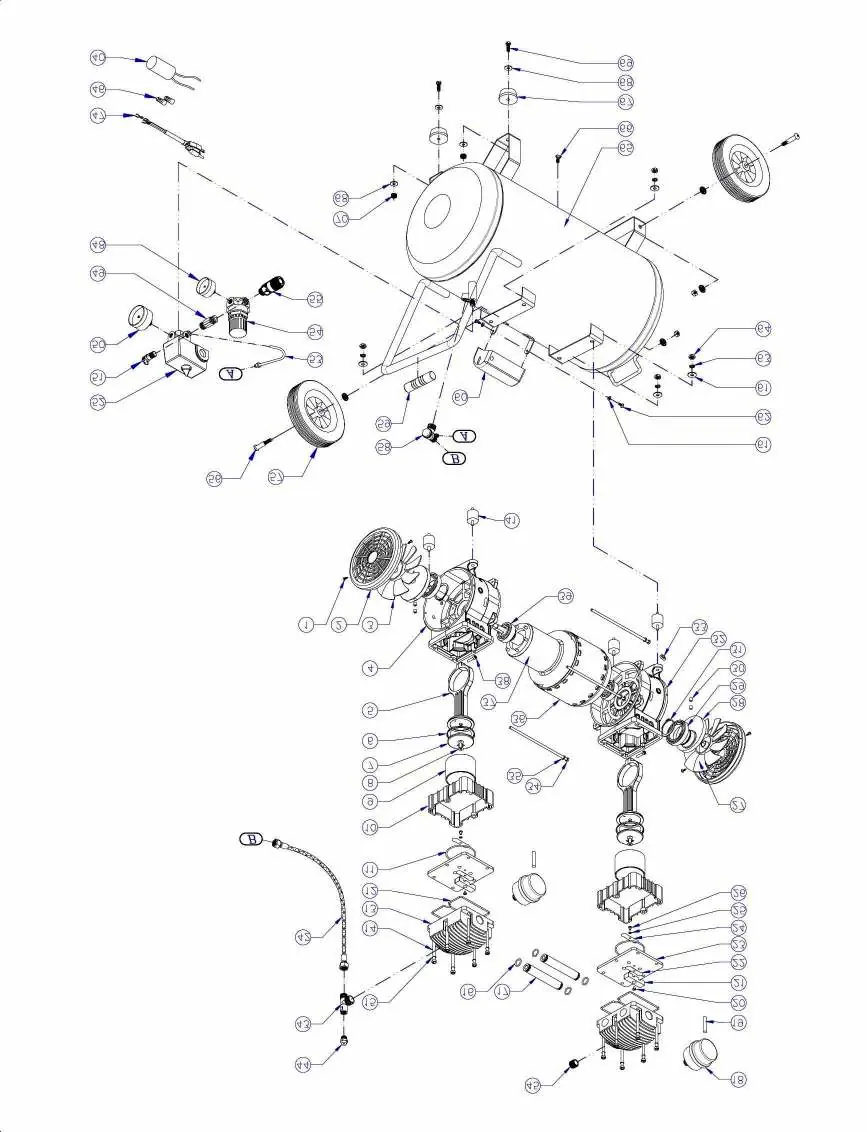
- Assembly diagrams illustrate the installation of wheels and the cushion foot.
- The electrical circuit diagram shows the motor, capacitor, and overload protector connections.
- The air passage drawing outlines the flow from the air intake through the tank to the regulator.
Model compatibility
- Use a dedicated 15 Amp circuit.
- Extension cords must be 3-wire, 3-blade grounding type, max 25 feet long, and at least 14 gauge.
- Do not use adapters with the power plug.

Manual page author
Emily Carter
User documentation editor
Prepares concise manual descriptions and highlights the most useful setup, operation, and maintenance information for readers.