Tools / Air Compressors & Pneumatics
User Manual for California Air Tools 1810C 10 Gallon Casting Pressure Pot
Quick guide for the California Air Tools 1810C 10 Gallon Casting Pressure Pot. Includes setup, operating instructions, safety warnings, maintenance, and troubleshooting.
Quick answers from the manual
Quick answer
- The 1810C is a 10-gallon casting pressure pot. It operates at 60 PSI, with a maximum safety limit of 80 PSI. Always bleed pressure before opening the lid. p. 1, 3
Key actions
- Bleeding pressure before opening p. 5
- Adjusting pressure p. 3, 4
First start
- Install regulator assembly to the swivel adaptor on the tank lid. p. 3
- Connect air supply hose to the air inlet fitting. p. 3
Problems and fixes
Air leak at the lid gasket
Tighten thumb screws or replace the lid gasket.
p. 6Maintenance and reset
- Clean tank and lid after each use. p. 5
Technical specifications
| Parameter | Value | Meaning | Pages |
|---|---|---|---|
| Maximum Pressure | 80 PSI | Safety limit | p. 1, 3 |
| Operating Pressure | 60 PSI | Recommended operating pressure | p. 1, 3 |
Where to find it in the PDF
- Technical Data p. 1
- Assembly and Operation p. 3, 4
- Maintenance p. 5
- Troubleshooting p. 6
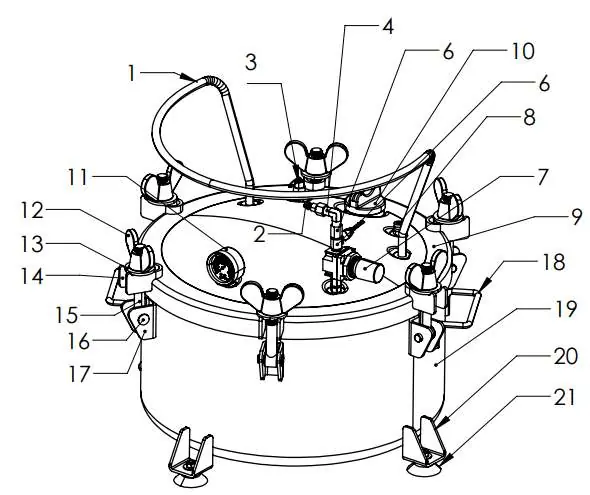
- Explosive Drawing p. 7
Table of contents
Manual images
Click an image to enlargeQuick guide from the manual
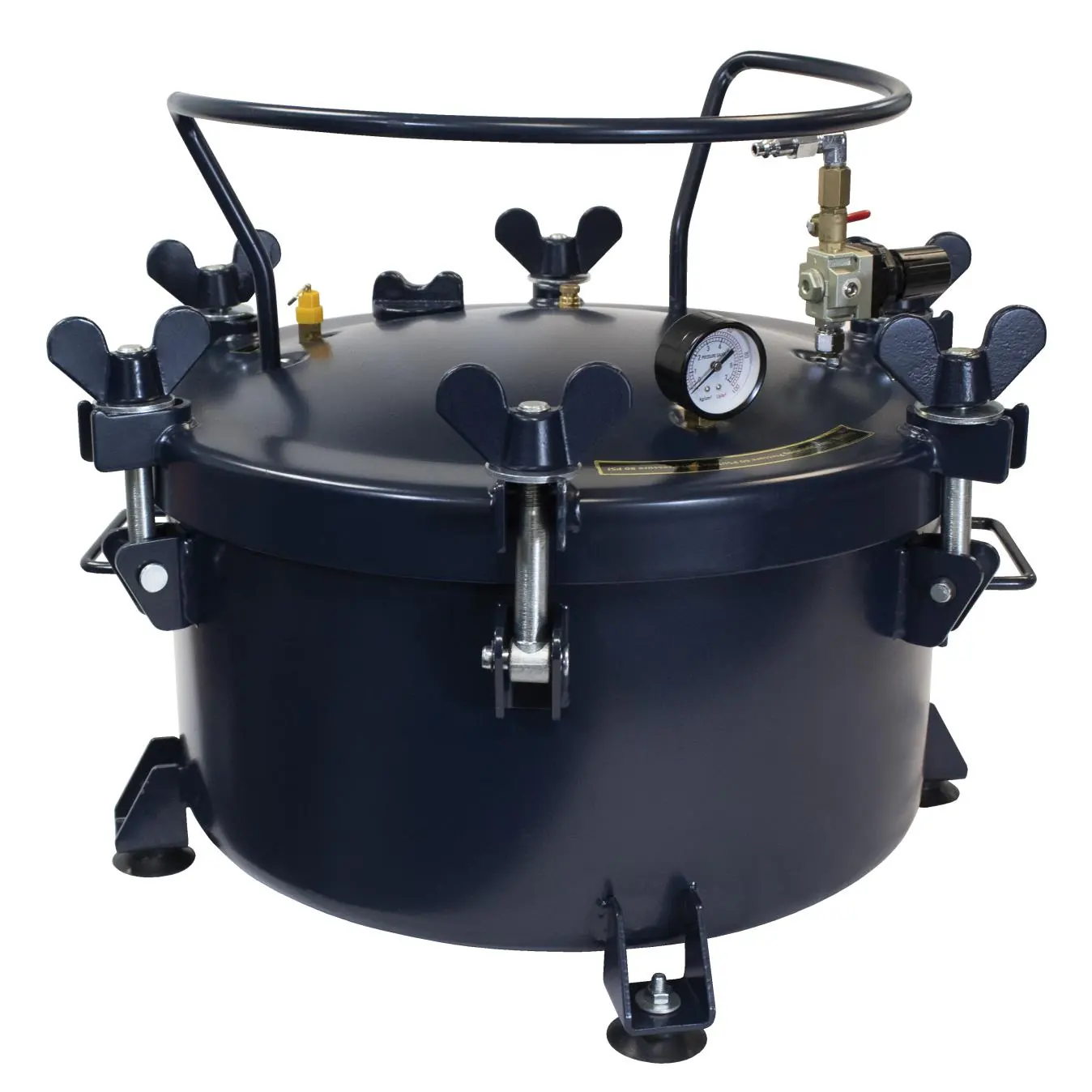
The California Air Tools 1810C is a 10-gallon casting pressure pot designed for specific pressure applications. Important: The maximum pressure in the tank is 80 PSI. Operating pressure should be 60 PSI. Never exceed 80 PSI, as this will activate the safety valve. Always ensure that any equipment connected to the tank has a higher pressure rating than the regulated air pressure.
Assembly
Before assembly, ensure your air compressor can produce at least 90 PSI and that the air supply is clean. The air hose should not be longer than 50ft, with a minimum diameter of 1/4" I.D.
- Install the regulator assembly to the swivel adaptor on the tank lid. Check the bottom of the regulator for the correct location of the tank connection.
- Connect the air supply hose to the air inlet fitting on the tank regulator.
Operation
Follow these steps for safe operation:
- Open the compressor valve or turn it on.
- Before turning on air pressure, screw out the regulator T-handle adjusting screw all the way counter-clockwise to shut off air pressure.
- Turn on the air, then adjust the regulator to the required pressure (60 PSI recommended).
- Rotate the regulator knob clockwise to increase pressure and counter-clockwise to decrease pressure.
- Always ensure all connections are tightened properly before use.
Maintenance and Storage
Regular maintenance is essential for safety and longevity:
- Before opening: Always shut off air pressure at the source and bleed off all pressure in the tank by pulling the safety valve ring until the pressure subsides.
- Rotate the tank regulator handle counter-clockwise until no spring tension is felt.
- Clean the tank and lid after each use. Ensure ports to the safety valve, gauge, and outlet are free of hardened paint or other materials.
- If the lid gasket leaks, relieve tank pressure and clean or replace the gasket.
Troubleshooting
If you encounter issues, stop using the tool immediately. Only qualified persons or an authorized service center should perform repairs.
- Air escaping from regulator cap: Likely a broken or damaged diaphragm in the regulator. Replace the regulator.
- Pressure dropping slowly on gauge: Likely a dirty or worn valve seat in the regulator. Replace the regulator.
- Air leak at the lid gasket: The gasket may be defective, or thumb screws may be loose. Tighten thumb screws or replace the lid gasket.
Practical help
Common problems
Air escaping from regulator cap
Replace the regulator due to a broken or damaged diaphragm.
Pressure dropping slowly on gauge
Replace the regulator due to a dirty or worn valve seat.
Air leak at the lid gasket
Tighten thumb screws or replace the lid gasket.
Before use
- Ensure air supply is clean and does not exceed 90 PSI.
- Verify air hose is not longer than 50ft.
- Check that all connections are secure.
- Ensure connected equipment has a higher pressure rating than the tank.
- Check that the safety valve functions properly before each use.
Specs in practice
- Maximum Pressure
- 80 PSI (Do not exceed, as this activates the safety valve).
- Operating Pressure
- 60 PSI (Recommended for general casting).
- Tank Capacity
- 10 Gallons (40 Liters).
Images and diagrams
- The explosive drawing identifies 21 components, including the lid handle bar, safety valve, pressure regulator kit, tank lid, and cushion feet.
Model compatibility
- Not designed for highly abrasive or corrosive applications.
- Do not use reactive chemicals such as acids, caustic solutions, or halogenated hydrocarbon solvents.

Manual page author
David Miller
Documentation analyst
Organizes user manual content into clear summaries, with attention to model details, product context, and everyday usability.