Hvac / Thermostats Controls
Danfoss 077B Thermostat Identification Guide
A guide to identifying genuine Danfoss 077B thermostats and distinguishing them from counterfeit products by comparing physical markings, materials, and construction details.
Table of contents
Manual images
Jump to the sectionQuick guide from the manual
This document serves as an operational guide to help users identify genuine Danfoss 077B thermostats and distinguish them from counterfeit imitations. It provides visual comparisons of key components, markings, and construction details.
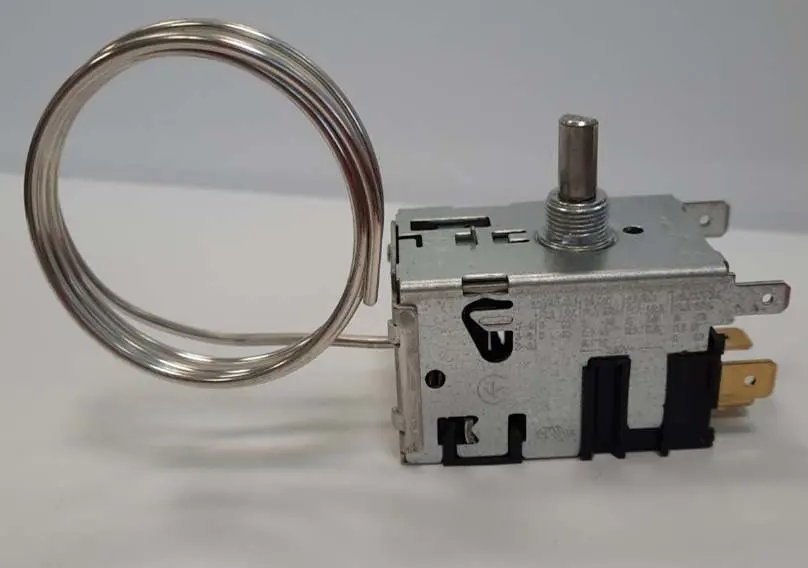
Original Danfoss 077B features
Genuine Danfoss 077B thermostats exhibit specific manufacturing characteristics:
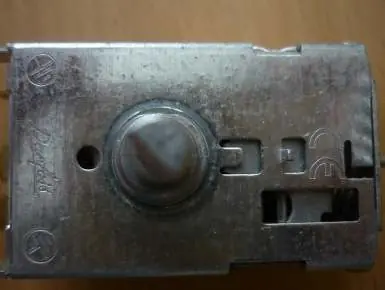
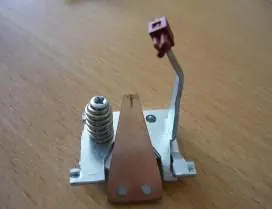
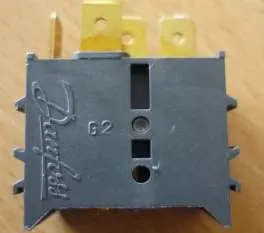
- Approvals and Markings: Original units feature clear, professional markings, including the Danfoss logo, country of origin (e.g., Made in Slovakia), and specific code numbers.
- Construction: The capillary tube connection to the bottom of the shell includes soldering. The spindle and connector are made of casting parts.
- Contact House: The contact house is available in grey, brown (nature), or black, and features the Danfoss logo.
- Internal Components: The main arm uses a Torx screw and is made of spring steel.
Identifying counterfeit products
Counterfeit units often display the following discrepancies:
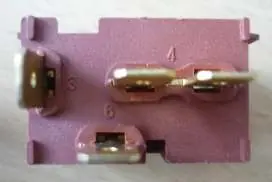
- Markings: Imitations may lack the Danfoss logo on the contact house, or the numbers and letters may be missing or poorly rendered.
- Construction: Counterfeit units may use turned parts for the spindle and connector instead of casting parts. The connection of the capillary tube to the bottom of the shell often excludes soldering.
- Materials: Imitations may feature copper-coated iron for the main arm (instead of spring steel) and use cross screws instead of Torx screws.
- Labels: Counterfeit units may have text printed on the plastic-coated tube, which is not a practice used by Danfoss.
- Contact System: The ID numbers (3 and 6) for the connection on the contact system may be placed differently compared to the original.
Manufacturer information
Danfoss A/S
Practical help
Common problems
Counterfeit products sold under the Danfoss brand
Verify the presence of the Danfoss logo on the contact house and check for proper soldering at the capillary tube connection point.
Incorrect spindle or connector material
Genuine parts use casting; imitations often use turned parts.
Incorrect screw type used in assembly
Genuine units use Torx screws for the main arm; imitations often use cross screws.
Before use
- Check for the Danfoss logo on the shell and contact house.
- Verify the country of origin marking (e.g., Made in Slovakia).
- Inspect the capillary tube connection at the bottom of the shell for soldering.
- Check if the spindle and connector are made of casting parts.
- Ensure the main arm uses a Torx screw.
- Verify that there is no text printed on the plastic-coated capillary tube.
Specs in practice
- Spindle/Connector
- Genuine parts are made of casting; imitations are often turned parts.
- Contact House
- Genuine units feature the Danfoss logo and specific ID numbers for connections.
Images and diagrams
- Visual comparisons show the difference in soldering at the capillary tube base.
- Images highlight the difference between casting (genuine) and turned (imitation) spindle parts.
- Detailed photos show the correct placement of ID numbers 3 and 6 on the contact system.

Manual page author
Michael Turner
Technical manual editor
Reviews PDF manuals for structure, safety notes, and practical product details so readers can find the right information quickly.