Computers / Laptops
User Manual for Dell Inspiron 15 5502 Laptop
Quick guide for the Dell Inspiron 15 5502 laptop. Learn about setup, port layouts, keyboard shortcuts, and technical specifications.
Table of contents
Manual images
Click an image to enlargeQuick guide from the manual
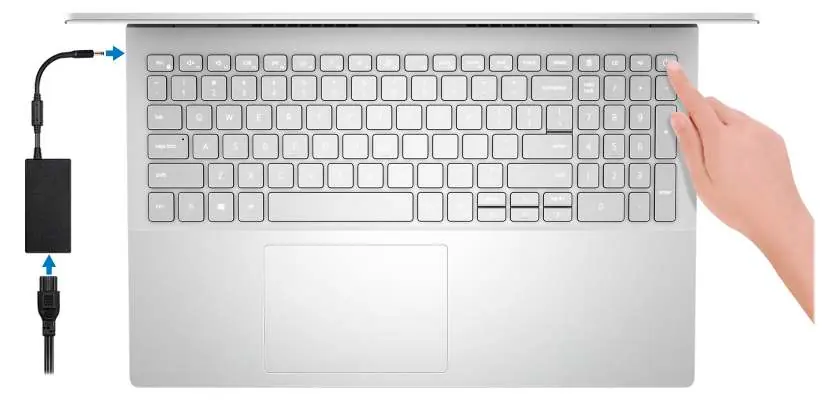
To set up your Inspiron 15 5502, connect the power adapter to the laptop and press the power button. If the battery is in power-saving mode, connecting the power adapter is required to turn on the computer. Follow the on-screen instructions to complete the operating system setup for Windows or Ubuntu. It is recommended to connect to a network during setup for updates and to sign in with or create a Microsoft account.
You can access Dell applications like My Dell, SupportAssist, and Dell Update from the Windows Start menu to manage your system, check warranty status, and download drivers.
Views of Inspiron 5502
The laptop features various ports and components:

- Right side: Includes a microSD-card slot, a USB 3.2 Gen 1 port, and a headset port.
- Left side: Includes the power-adapter port, power and battery-status light, HDMI port, a USB 3.2 Gen 1 port, and a USB 3.2 Gen 2 Type-C port with Power Delivery/DisplayPort.
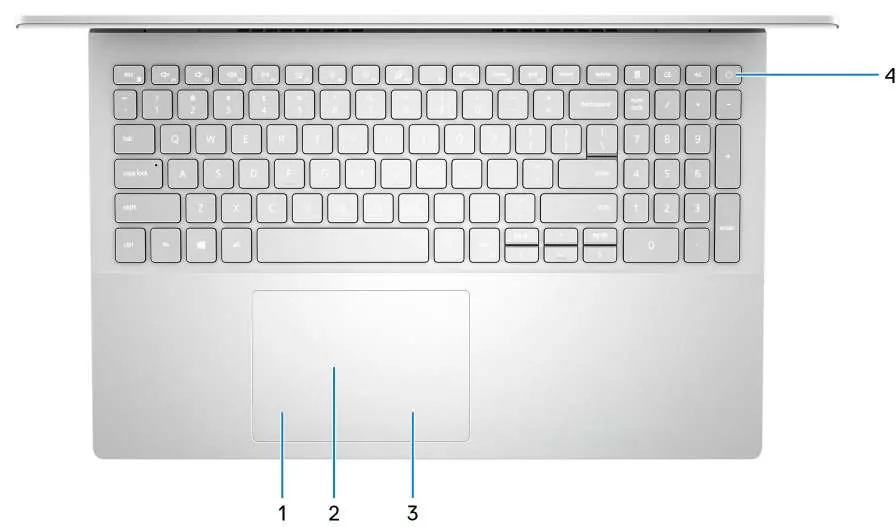
- Top: Features the touchpad, left/right-click areas, and the power button (which may include an optional fingerprint reader).
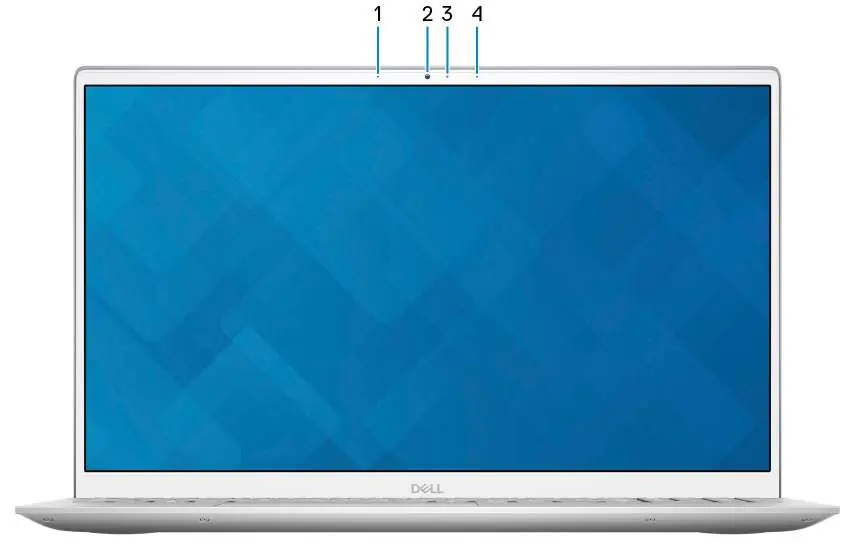
- Display: Contains the camera, camera-status light, and left/right microphones.
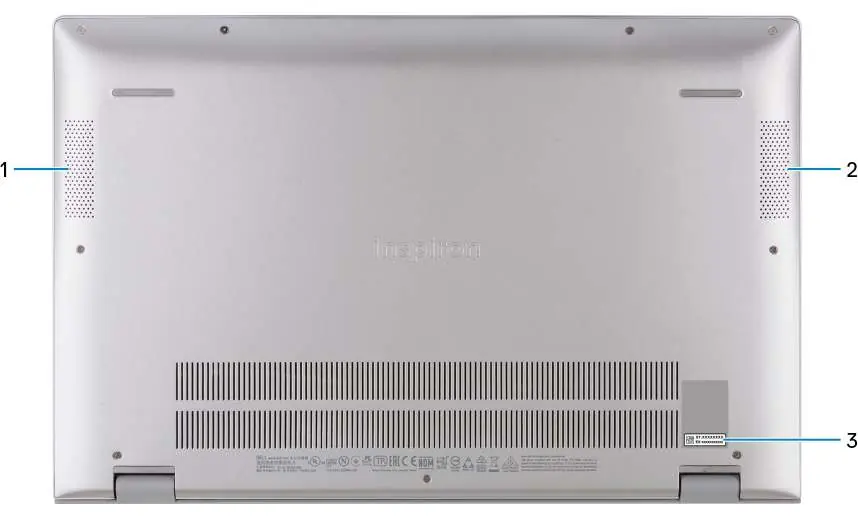
- Bottom: Features left and right speakers and the Service Tag label for identification.
Technical Specifications
The Inspiron 5502 supports 11th Generation Intel Core i3, i5, or i7 processors. Memory is expandable up to 32 GB using DDR4 3200 MHz SODIMM slots. Storage options include M.2 PCIe Gen3 x4 NVMe solid-state drives. The display is a Full High Definition (FHD) panel with Wide-Viewing Angle (WVA) technology.
The power adapter is available in 45W or 65W configurations, supporting 100-240 VAC input. The battery is a smart lithium-ion type, available in 3-cell (40 Whr) or 4-cell (53 Whr) versions, with an approximate charging time of 4 hours when the computer is off.
Keyboard Shortcuts
The function keys (F1-F12) provide multimedia control. You can toggle between multimedia and standard function key behavior by pressing Fn + Esc. Specific shortcuts include:
- F1: Mute audio
- F2: Decrease volume
- F3: Increase volume
- F4: Play/Pause
- F5: Toggle keyboard backlight
- F6: Decrease brightness
- F7: Increase brightness
- F8: Switch to external display
- Fn + T: Turn on/off Ultra performance mode
Getting Help
For support, you can use the My Dell app or visit the Dell support website. Your computer is identified by a Service Tag or Express Service Code, which can be found on the bottom of the laptop. You can access diagnostics, drivers, and manuals at www.dell.com/support.
Official resources from the manual
Manufacturer information
Dell Inc.
Practical help
Common problems
Battery not charging
Ensure the power adapter is connected properly and the status light is solid white. Use the Dell Power Manager application to check charging settings.
Computer will not turn on
Connect the power adapter, as the battery may have entered power-saving mode. Press the power button.
Function keys not performing multimedia actions
Press Fn + Esc to toggle the function key behavior. You can also define primary behavior in the BIOS setup program.
Before use
- Connect the power adapter to the laptop.
- Press the power button to turn on the device.
- Follow on-screen instructions for OS setup (Windows or Ubuntu).
- Connect to a network for Windows updates.
- Enter contact details on the Support and Protection screen.
Images and diagrams
- Right side: microSD-card slot, USB 3.2 Gen 1 port, Headset port.
- Left side: Power-adapter port, Power/battery-status light, HDMI port, USB 3.2 Gen 1 port, USB 3.2 Gen 2 Type-C port.
- Top: Power button (with optional fingerprint reader), Touchpad.
- Bottom: Left/Right speakers, Service Tag label.
Model compatibility
- Supports Windows 10/11 and Ubuntu 18.04 LTS.
- USB Type-C to DisplayPort adapter (sold separately) is required to connect a DisplayPort device.
- Intel Optane Memory H10 requires 9th Gen or higher Intel Core processors and Windows 10 64-bit or higher.

Manual page author
Michael Turner
Technical manual editor
Reviews PDF manuals for structure, safety notes, and practical product details so readers can find the right information quickly.