General / Other Manuals
User manual for Fame LEF-333 Comp Classic Compressor pedal
Quick guide for the Fame LEF-333 Comp Classic compressor pedal. Includes setup instructions, control descriptions, technical specifications, and troubleshooting tips.
Table of contents
Manual images
Jump to the sectionQuick guide from the manual
The Fame Comp is a compressor pedal designed to modify the sound of musical instruments with electromagnetic pickups. This document provides essential information for safe operation, installation, and troubleshooting. Always ensure the device is used in a dry, indoor environment and kept away from heat sources or moisture.
Device description
The pedal features a compact design with several controls for sound shaping:
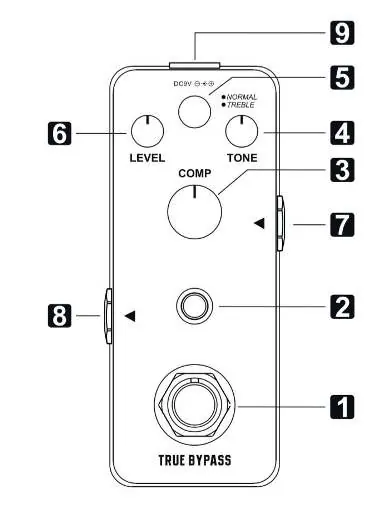
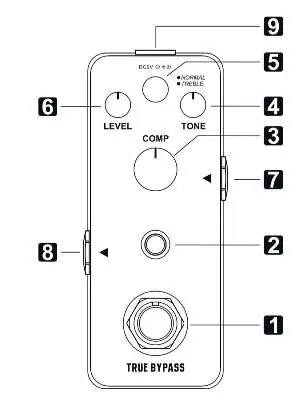
- BYPASS foot switch: Activates or deactivates the pedal effect.
- LED: Indicates the pedal status.
- COMP controller: Adjusts the intensity of the compression.
- TONE controller: Adjusts the treble components in the signal.
- MODE switch: Toggles between 'Normal' and 'Treble' modes.
- LEVEL controller: Controls the overall output volume.
- Input: 6.3mm mono jack for instrument connection.
- Output: 6.3mm mono jack for connecting to an amplifier or another pedal.
- DC IN connection: Input for a 9V DC power supply (center negative).
Installation and operation
Before connecting, inspect the device for any damage. Use only high-quality, short cables to minimize signal loss. Ensure the power supply voltage matches the requirements indicated on the device housing. Always make all cable connections before switching the device on.
Cleaning and maintenance
Regular cleaning extends the life of the product. Disconnect the device from the power supply before cleaning. Use a dry microfiber cloth to clean the unit. Never use water or wet cleaning methods. Ventilation grilles should be kept free of dust and dirt; compressed air sprays are recommended for this purpose.
Troubleshooting
- No function: Check the power supply connection.
- No output signal: Verify all cable connections between the instrument, the pedal, and the amplifier.
Technical specifications
- Input impedance: 470K Ω
- Output impedance: 1K Ω
- Current consumption: 12 mA
- Power supply: 9V DC (center negative)
- Dimensions: 95 x 45 x 48 mm
- Weight: 278 g
Practical help
Common problems
Device does not turn on
Check the power supply connection and ensure the 9V DC adapter is correctly plugged in.
No sound output
Verify that all instrument cables are securely connected from the instrument to the pedal and from the pedal to the amplifier.
Before use
- Inspect the device for physical damage.
- Ensure the power supply matches the 9V DC requirement.
- Use high-quality, short instrument cables.
- Ensure the environment is dry and well-ventilated.
- Make all connections before powering on the device.
Specs in practice
- Input impedance (470K Ω)
- Determines how the pedal interacts with your instrument's pickups.
- Current consumption (12 mA)
- The amount of power the pedal draws; ensure your power supply can provide at least this amount.
- Power supply (9V DC)
- Requires a standard 9V DC adapter with a center-negative polarity.
Images and diagrams
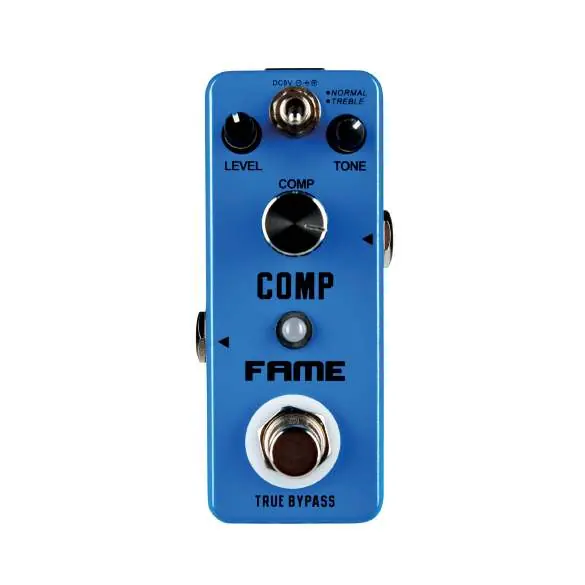
- The pedal layout includes a bypass footswitch, status LED, and four controls: Level, Tone, Comp, and a Mode switch.
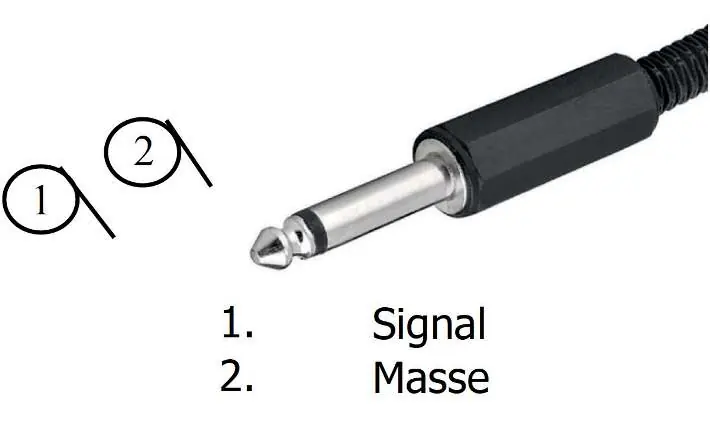
- The input and output jacks are standard 6.3mm mono connectors.
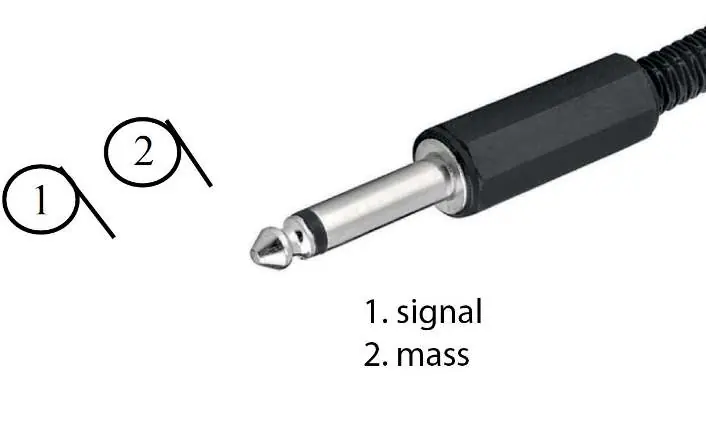
- The connector wiring diagram shows the tip as the signal and the sleeve as the ground (mass).
Model compatibility
- Designed for instruments with electromagnetic pickups.
- Requires a 9V DC power supply with center-negative polarity.
- Uses standard 6.3mm mono instrument cables.

Manual page author
Michael Turner
Technical manual editor
Reviews PDF manuals for structure, safety notes, and practical product details so readers can find the right information quickly.