Home Appliances / Ovens
Installation and Usage Manual for Fiamma Motor Kit Compact F80s
Complete installation and operation guide for the Fiamma Motor Kit Compact F80s. Includes wiring diagrams, electrical connection steps, safety warnings, and troubleshooting procedures for your awning motor.
Table of contents
Manual images
Jump to the sectionQuick guide from the manual
The Fiamma Motor Kit Compact F80s is designed to motorize your F80s awning. Important: The system operates on 12V DC. Always disconnect the vehicle battery before installation. The motor includes a standard fuse (T 4A L 250V) to protect the circuit. If the motor fails, you can manually close the awning using the provided crank handle E.
Package contents
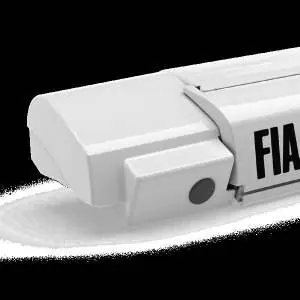
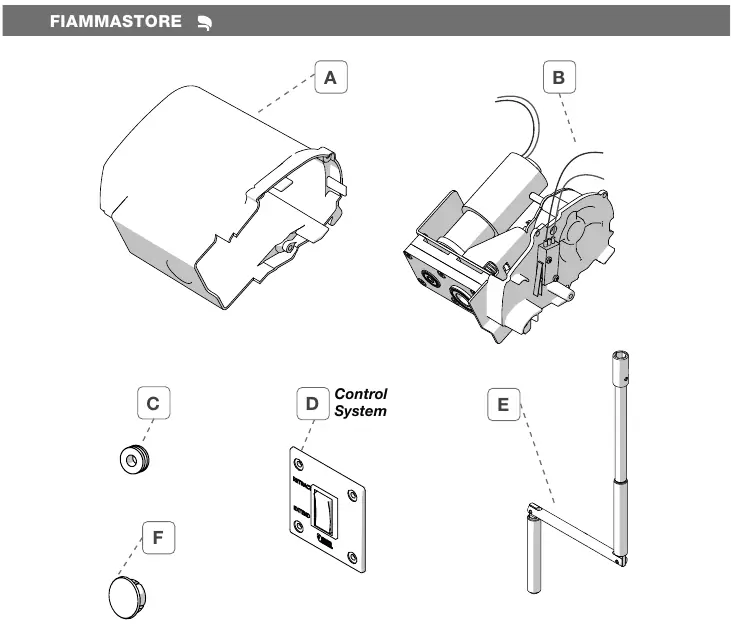
The kit includes the motor assembly, control system, necessary wiring components, and a manual crank handle. Ensure all parts are present and undamaged before starting installation.
Installation and wiring
Installation should be performed by qualified personnel. Warning: Always work without current by disconnecting the vehicle battery.
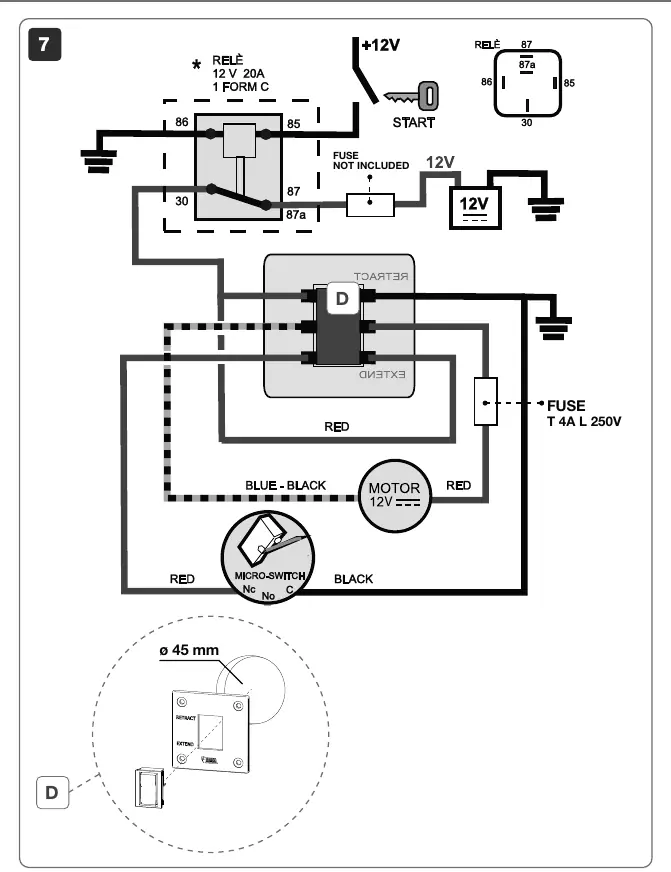
- Choose the safest and shortest route for the power cable.
- Use cable clamps suitable for the cable diameter to prevent voltage drops.
- The motor/control unit system must be powered by a line protected by a 12A fuse.
- Connect the relay (not supplied) to the ignition key so that the motor is disabled when the vehicle is moving.
Electrical operation test
After installation and before fixing the motor covers, perform a general test:
- Restore 12V power.
- Verify the awning opens when the switch is in the EXTEND position and closes in the RETRACT position. If reversed, invert the polarity.
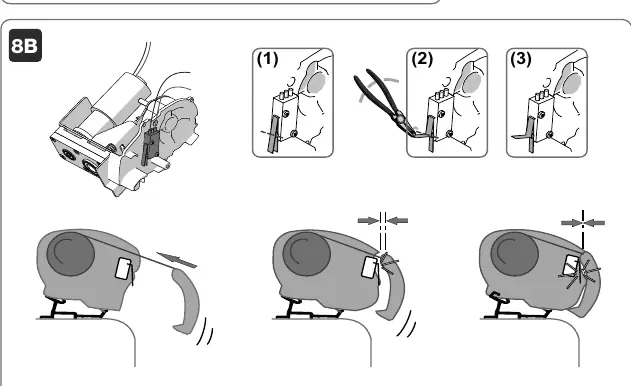
- Open the awning completely, then close it to verify the microswitch interrupts movement when pressed.
- If the microswitch does not stop the movement, adjust it using pliers. Do not disconnect or replace the microswitch on the end cap, as this voids the warranty.
Standard operation
Use the control system switch to open or close the awning. Releasing the button stops the movement. Ensure there are no obstacles (like branches) that could hamper the movement, as this may trigger the protection fuse.
Manual operation
If the motor fails, you can close the awning manually. Use the provided crank handle E to bypass the 12V electrical system.
Safety and maintenance
- Before driving: Always ensure the awning is fully closed.
- Cleaning: Do not use aggressive products on the outer casing to avoid damaging the finish.
- Fuse replacement: If the fuse blows, replace it only with an identical T 4A L 250V fuse. Never operate the product without a fuse.
- Regulations: If the awning protrudes more than 100mm from the vehicle profile, it must be recorded in the vehicle registration documents (DIN 75303 - 2019).
Manufacturer information
Fiamma SpA
Practical help
Common problems
Awning movement does not stop
The microswitch may be disconnected or defective. The lead bar will finish the operation and trigger the protection fuse. Check microswitch connection or adjust with pliers.
Motor failure
Use the provided crank handle E to manually close the awning.
Fuse blows
This indicates an obstruction or electrical fault. Remove any obstacles (e.g., branches) and replace the fuse with an identical T 4A L 250V fuse.
Before use
- Ensure the 12V power supply is connected correctly.
- Verify the awning is fully closed before driving.
- Check for obstacles (branches, etc.) that could hamper movement.
- Ensure the microswitch is properly adjusted.
- Keep a spare fuse (T 4A L 250V) available at all times.
Specs in practice
- Power Supply
- 12V DC
- Absorbed power max
- 144W
- Motor protection fuse
- T 4A L 250V
- General protection fuse
- 12A
Images and diagrams
- The wiring diagram illustrates the relay connection to the 12V power source and the control switch.
- Microswitch adjustment involves using pliers to ensure it interrupts movement when pressed.
Model compatibility
- Compatible with Fiamma F80s series awnings.
- Requires 12V DC power source.

Manual page author
David Miller
Documentation analyst
Organizes user manual content into clear summaries, with attention to model details, product context, and everyday usability.