Toys / RC Models & Drones
Hangar 9 Hawk 140-160N ARF Turbine Jet Instruction Manual
Quick guide for the Hangar 9 Hawk 140-160N ARF turbine jet. This manual covers assembly, installation of retracts, turbine and fuel system setup, center of gravity, control throws, and preflight checklists.
Table of contents
Manual images
Click an image to enlargeQuick guide from the manual
This manual provides comprehensive instructions for the assembly and setup of the Hangar 9 Hawk 140-160N ARF turbine jet. It is intended for experienced modelers due to the complexity of turbine-powered aircraft.
Safety and Precautions
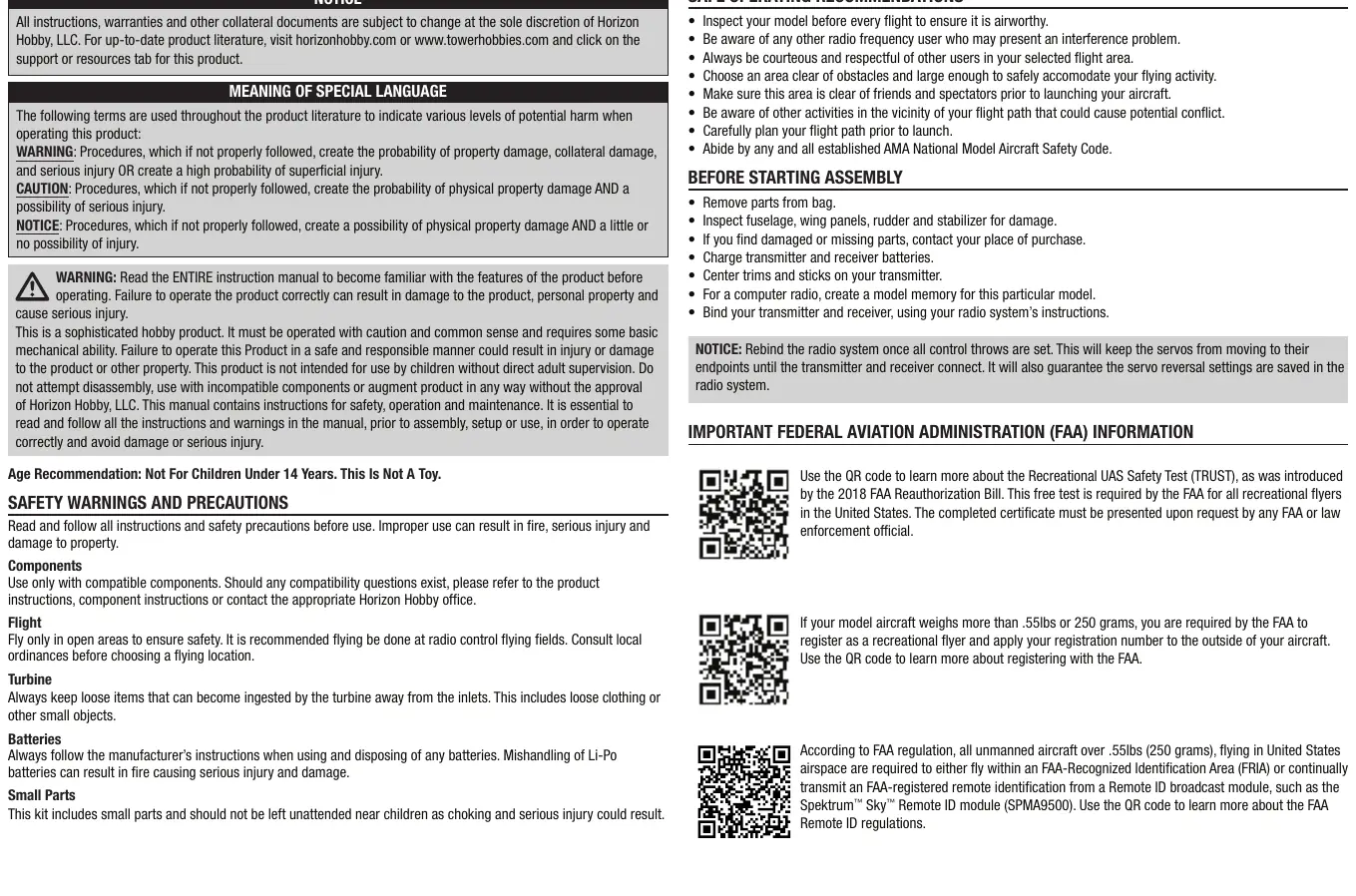
This is a sophisticated hobby product, not a toy. It requires caution, common sense, and basic mechanical ability. Always inspect the model before every flight, fly in open areas, and follow the AMA National Model Aircraft Safety Code.
Assembly and Installation
The manual details the step-by-step assembly of the aircraft, including:
- Aileron and Flap Installation: Detailed steps for installing servos, control horns, and linkages.
- Main Retract Installation: Instructions for both overlapping and flush-mounted gear doors.
- Inner Main Gear Door Installation: Procedures for fuselage-mounted doors.
- Nose Gear Retract and Door Installation: Specific steps for the nose gear assembly.
- Turbine Installation: Mounting the turbine and connecting the data lead.
- Fuel System Installation: Routing fuel lines, installing the air trap, and fuel pump.
Setup and Calibration
Proper setup is critical for flight performance:
- Center of Gravity (CG): The recommended range is 11/16–1-1/4 inches (18–30 mm).
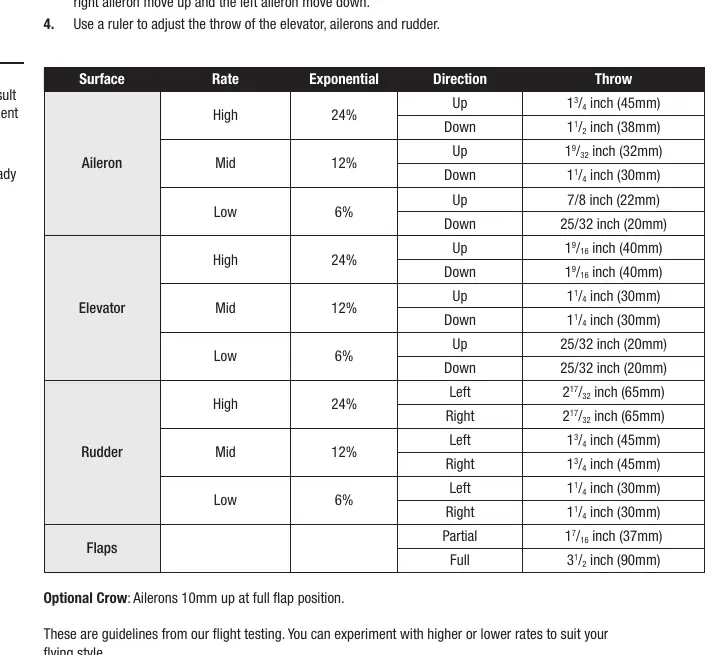
- Control Throws: The manual provides a detailed table for Aileron, Elevator, Rudder, and Flap settings, including rates and exponential values.
Preflight and Maintenance
Before each flying session, perform the following:
- Charge all batteries (transmitter, receiver, and turbine ECU).
- Verify radio installation and control surface movement.
- Check all hardware (linkages, screws, nuts, and bolts) for security.
- Perform a ground range check.
Manufacturer information
Horizon Hobby, LLC
Practical help
Common problems
Retract doors binding
Check for obstructions on the wing surface where the door sits. Sanding or shimming the door mounts on the strut may be required.
Fuel starvation
Ensure the clunk in the fuel tank can move freely and the vent line does not contact the top of the tank.
Door alignment issues
Use low-tack tape to hold doors in position while epoxy cures to ensure proper alignment.
Before use
- Charge transmitter, receiver, and ECU batteries.
- Center trims and sticks on the transmitter.
- Bind transmitter and receiver.
- Verify all control surfaces move in the correct direction.
- Perform a ground range check.
- Check all hardware for security.
Specs in practice
- Center of Gravity
- 11/16–1-1/4 inches (18–30 mm) from the leading edge.
- Fuel Tank Capacity
- 5.5 Liter (186 fl oz).
- Retract Power
- Requires 2S LiPo (7.4V) power.
Images and diagrams
- Control Throws Table: Provides specific rates (High, Mid, Low) and throws for Aileron, Elevator, Rudder, and Flaps.
- Fuel System Diagram: Illustrates the routing from the tank to the air trap, fuel pump, and turbine.
Model compatibility
- Requires Kingtech G4+ turbine.
- Requires 20-channel transmitter with 8 servos.

Manual page author
Michael Turner
Technical manual editor
Reviews PDF manuals for structure, safety notes, and practical product details so readers can find the right information quickly.