HVAC / Heat Pumps
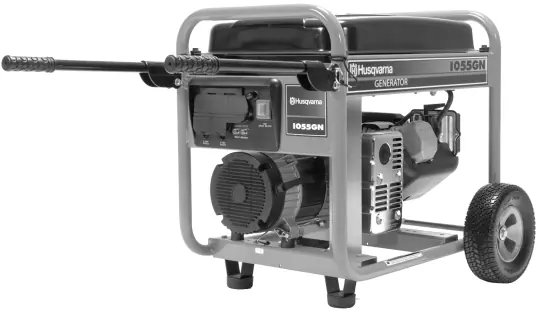
User Manual for Husqvarna 1055GN Portable Generator
Quick guide for the Husqvarna 1055GN 5500 Watt Portable Generator. Includes assembly instructions, operation steps, maintenance schedule, and troubleshooting tips.
Table of contents
Manual images
Click an image to enlargeQuick Guide
This generator is designed to provide electrical power for compatible lighting, appliances, tools, and motor loads. Important: Always operate the generator outdoors in a well-ventilated area to avoid carbon monoxide poisoning. Ensure the unit is on a level surface before starting. Never exceed the generator's wattage capacity.
Safety
Carbon Monoxide Hazard: Running engines produce carbon monoxide, an odorless, colorless, poisonous gas. Operate the generator ONLY outdoors, away from windows, doors, and ventilation intakes. Never run the generator indoors or in enclosed areas like garages or RV compartments.
Fuel Safety: Fuel and its vapors are extremely flammable. Turn the generator OFF and let it cool for at least 2 minutes before refueling. Do not overfill the tank. Keep fuel away from sparks, open flames, and heat sources.
Electrical Safety: Do not touch bare wires or receptacles. Do not operate in rain or wet weather. Use a ground fault circuit interrupter (GFCI) in damp or highly conductive areas.
Assembly
The generator requires final assembly before use.
- Unpack: Set the carton on a flat surface and remove the generator.
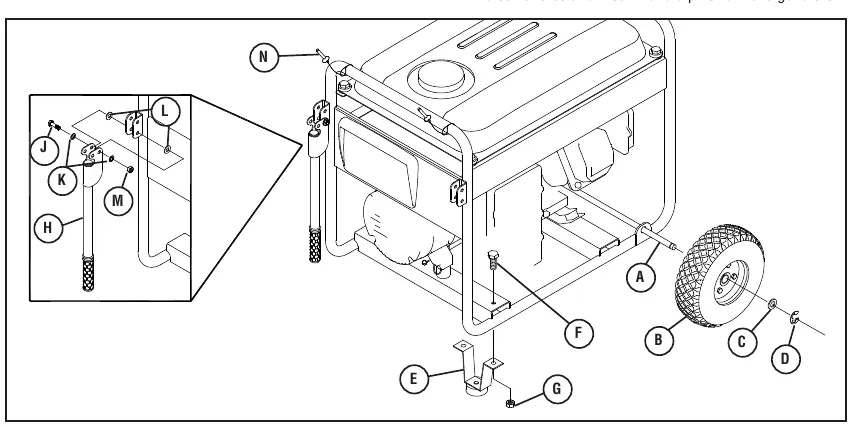
- Wheel Kit: Install the axle through the mounting brackets, slide on wheels, and secure with washers and e-rings. Attach support legs using capscrews and hex nuts. Attach handles to the frame.
- Oil: Place the generator on a level surface. Remove the oil fill cap and pour in the provided oil until it reaches the point of overflowing.
- Fuel: Use clean, fresh, unleaded gasoline (minimum 87 octane). Do not overfill.
Features and Controls
Key components include:
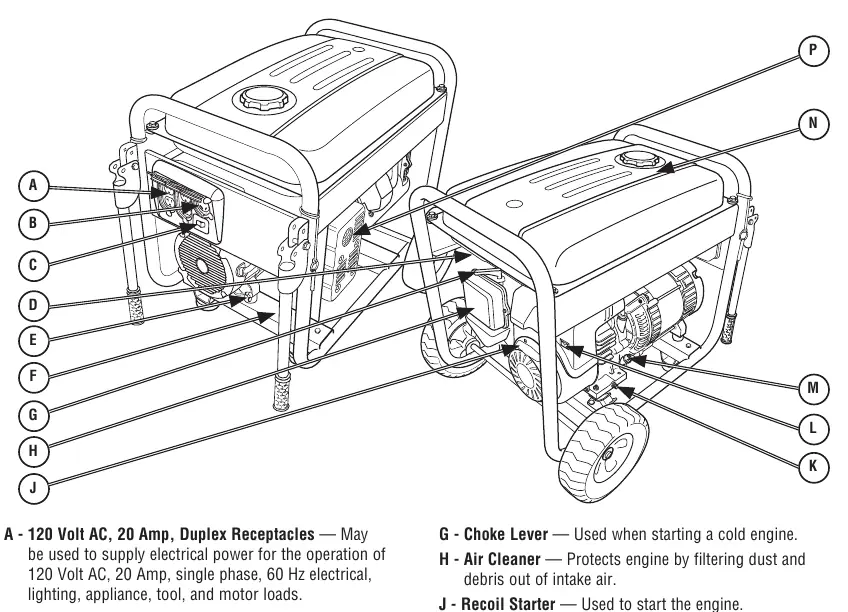
- 120V Duplex Receptacles: For 120V, 20 Amp loads.
- 120/240V Locking Receptacle: For 120/240V, 30 Amp loads.
- Circuit Breaker: Protects receptacles against overload.
- Fuel Valve: Turns fuel supply on/off.
- Choke Lever: Used for cold starts.
- Rocker Switch: Turns the engine on/off.
- Recoil Starter: Used to start the engine.
Operation
Starting the Engine:
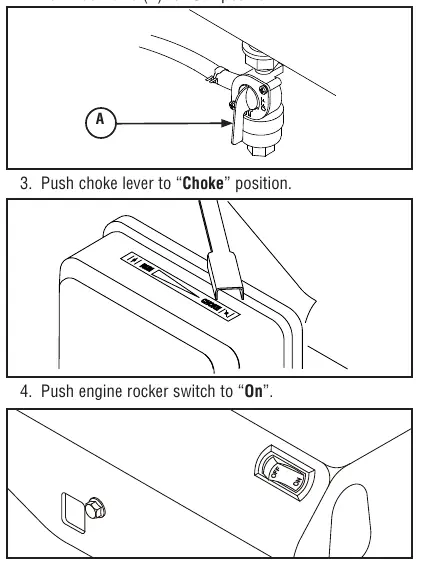
- Ensure the generator is on a level surface and all electrical loads are disconnected.
- Turn the fuel valve to the "On" position.
- Push the choke lever to the "Choke" position.
- Push the engine rocker switch to "On".
- Pull the recoil handle slowly until resistance is felt, then pull rapidly to start.
- Once the engine starts, gradually move the choke lever to the "Run" position.
Connecting Loads: Let the engine stabilize for a few minutes before plugging in electrical loads. Connect loads sequentially, starting with the largest.
Stopping the Engine:
- Turn off and unplug all electrical loads.
- Let the engine run at no-load for several minutes.
- Push the engine rocker switch to "Off".
- Turn the fuel valve to "Off".
Maintenance
Regular maintenance is essential for performance and longevity.
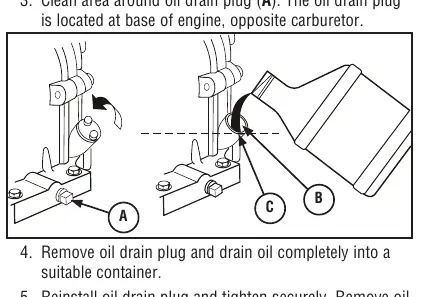
- First 5 Hours: Change engine oil.
- Every 8 Hours/Daily: Clean debris, check oil level.
- Every 25 Hours/Yearly: Service air cleaner.
- Every 50 Hours/Yearly: Change engine oil.
- Every 100 Hours/Yearly: Service fuel valve, spark plug, spark arrester, and clean cooling system.
- Every 250 Hours/Yearly: Check valve clearance.
Cleaning: Keep the generator clean and dry. Use a damp cloth for exterior surfaces and a soft brush to loosen dirt. Do not use water to clean the generator as it can enter the fuel system or damage internal windings.
Troubleshooting
- Engine runs but no AC output: Reset circuit breaker or check for faulty connections/devices.
- Engine bogs down under load: Check for overload or short circuit.
- Engine will not start: Check fuel valve, air cleaner, spark plug, or fuel quality.
- Engine lacks power: Check for overload or dirty air filter.
Specifications
- Starting Wattage: 6,875 watts
- Running Wattage: 5,500 watts
- Fuel Capacity: 7 U.S. gallons (26.5 L)
- Oil Capacity: 28 ounces (0.83 Liters)
Manufacturer information
Husqvarna
Practical help
Common problems
Engine is running, but no AC output is available.
Reset the circuit breaker or check for poor connections/defective cord sets.
Engine bogs down when loads are connected.
Check for a short circuit in the load or ensure the generator is not overloaded.
Engine will not start or runs rough.
Check if the rocker switch is 'On', fuel valve is 'Open', air cleaner is clean, or if the spark plug wire is connected.
Before use
- Check engine oil level.
- Check fuel level.
- Ensure generator is on a level surface.
- Inspect air cleaner.
- Ensure all electrical loads are disconnected before starting.
Specs in practice
- Starting Wattage
- 6,875 watts; the short burst of power needed to start electric motor-driven tools.
- Running Wattage
- 5,500 watts; the continuous power the generator can supply.
- Fuel Capacity
- 7 U.S. gallons (26.5 L).
Images and diagrams
- Wheel Kit Assembly: Shows installation of axle, wheels, support legs, and handles.
- Control Panel: Identifies receptacles, circuit breaker, fuel valve, and switches.
Model compatibility
- Not for marine use.
- Requires high altitude adjustment for operation above 5,000 feet (1524 meters).

Manual page author
Emily Carter
User documentation editor
Prepares concise manual descriptions and highlights the most useful setup, operation, and maintenance information for readers.