Toys / RC Models & Drones
User Manual for Maverick EV Charger MES-EV-LH Series
Quick guide for the Maverick EV Charger (MES-EV-LH-SG80, DG80, DG40). Includes installation, wiring, charging operation, troubleshooting, and safety instructions.
Table of contents
Manual images
Click an image to enlargeQuick Guide from the Manual
This manual provides essential instructions for the installation, operation, and maintenance of the Maverick EV Charger (Models: MES-EV-LH-SG80, MES-EV-LH-DG80, MES-EV-LH-DG40). Always ensure the device is installed by a professional and that the electrical circuit is properly sized (125% of the load) in accordance with local codes like the National Electrical Code (NEC).
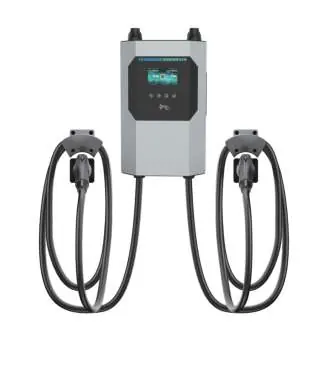
Product Overview
The Maverick EV Charger is a Level 2 AC charging station designed for indoor or outdoor use. It features a 4.3-inch LCD display, RFID authentication, and supports network connectivity via Wi-Fi, 4G, or Ethernet. The unit is rated for temperatures between -30°C and 50°C and has an enclosure protection rating of Type 4, IK08.
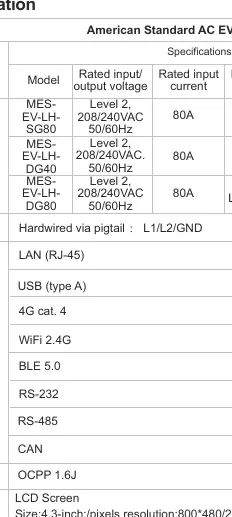
Installation
Location Requirements: Install the charger in a ventilated, cool place away from direct sunlight and rain. Ensure the unit is mounted vertically with sufficient clearance (at least 200mm-500mm depending on the side).
Wall Mount Installation:
- Mark and drill holes in the wall according to the mounting plate.
- Install wall mounts and hanging plates.
- Secure the pile body onto the mounting plate using the provided screws.
Wiring:
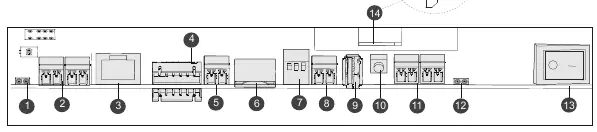
- Ensure the mainboard power switch is off before starting.
- Remove the decorative and wiring covers.
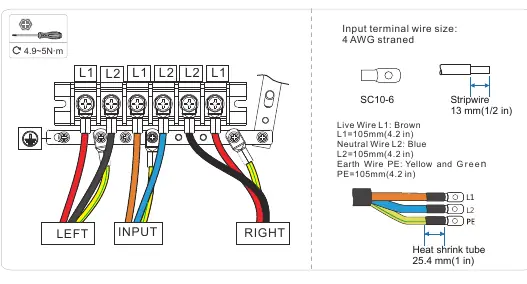
- Connect the input wires (L1, L2, PE) to the terminals. Ensure the ground cable is connected reliably.
- Use 4 AWG stranded copper cable for input.
- Reinstall covers after wiring is complete.
Operation
Charging Preparation: Park the vehicle, turn it off, and ensure it is in a chargeable state. You can initiate charging via the APP, RFID card, or plug-and-charge mode.
Charging Steps:
- Connect the charging cable to the car socket.
- If using an RFID card, tap the card to the reader and select the charging cable.
- If using the APP, scan the QR code and follow the prompts.
- The screen will display charging voltage, current, and time during the process.
- To stop, use the APP, car terminal, or tap the RFID card again.
Troubleshooting
The charger includes automatic protection. If a fault occurs, the screen will display a fault code. Common issues include:
- 24 Ground Fault: The charging pile is not grounded; test the circuit.
- 25 Motherboard Over Temperature Alarm: Equipment is too hot; wait for it to cool down.
- 32/42 A/B Cable Input Overcurrent Alarm: Check the charging adapter connection and ensure the car charger is working properly.
- 3E/4E Cable Input Overload Alarm: Check the charging adapter connection.
For faults like Flash Fault (20) or EEPROM Fault (21), contact after-sales service.
Maintenance
Perform regular monthly maintenance. Ensure the equipment is well-grounded, check for safety hazards (high temperatures, corrosion, flammable items), and verify that all wiring connection points are secure and not loose.
Practical help
Common problems
24 Ground Fault
The charging pile is not grounded; the circuit needs to be tested.
25 Motherboard Over Temperature Alarm
The equipment temperature is too high; resolve the fault after the temperature drops.
32/42 A/B Cable Input Overcurrent Alarm
Check that the charging adapter is properly connected to the car and that the car charger is working properly.
3E/4E Cable Input Overload Alarm
Check whether the charging adapter is correctly connected to the car and check whether the car charger is normal.
Before use
- Ensure the mainboard power switch is off before installation.
- Verify the model and specifications match your order requirements.
- Install in a ventilated, cool place away from direct sunlight and rain.
- Ensure the wall is suitable for vertical mounting.
- Check that the ground cable is connected reliably.
- Verify that the electrical branch circuit is sized at 125% of the load.
Specs in practice
- Rated Input/Output Voltage
- 208/240VAC, 50/60Hz.
- Enclosure Protection
- Type 4, IK08 (suitable for indoor/outdoor use).
- Operating Temperature
- -30°C to 50°C.
Images and diagrams
- Wiring Diagram: Shows L1, L2, and PE connections for input power.
- Interface: Displays charging status, voltage, current, and network connectivity.
Model compatibility
- Compatible with Electric Vehicles (EV/PHEV).
- Requires 125% branch circuit sizing for continuous load.
- Supports OCPP 1.6J.

Manual page author
David Miller
Documentation analyst
Organizes user manual content into clear summaries, with attention to model details, product context, and everyday usability.