Automotive / Electrical Accessories
Metra 1305MTLKEG Electronic Lock Ejector Spring Adjustment Guide
Learn how to adjust the ejector spring force on your Metra 1305MTLKEG electronic lock. This guide covers spring settings for different door types and safety precautions.
Table of contents
Important information
This document provides instructions for adjusting the ejector spring force on the Metra 1305MTLKEG electronic lock. This adjustment is typically only required for specific installations, such as very small doors or those equipped with spring-shut hinges. For the vast majority of lockers and hinge types, the factory settings are already optimal and do not require adjustment.
Understanding the ejector spring
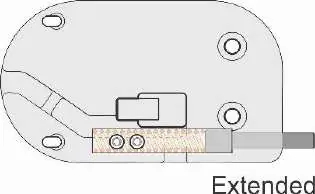
The ejector is a critical component of the lock designed to push the door open when the lock is in the unlocked state. If the door does not open correctly, you may need to adjust the spring force using the supplied 2.5/16 mm screw. Always ensure the screw is fully inserted so that the head is level with the lock base.
Adjusting the spring force
The lock features two positions, labeled A and B, which allow you to increase or decrease the spring tension based on your requirements.
If the spring is too strong
If the spring force is excessive, follow these steps:
- Compress the spring fully with your thumb.
- Insert the screw into position A for a much weaker setting.
- Insert the screw into position B for a weaker setting.
If the spring is too weak
If the spring force is insufficient to open the door, follow these steps:
- Leave the ejector uncompressed.
- Insert the screw into position A for a much stronger setting.
- Insert the screw into position B for a stronger setting.
Safety warnings
Attention: Do not over-compress the spring by forcing the ejector inside the lock. Doing so may cause damage to the internal switch.
Practical help
Common problems
Door does not open when unlocked
The spring may be too weak. Adjust the screw to position A or B while the ejector is uncompressed to increase spring force.
Spring is too strong for the door
The spring may be too strong. Compress the spring fully and adjust the screw to position A or B to decrease spring force.
Before use
- Verify if the door is a small door or uses spring-shut hinges.
- Check if the factory spring setting is insufficient for your specific door.
- Ensure you have the supplied 2.5/16 mm screw.
- Confirm the lock is in the unlocked state before attempting adjustments.
Specs in practice
- Position A (Uncompressed)
- Much stronger spring setting.
- Position B (Uncompressed)
- Stronger spring setting.
- Position A (Compressed)
- Much weaker spring setting.
- Position B (Compressed)
- Weaker spring setting.
Images and diagrams
- The diagrams illustrate the lock body with the ejector mechanism. Positions A and B are clearly marked for screw placement to adjust spring tension.
- The 'Compressed' diagram shows the correct thumb placement to compress the spring before adjusting for a 'too strong' scenario.
Model compatibility
- Factory settings are sufficient for the great majority of locker and hinge types.

Manual page author
Emily Carter
User documentation editor
Prepares concise manual descriptions and highlights the most useful setup, operation, and maintenance information for readers.