Power / Solar Panels
Handling and Storage Guidelines for SunPower Solar Panels
Essential handling, storage, and transport guidelines for SunPower solar panels. Learn proper forklift procedures, pallet stacking rules, and delivery inspection steps to prevent module damage.
Table of contents
Manual images
Click an image to enlargeQuick Guide for Handling and Storage
These guidelines are critical for maintaining the integrity of SunPower solar panels during transport and storage. Key safety rules include:
- Never unload pallets from the top of a truck using a crane.
- Never unload panels manually from the truck.
- Always use appropriate handling equipment (forklift or pallet jack) based on site conditions.
- Handle all pallets and modules with high care.
- Check the load capacity of your equipment before lifting any pallets.
Pallet Handling and Transport
Proper transport and loading are essential to prevent damage to the modules.
- Double Stacking: Only allowed for the same pallet type. Pallets must be properly blocked and secured with air bags and loading bars to prevent movement.
- Loading Method: Follow the specific loading method for your model (e.g., double stack with air bags for most Euro trailers).
- Unloading: Use a forklift or tail lift (if not double-stacked). Ensure the area is clear of personnel before unloading.
General Handling Rules
Follow these rules to ensure the longevity and safety of the solar modules:
- Storage: Keep packed modules protected from water, as moist cardboard can damage the glass.
- Manual Handling: Each module should be handled by two people wearing appropriate personal protection equipment (e.g., gloves).
- Stacking Restrictions: Do not stack other items on the PV pallet. Triple stacking is strictly prohibited.
- Unpacking: Do not cut horizontal straps until at least two people are present to assist with the operation.
Forklift Safety Precautions
Using a forklift requires specific precautions to avoid damaging the panels:
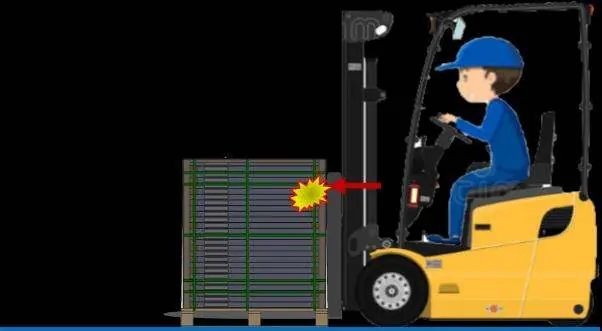
- Fork Length: Match the length of the forks to the width of the pallet so they do not extend beyond the pallet.
- Tilting: Do not tilt the fork up while inside the pallet, as this can impact the back sheet or cut the strapping.
- Backrest: Ensure the forklift backrest does not hit the pallet. Use padding if necessary.
- Unloading: When unloading double-stacked pallets, unload them one by one. Shift the top pallet horizontally to create space before lifting.
Delivery Inspection
Before signing the delivery note, perform a thorough inspection of the pallet. Look for:
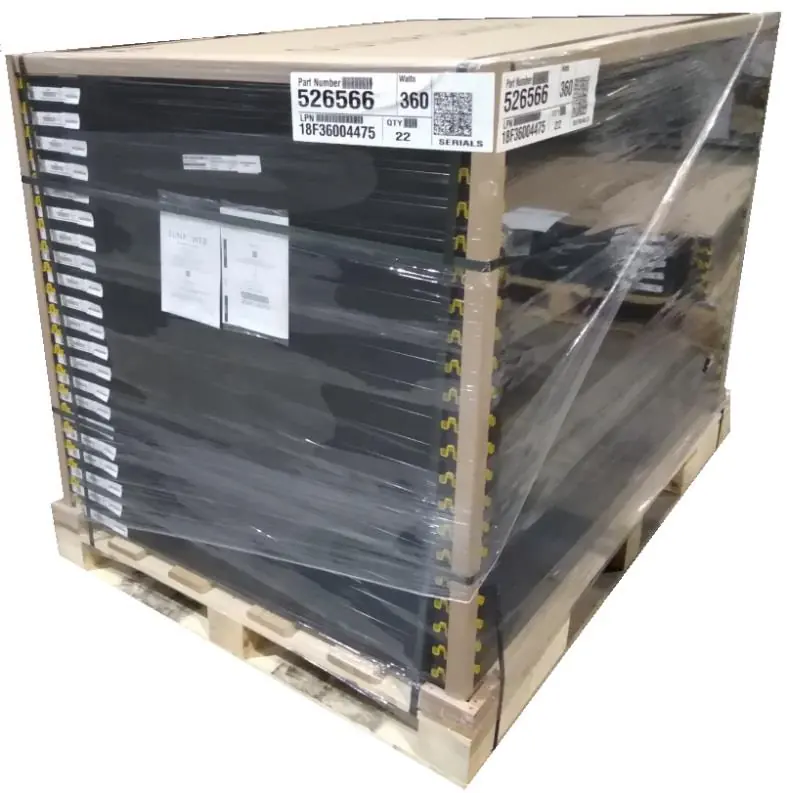
- Top Pallet: Check for footprints, torn/drilled cover pads, or shattered glass.
- Sides: Inspect for folded edge protectors, damaged corner pieces, or shifted modules.
- Wood Pallet: Check for damaged wood corner pieces or broken back planks.
- Module Frame: Inspect the bottom frame for deep scratches, bends, or fork knocks.
In case of visible damage, write detailed remarks on the delivery note and take photos of the damage and the original packaging. Claims for hidden damage must be reported within 7 working days.
Practical help
Common problems
Pallet damage during transport
Ensure double stacking uses air bags and loading bars; only stack same pallet types.
Forklift damage to modules
Ensure forks do not extend beyond the pallet and do not tilt the fork up while inside the pallet.
Delivery damage claims
Inspect for footprints, shattered glass, or bent frames before signing; take photos of damage and original packaging.
Before use
- Check load capacity of handling equipment.
- Verify if the pallet is double-stacked and secured.
- Ensure two people are available for manual handling.
- Check for warning signs on packaging (red = glass side).
Specs in practice
- Pallet Dimension
- Physical size of the pallet for transport planning.
- Packaging Method
- Orientation (horizontal/vertical) and protection (plastic corners/sleeves).
- Loading Method
- Number of pallets per truck and stacking requirements.
Images and diagrams
- Forklift handling diagrams show correct fork positioning and common mistakes to avoid.
- Delivery check diagrams highlight specific areas to inspect for damage.
Model compatibility
- Guidelines apply to various Maxeon and Performance line models.
- Specific stacking limits apply to P3 and P6 series.

Manual page author
Michael Turner
Technical manual editor
Reviews PDF manuals for structure, safety notes, and practical product details so readers can find the right information quickly.