Automotive / Bicycle Carriers
Thule Epos 2-bike Rack User Manual
Comprehensive user guide for the Thule Epos 2-bike rack. Includes installation instructions, bike loading procedures, safety guidelines, and compatibility details.
Quick answers from the manual
Quick answer
- The Thule Epos 2-bike rack is a hitch-mounted carrier compatible with 1.25" and 2" receivers. It supports a maximum total load of 140 lbs (64 kg). p. 1, 3, 5
Key actions
- Install the rack into the hitch receiver and tighten the bolt to 10 Nm (7.5 lb ft). p. 7, 8
- Use the foot pedal to tilt the rack for trunk access. p. 12
Technical specifications
| Parameter | Value | Meaning | Pages |
|---|---|---|---|
| Max Load | 140 lbs (64 kg) | Total weight capacity for the rack | p. 5 |
| Max per bike | 75 lbs (34 kg) | Maximum weight for a single bike | p. 5 |
| Hitch Size | 1.25" / 2" | Compatible hitch receiver sizes | p. 7 |
Where to find it in the PDF
- Safety Warnings p. 2
- Installation p. 3, 6, 7, 8
- Loading Bikes p. 9, 10, 11, 14
Table of contents
Manual images
Click an image to enlargeQuick guide from the manual
The Thule Epos 2-bike rack is designed for hitch-mounted transport. Before use, ensure your vehicle's hitch receiver is compatible (1.25" or 2"). The rack supports a maximum total load of 140 lbs (64 kg), with a maximum of 75 lbs (34 kg) per bike. Always verify that the rack is securely locked to the vehicle and that all bike straps are tightened before driving.
Installation
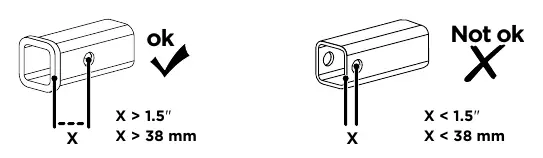
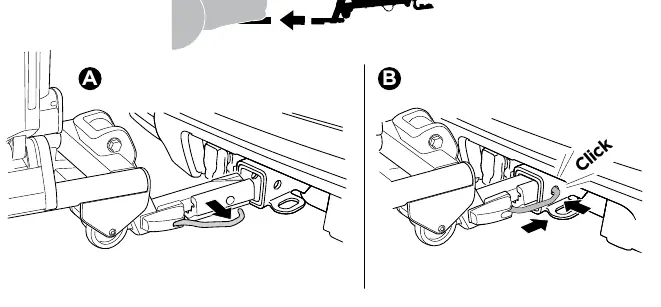
The rack is compatible with 1.25" (32 mm) and 2" (51 mm) hitch receivers. Ensure the hitch receiver depth is greater than 1.5" (38 mm). Insert the rack into the hitch receiver until it clicks. Use the provided tool to tighten the hitch bolt to 10 Nm (7.5 lb ft) and lock the mechanism.
Loading bikes
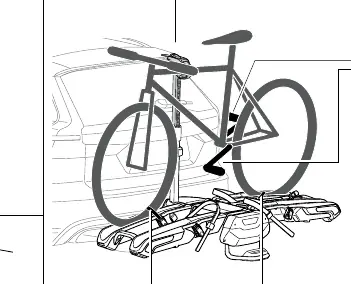
To load bikes, ensure the rack is in the unfolded position. Place the bike on the rack and secure the frame using the adjustable clamp. Ensure the clamp is locked. Secure the wheels using the integrated wheel straps. For fat bikes with tires wider than 3", use the Thule XXL Fatbike Wheel Straps (sold separately).
Tilting for trunk access
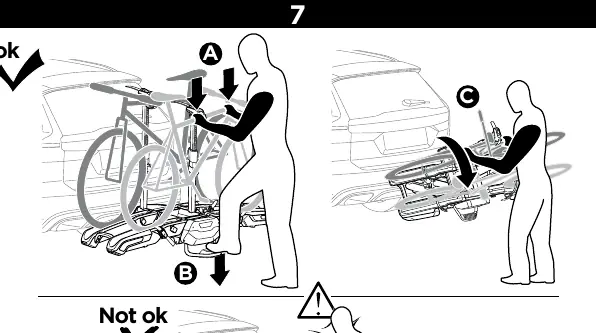
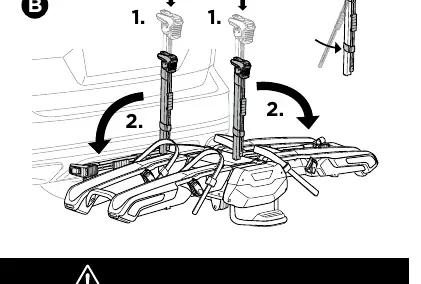
The rack features a tilt function to allow access to the vehicle's trunk. Use the foot pedal to release the tilt mechanism while supporting the rack with your hands. Carefully lower the rack. To return to the driving position, lift the rack until it clicks into place.
Folding and storage
When not in use, the rack can be folded for storage. Ensure all straps are secured and the rack is in the folded position. The rack can be stored in the Thule Epos 2-bike Storage Bag (sold separately).
Safety and maintenance
Regularly check all bolts and straps for wear. Do not exceed the maximum load capacity. Always remove the rack when not in use to improve fuel economy and vehicle safety. Observe local traffic laws regarding rear-mounted accessories.
Manufacturer information
Thule
Practical help
Common problems
Rack does not fit the hitch receiver
Ensure the hitch receiver depth is at least 1.5" (38 mm). If the depth is less, the rack cannot be safely installed.
Bike feels unstable
Check that the frame clamp is fully tightened and locked, and that wheel straps are pulled tight against the rims.
Before use
- Verify hitch receiver size (1.25" or 2").
- Check that the hitch bolt is tightened to 10 Nm (7.5 lb ft).
- Ensure the rack is locked to the vehicle.
- Confirm total bike weight does not exceed 140 lbs (64 kg).
- Check that bike tires are within the 3" width limit (or use XXL straps for up to 5").
Specs in practice
- Max per bike
- 75 lbs (34 kg) maximum weight for a single bike.
Images and diagrams
- The hitch compatibility diagram shows that the receiver depth must be greater than 1.5" (38 mm).
- The tilt mechanism diagram illustrates using the foot pedal to lower the rack for trunk access.
Model compatibility
- Compatible with 1.25" and 2" hitch receivers.
- Standard wheel straps fit tires up to 3" wide.
- Thule XXL Fatbike Wheel Straps (9851) required for tires up to 5" wide.

Manual page author
David Miller
Documentation analyst
Organizes user manual content into clear summaries, with attention to model details, product context, and everyday usability.