General / Mounts Stands
Casambi BLE to 0-10V Ceiling Mounted AC PIR Sensor
Installation and operation guide for the Casambi BLE to 0-10V Ceiling Mounted AC PIR Sensor. Includes wiring diagrams, detection patterns, lens mask configuration, and technical specifications.
Table of contents
Quick guide from the manual
The Casambi BLE to 0-10V Ceiling Mounted AC PIR Sensor is designed for automated lighting control using presence sensing and daylight harvesting. Important: Never install the device with power applied. Avoid placing the sensor near heat sources, air conditioners, fans, or in areas with significant air flow, as these can cause false alarms. Ensure the device is not exposed to direct sunlight or positioned where light sources point directly into the sensor.
Product Description
This ceiling-mounted sensor integrates presence sensing, daylight harvesting, and DALI dimming with Casambi radio technology. It is compatible with 0-10V LED drivers or luminaires. The system utilizes a fully distributed mesh network architecture, ensuring no single point of failure; if a unit goes offline, it automatically reconnects and synchronizes when back online.
Installation and Wiring
The sensor requires connection to mains power and 0-10V control lines. Ensure all wires are securely held within the connection terminals.
- L (Input): Black, 18 AWG
- N (Input): White, 18 AWG
- L' (Output): Red, 18 AWG
- Dim+ (Output): Violet, 22 AWG
- Dim- (Output): Pink, 22 AWG
Note: With a maximum 20mA 0-10V BUS current output, the sensor can connect to a minimum of 10pcs 0-10V drivers.
Detection Patterns and Lens Masks
The sensor's detection area depends on the installation height and the lens mask used. The device supports different coverage patterns:
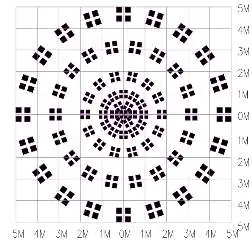
- Aisle/Corridor application: Split the lens cover into the aisle type.
- Semi-sphere application: Split the lens cover into the semi-circle type.
Performance is influenced by site conditions, including installation height, temperature, humidity, and potential blind areas. Avoid installing the sensor opposite large, constantly moving objects or glass doors/windows to prevent interference.
Technical Specifications
- Operating Voltage: 100-277VAC 50/60Hz
- Standby Power: Less than 0.5W
- Relay Capacity: Resistive Max. 10A, Capacitive Max. 8A, Inductive Max. 7A (all at 120-277VAC)
- Wireless: 2.4GHz ISM band, 164 feet (50m) range in open field
- Operating Temperature: -10°C to +50°C
- IP Rating: IP20
Practical help
Common problems
False alarms (lights turning on unexpectedly)
Ensure the sensor is not placed near heat sources (fans, air conditioners, ovens) or opposite large, constantly moving objects. Check that no light source points directly into the sensor.
Load does not switch on
Verify wiring connections (L, N, L', Dim+, Dim-). Ensure the sensor is powered and the load is within the relay capacity (10A resistive).
Interference from windows/doors
Avoid facing glass doors and windows directly to prevent interference from strong light or complex outdoor environments like moving vehicles.
Before use
- Disconnect power before installation.
- Verify the installation height (2-6m, max 6m).
- Ensure wires are stripped to 10mm.
- Select the appropriate lens mask (Aisle or Semi-circle) if required.
- Confirm the load type (Resistive, Capacitive, or Inductive) is within relay limits.
Specs in practice
- 0-10V Dimming
- Control signal for compatible LED drivers; supports up to 10 drivers based on 20mA bus current.
Images and diagrams
- The wiring diagram illustrates the connection of the sensor to the mains (L, N) and the output to 0-10V drivers (L', Dim+, Dim-).
- The lens mask diagram shows how to physically modify the lens cover for specific coverage patterns like Aisle or Semi-circle.
Model compatibility
- Compatible with 0-10V LED drivers or luminaires.
- Supports a maximum of 10pcs 0-10V drivers due to 20mA BUS current limit.
- Designed for indoor applications only.

Manual page author
Michael Turner
Technical manual editor
Reviews PDF manuals for structure, safety notes, and practical product details so readers can find the right information quickly.