Automotive / Motorcycle Accessories
LeoVince 14324E LV One EVO Slip-On Exhaust Installation Guide
Comprehensive installation and maintenance guide for the LeoVince 14324E LV One EVO slip-on exhaust, designed for KTM 690 Enduro R and 690 SMC R motorcycles. Includes step-by-step fitting instructions, component lists, and maintenance tips.
Table of contents
Manual images
Click an image to enlargeQuick guide from the manual
This document provides installation and maintenance instructions for the LeoVince 14324E LV One EVO slip-on exhaust, compatible with KTM 690 Enduro R and 690 SMC R models (including the 35kW version). Professional installation is recommended. Ensure the exhaust system has cooled completely before beginning any work to prevent burns or damage to heat-sensitive components.
Components list
Before starting, verify that all parts are present. The kit typically includes the silencer, link pipe, and a fitting kit containing springs, brackets, spacers, and washers. Refer to the technical drawing in the manual for a detailed breakdown of all components and their specific codes.
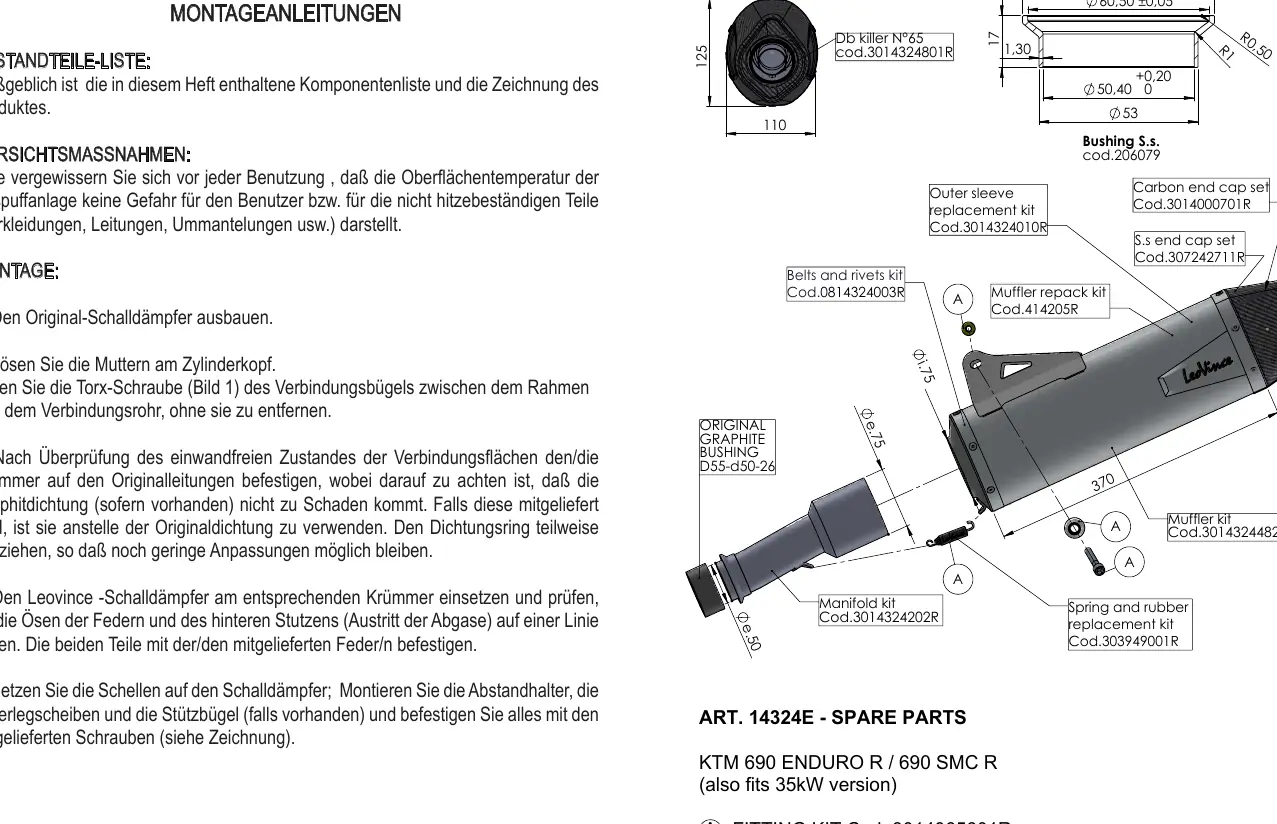
Installation instructions
- Remove the original OE silencer.
- Loosen the cylinder head exhaust nuts.
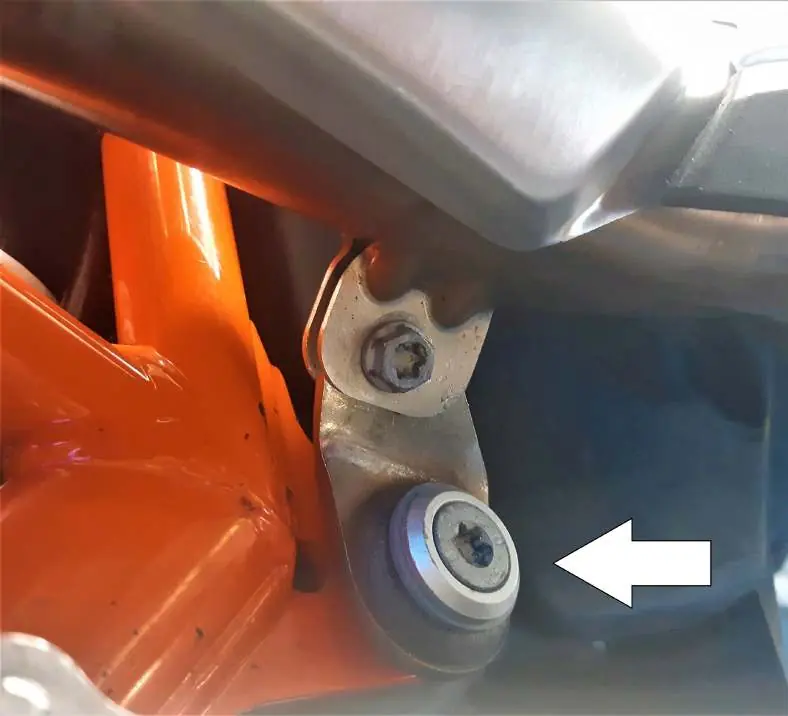
- Loosen the Torx screw on the connection bracket between the frame and the pipe, but do not remove it.
- Check that mating surfaces are clean. Slide the link pipe onto the original header, ensuring the graphite bushing (if supplied) is used to replace the original. Partially tighten the securing strap to allow for adjustments.
- Slide the LeoVince silencer onto the link pipe. Check the alignment of the mounting eyes for the springs and the exhaust outlet.
- Connect the parts using the provided springs.
- Fit the clamps to the silencer. Mount spacers, washers, and brackets as shown in the technical drawing and secure by tightening all nuts and bolts.
- Tighten the clamps joining the link pipe to the exhaust headers.
- Start the engine, wait a few minutes to reach operating temperature, and check for gas leaks.
Maintenance and care
The exhaust system requires a break-in period. During the first kilometers, slight gas leakage may occur. After approximately 100 km, check and tighten all fasteners. Periodically inspect brackets, fasteners, and rubber parts for wear and replace them if necessary. The silencer can be cleaned using gasoline, diesel oil, or alcohol; do not use solvents. Discoloration of the silencer is normal due to heat and material properties.
Important warnings
Modifying the silencer is strictly forbidden. Belgrove Sp. z o.o. declines all responsibility for defects or malfunctions resulting from any modification or tampering with the product.
Manufacturer information
LeoVince
Practical help
Common problems
Slight gas leakage during initial use
The exhaust system needs a break-in period. Check and tighten all fasteners after approximately 100 km.
Discoloration of the silencer
This is a normal result of heat and the nature of the materials used; it is not a defect.
Before use
- Ensure the exhaust surface has cooled down completely before starting work.
- Verify all components are present according to the parts list.
- Have necessary tools ready for removing the original silencer.
- Check that mating surfaces are clean before installation.
Specs in practice
- Graphite bushing
- Must be used if supplied to ensure proper sealing between the link pipe and the original header.
Images and diagrams
- The technical drawing illustrates the assembly of the silencer, link pipe, springs, and mounting brackets.
- Image 1 highlights the Torx screw on the connection bracket that must be loosened during installation.
Model compatibility
- Compatible with KTM 690 Enduro R and 690 SMC R.
- Also fits the 35kW version.

Manual page author
David Miller
Documentation analyst
Organizes user manual content into clear summaries, with attention to model details, product context, and everyday usability.