Furniture / Storage Cabinets
User Manual for Sealey PTB104008 Topchest and PTB105511 Rollcab
Quick guide for assembling and maintaining your Sealey PTB104008 Topchest and PTB105511 Rollcab. Includes instructions for handle and wheel installation, drawer operation, and maintenance tips.
Table of contents
Manual images
Click an image to enlargeQuick guide from the manual
This document provides assembly and maintenance instructions for the Sealey PTB104008 Topchest and PTB105511 Rollcab. Key procedures include installing handles and wheels, operating the drawer locking mechanisms, and connecting the topchest to the rollcab. Always ensure the units are placed on level, solid ground and follow safety guidelines to prevent tipping.
Safety Instructions
- Ensure the work area is clean, uncluttered, and well-lit.
- Always use the units on level and solid ground, preferably concrete.
- Do not use the units outdoors or in damp/wet locations.
- Do not move the units with drawers extended.
- To avoid tipping, open only one drawer at a time.
- Do not step on the drawers.
- Keep children and unauthorized persons away from the work area.
Assembly
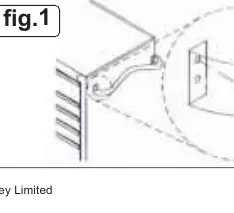
Handle Installation: Position the handle over the holes on the side of the rollcab and attach it securely using the provided bolts.
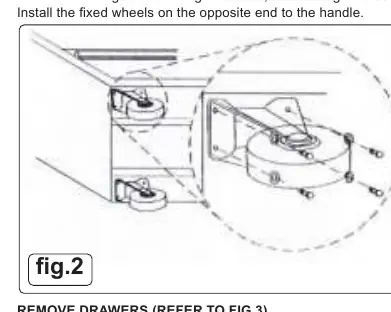
Wheel Installation (Rollcabs): Lay the rollcab on its back on a soft mat. Install the two braked casters on the same end as the handle. Insert carriage bolts through washers, then through the casters and into the cabinet bottom. Tighten securely. Install the fixed wheels on the opposite end.
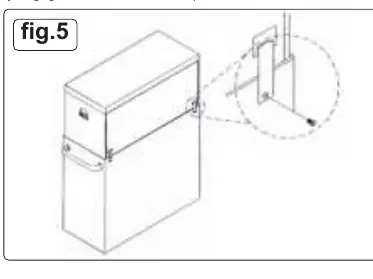
Chest and Cabinet Connection: Place the topchest onto the rollcab. Attach the connectors to both ends, ensuring the clips fully engage in the back of the topchest.
Drawer Operation
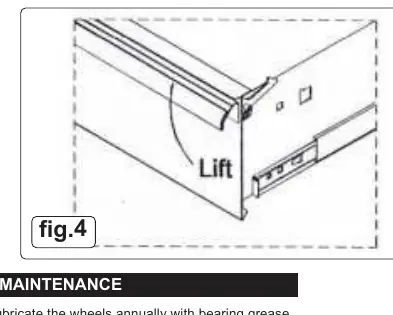
Raise and Release Handles: To open a drawer, lift the handle while pulling it towards you. To close, push the drawer firmly until the latch engages.
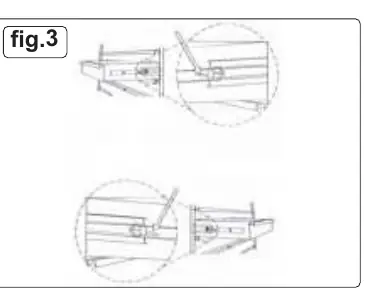
Removing Drawers: Pull the drawer out until almost fully extended. Push up one black release lever while pulling down the other. Hold the levers in these positions and pull the drawer out until it releases from the slide.
Replacing Drawers: Extend the drawer slides from the unit. Insert the brackets on each side of the drawer into the slots in the slides. Once inserted, close the drawer completely to set the slides.
Maintenance
- Lubricate the wheels annually with bearing grease.
- Lubricate the drawer slides twice a year.
- Periodically clean drawer fronts, trim, and surfaces with mild detergent and water.
Manufacturer information
Sealey Group
Practical help
Common problems
Drawer does not stay closed
The hook may be bent or rubbing against the slides. Lightly bend the hook until the drawer engages properly in the slide.
Unit tipping risk
Never move the unit with drawers open. Open only one drawer at a time.
Before use
- Ensure the work area is level and solid (preferably concrete).
- Have at least one other person help with unpacking due to the weight of the units.
- Verify all bolts are tightened securely during assembly.
- Ensure the work area is clean and well-lit.
- Check that the drawer slides are lubricated.
Images and diagrams
- Fig 1: Handle installation on the side of the rollcab.
- Fig 2: Wheel installation showing braked casters on the handle end.
- Fig 3: Drawer removal using the black release levers.
- Fig 4: Operation of the raise and release drawer handles.
- Fig 5: Connection of the topchest to the rollcab using connectors.
Model compatibility
- PTB104008 is designed to be used with the PTB105511 Rollcab or as a standalone unit.
- PTB105511 is designed to be used with the PTB104008 Topchest or as a standalone unit.

Manual page author
David Miller
Documentation analyst
Organizes user manual content into clear summaries, with attention to model details, product context, and everyday usability.